
Opinion & Analysis
The Numbers Behind Rickie Fowler’s Improvement


Two years ago, fan favorite Rickie Fowler took what many felt was a leap into superstardom with his win at The Players Championship. Since then, Fowler has continued his success and was in contention at the Masters this April. Many analysts and fans feel that Fowler is on pace to have the best season of his career and perhaps secure his first championship victory.
The notion that this could be Fowler’s best season has some merit, as he is currently No. 1 in Adjusted Scoring Average on the PGA Tour. Many (including Fowler himself) have credited his shorter-length driver shaft as a key part of his success. In this article, I’m going to examine the data and see what Fowler’s strengths have been this year compared to his previous seasons on the PGA Tour.
Scoring
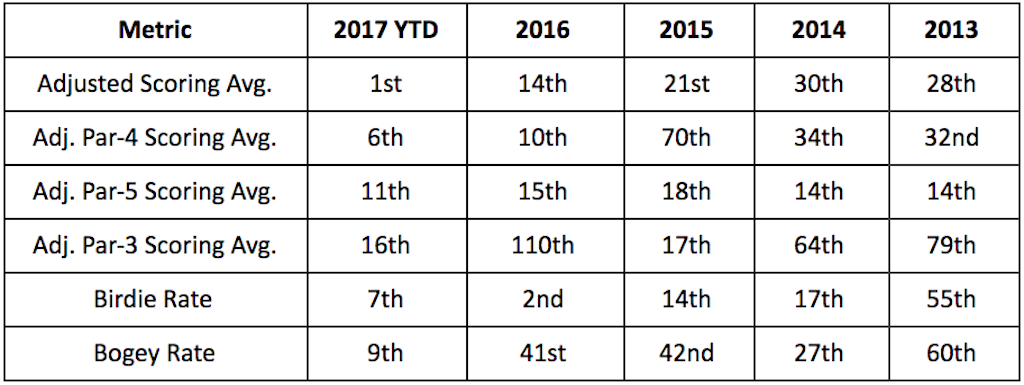
There are two big factors that are immediately noticeable in Fowler’s game in 2017:
- Fowler is playing the par-4’s the best he has ever played them.
- His Bogey Rate is the lowest it has ever been.
When it comes to scoring metrics, Par-4 Scoring Average and Bogey Rates strongly correlate to success on the PGA Tour. Par-4’s are critical because the average Tour player plays roughly eleven par-4’s per round. I also believe that a player’s performance on par-4’s gives a better indication of their all around game, as it requires a driver (which par-3’s do not). In par-5 performance, sheer power off the tee plays a major role. Par-4’s, on the other hand, require distance and accuracy off the tee, quality approach shots and strong putting — along with being able to get up and down when the player misses the green.
In terms of Bogey Rate, it correlates to success on the PGA Tour more than birdie rate. My conclusion is that bogey rate also includes double bogeys, which are killers to good rounds. Furthermore, not only does avoiding bogey mean being able to get up and down when you miss a green, but one of the best ways to avoid bogeys is to hit an approach shot so close to the hole that three putts are unlikely. If putts are not falling, at least the golfer is coming away with a par.
From a scoring perspective, these are two improvements that Fowler needed to make in order to jump into a discussion about the top-3 golfers in the world.
Driving

While much of the discussion about Fowler’s improvement revolves around his driving and shortening the length of the driver shaft to 43.5 inches, he was actually a better driver of the ball last season than he is so far this year. The reality is that Fowler has been a good driver of the ball in his career and any improvement is likely to be minute.
- Related: Rickie Fowler WITB 2017
Putting

On the putting green is where we see some marked improvement from Fowler in 2017. He has been an underrated putter over the years, but this season he has taken hit putting to the next level. He ranks 6th in Stroke-Gained Putting, 59 spots better than last year and 18 spots better than any of his previous four seasons
Short Game

Short-game performance used to be a major weakness for Fowler in his early years on Tour. He’s been excellent around the green for the previous three seasons, however, and he continues to be one of the best short game performers on the PGA Tour.
Approach Shots
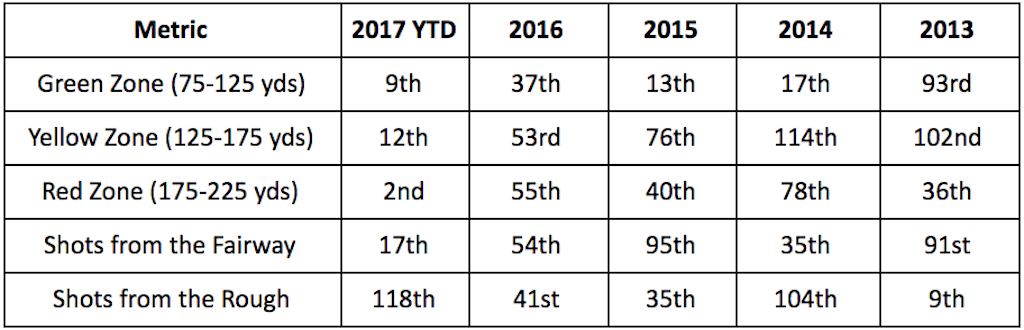
Approach shots are the part Fowler’s game that has improved the most. In particular, his play from the Yellow Zone (125-175 yards) and the Red Zone (175-225 yards) has improved. Those shots typically “count more” than shots from the Green Zone (75-125 yards), where he’s been excellent over the years. He’s also having the best season of his career on shots from the fairway.
All of these metrics bode very well for Fowler. His success this season is not smoke and mirrors; it has been supported by sustaining his strengths (driving, short game, Green Zone play) and making significant improvements in the weakest parts of his game (Yellow Zone play). Fowler’s game is right in line with shooting low scores and I like his chances at The Players Championship and for the rest of the season as he seeks the first major championship of his career. It wouldn’t surprise me if he gets it.



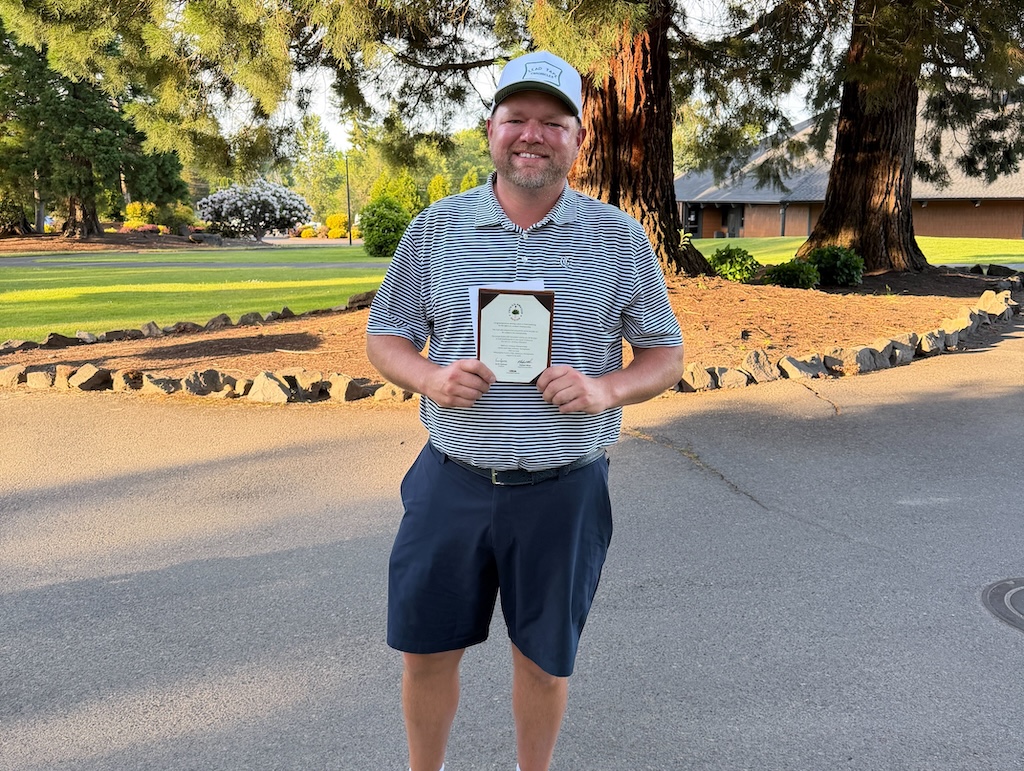
This past Monday, I played in the U.S. Amateur local qualifier at Rock Creek Country Club in Portland, Oregon. A full tee sheet from 7:30 a.m. to 1:55 p.m., the top 11 scores would make it to the U.S. Amateur final qualifying.
I teed off at 10:48 a.m.. With the 7:30 am tee time, you can get a feel for the leaders’ pace, and they were off and running on the challenging setup at Rock Creek.
View this post on Instagram
Getting to the highlight of the round on the par five 17th, a drive up the left side and 212 yards left to the front hole location. I took out a 5-iron with plans of middle of the green. The ball ended up 8 feet left of the hole, pin high. A slight downhill putt dropped in for an eagle 3 on the 17th. With the cut line looking to be anywhere from -2 to even par. This was the boost I had been waiting for all day.
With making par from the trees on 18, it was time to wait for a potential playoff with a posted score of one under par 71.
Three hours later, it was playoff time. 8 players for 6 spots. I made par on the playoff hole, which was good enough to advance to the U.S. Amateur final qualifying in July. USGA qualifiers sure deliver on all of the emotions in golf!
Club Junkie
Building my 2026 gamer WITB: Ranking the contenders and new putter projects – Club Junkie Podcast

The annual What’s In The Bag build is underway, and on this episode of Club Junkie, Brian breaks down the clubs currently leading the race for a spot in his 2026 gamer setup. From drivers and fairway woods to irons, wedges, and shafts, he ranks the equipment that’s performing best and explains what’s separating the front runners from the rest of the field.
Brian also heads into the workshop to discuss several putter projects currently on the bench. From head options and shaft choices to build ideas and testing plans, he shares what he’s working on and which putters could become serious contenders for the bag this season.
If you’re a gear junkie who loves equipment testing, club building, and the never-ending pursuit of the perfect setup, this episode is for you.
Follow Club Junkie:
Instagram: @clubjunkiepod
TikTok: @clubjunkiepod
Threads: @clubjunkiepod
X: @ClubJunkiePod
Club Junkie
Tour Edge Exotics mini driver review + TaylorMade Spider ZT Max first look – Club Junkie

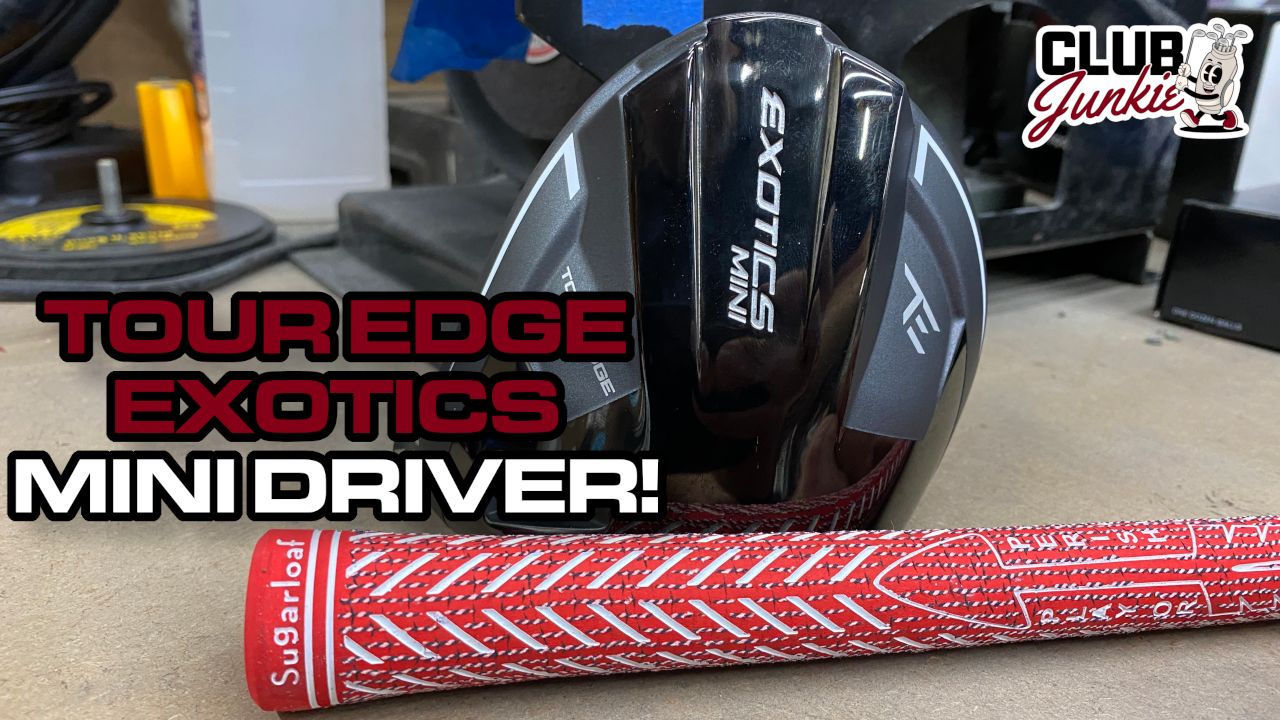
On this episode of Club Junkie, I put the new Tour Edge Exotics Mini Driver to the test and break down the performance, forgiveness, distance, and where it fits compared to a traditional driver or strong fairway wood. If you have been curious about adding a mini driver to the bag, this one is worth a look.
I also dive into the new TaylorMade Spider ZT Max putter that was recently spotted and discuss the growing zero torque putter trend. Plus, there is a closer look at the new Project X Titan Yellow shaft showing up on the PGA Tour and what makes it different from other profiles currently out there.

Justin Rose WITB 2026 (April): Full WITB breakdown with new McLaren irons

What’s the story behind Webb Simpson’s custom-stamped irons?

Memorial Tournament Tour Report: Rory McIlroy, Cameron Young switch up drivers, and more

Cadillac Championship Tour Report: Spieth’s sizable changes, McLaren Golf launches, and more

Russell Henley’s winning WITB: 2026 Charles Schwab Challenge

Kristoffer Reitan’s winning WITB: 2026 Truist Championship

J.T. Poston’s winning WITB: 2026 Memorial Tournament

Best irons 2026: Best irons overall, most forgiving irons, and more

Aaron Rai’s winning WITB: 2026 PGA Championship

Cameron Young’s winning WITB: 2026 Cadillac Championship


Bud Cauley WITB 2026 (June)
Bud Cauley had >14 clubs in his bag when photographed prior to the Memorial Tournament. Driver: Titleist GTS2 (8 degrees) Shaft: Fujikura...


Hannah Green WITB 2026 (June)
Driver: Titleist GTS3 (10 degrees, D4 SureFit setting) Shaft: Mitsubishi Chemical Diamana RB 53 S 3-wood: Titleist GT3 (15 degrees,...


Asterisk Talley WITB 2026 (June)
Driver: TaylorMade Qi4D (9 degrees) Shaft: Fujikura Ventus Blue 6 S 3-wood: TaylorMade Qi4D (16.5 degrees) Shaft: Fujikura Ventus Blue...


Brianna Do WITB 2026 (June)
Driver: Callaway Quantum Triple Diamond (9 degrees) Shaft: KBS PGW 3-wood: Callaway Elyte Titanium (15 degrees) Shaft: KBS PGW 5-wood:...
-
 Equipment6 days ago
Memorial Tournament Tour Report: Rory McIlroy, Cameron Young switch up drivers, and more
-
 News2 weeks ago
Russell Henley’s winning WITB: 2026 Charles Schwab Challenge
-
 Whats in the Bag4 days ago
J.T. Poston’s winning WITB: 2026 Memorial Tournament
-
 Equipment3 days ago
Best irons 2026: Best irons overall, most forgiving irons, and more
-

 Equipment1 week ago
Details on Jason Day’s latest prototype Avoda iron setup
-

 Equipment3 weeks ago
CJ Cup Byron Nelson Tour Report: Koepka and Kim’s newest putters finally get hot
-

 News2 weeks ago
Charles Schwab Challenge Tour Report: MacIntyre, Åberg and Spaun all switch putters, TaylorMade launches new Spider
-

 Equipment2 weeks ago
Details on J.J. Spaun’s surprise putter switch


Zapatoszx750.us
Oct 25, 2019 at 2:54 pm
I was recommended by one of my friends on facebook to watch out your article.
Great job bro… looking for more from yours.
However good luck with your channel…
google pixel 3a amazon
Oct 6, 2019 at 2:07 am
The real highlight of the Pixel 3A XL is its digicam.
where to eat
Sep 18, 2019 at 12:55 am
Real fantastic visual appeal on this site, I’d value it 10.
country inn and suites near me
Jun 28, 2019 at 5:59 pm
I think that is among the most significant info for
me. And i am happy reading your article. But should remark on some common things, The
web site style is ideal, the articles is actually
nice :D. Excellent job, cheers.
Sam
May 15, 2017 at 4:16 pm
Can’t win them all, it’s hard to win on the tour
MRC
May 10, 2017 at 6:00 pm
Well done Richie.
Stats like these are worth reading.
Keep up the good work.
Happyday_J
May 10, 2017 at 12:42 pm
Rich, your analysis has always been very eye opening and informative and for myself has definitely opened my eyes to a different way of play, so thank you for taking your time to write the articles. Question, when you state:
“Furthermore, not only does avoiding bogey mean being able to get up and down when you miss a green, but one of the best ways to avoid bogeys is to hit an approach shot so close to the hole that three putts are unlikely. If putts are not falling, at least the golfer is coming away with a par.”
Have you found that statistically it is often more advantageous to fire at the pin to have a closer next shot even if it results in more greens than leaving yourself a longer putt by playing safely to the wider side of the green? Is there a breakeven point?
Richie Hunt
May 10, 2017 at 4:46 pm
Generally, the best golf strategy is more offensive than defensive in nature and that includes firing at pins. Of course, it depends on the situation. I have to do more research on the subject, but I tend to determine 3 different likely positions I will end up if I miss the green and then label them as:
A = good % of getting up-and-down
B = moderate % of getting up-and-down
C = poor % of getting up-and-down
I plan to avoid ‘C’ at all costs and if there’s a decent chance that aiming at the flag can result in landing in that ‘C’ zone, I avoid doing so. A lot of the time the ‘C Zone’ is a front bunker since there is a higher likelihood of the front bunker plugging.
If you’re planning a round (practice round), I would take a handful of golf balls and hit chips from those areas and see how close you hit to the hole and you determine if they are a ‘A’, ‘B’ or ‘C’ Zone. I really believe that effective practice rounds are more about understanding what’s going on around the green more than anything else.
Hope this helps.
Happyday_J
May 10, 2017 at 6:26 pm
It does. Thanks again.
larrybud
May 10, 2017 at 7:20 am
Rich, what does “driver effectiveness” mean? What’s the metric?
Richie Hunt
May 10, 2017 at 4:34 pm
Driving Effectiveness is an algorithm that I use based off the following metrics:
1. Driving Distance on All Drives
2. Hit Fairway %
3. Avg. Distance to Edge of Fwy (on tee shots that miss the fairway)
4. Hit Fairway Bunker %
5. Missed Fairway – Other %
The algorithm runs the data thru the courses that the player has played and then ‘normalizes’ the data thru 35 of the courses played on Tour (this prevents players from masking their effectiveness off the tee by only scheduling events that fits their style of driving).
It’s basically a very advanced way of calculating ‘Total Driving’, but is far more accurate in determining actual driving skill as it relates to shooting lower scores.
Matty
May 9, 2017 at 8:56 pm
I know this is unrelated to the topic.
This is your first article since the Masters, and I would like to say well-played, sir. The top-3 in this year’s Masters were on your list of 20 players.
I’ll be looking forward to reading your Masters article every year.
Richie Hunt
May 10, 2017 at 4:25 pm
Thanks for the kind words.
The Dude
May 9, 2017 at 8:43 pm
great article!!
Patricknorm
May 9, 2017 at 12:24 pm
In the final round of this year’s Masters, Fowler shot 76. In the first three rounds Rickie was a putting machine, continually making those testy clean up putts for par. That magic deserted him in round 4 which lead to his poor finish relative to his fine play in the first three rounds.
The other issue is one of confidence and I’m wondering if Fowler lost that feeling during his fourth round. I’m not disputing his putting stat, the numbers don’t lie, but under pressure, if Fowler wants to win a major he needs to putt like a 6 th ranked putter in strokes gained.
I wonder what distance in the putting metric Fowler needs to improve upon. Over to you Rich.
Richie Hunt
May 9, 2017 at 3:44 pm
The golden number at ANGC is 50.
That’s 50 GIR.
Almost all of the winners at the Masters have hit at least 50 GIR in the event. IIRC, Rickie only hit 30 GIR after the 3rd round and just wasn’t hitting the ball that well and was likely to flame out come Sunday.
God Shamgod
May 10, 2017 at 9:09 am
I’ve not seen that before, but it is very interesting. Augusta does punish you badly if you are constantly trying to get up and down. Rickie was doing a great job of getting up and down the first three days, but that means he was sinking some 5-10ft pars which is hard to sustain.
Leon
May 9, 2017 at 9:14 am
All I know is that he could not close the deal on Sunday under the heat.
Dill Pickelson
May 10, 2017 at 2:25 am
you don’t know much, then