
Opinion & Analysis
Imagine what drivers will look like in 30 years

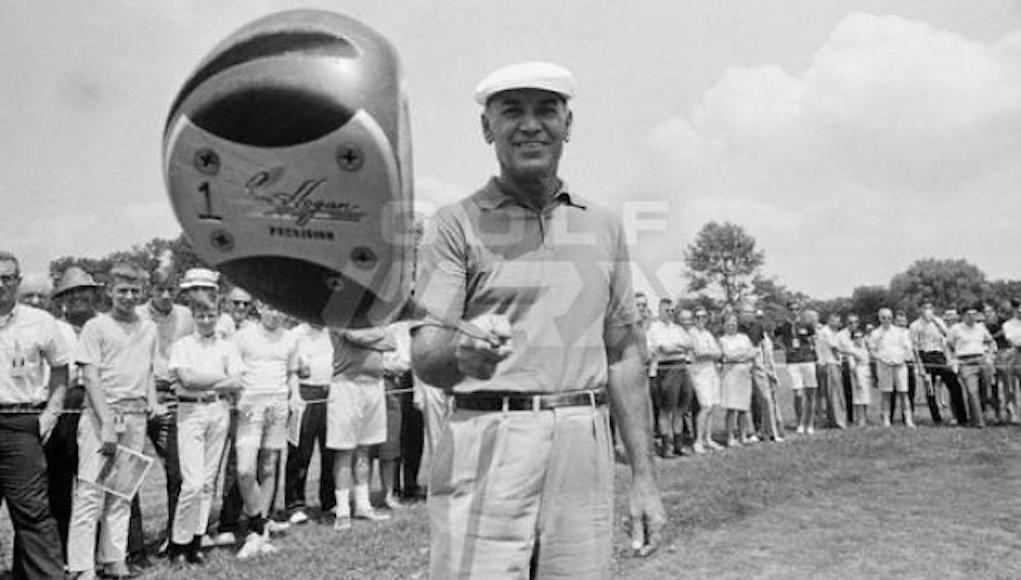
At one point in the early 1980s, Dan Pohl was the longest driver on the PGA Tour, averaging 274 yards with the Big Dog. As a teenage spectator watching from afar, I only became aware of him and his prodigious drives at the 1982 Masters. He tore up the back nine and managed to get into a playoff with Craig Stadler, the eventual winner. One thing I did pick up on was that he was using a “metal wood,” and the commentators were analyzing how much this ground-breaking new technology added to his length. I mean, a metal wood! It was the stuff of tomorrow; space-age cool!
This contradiction in terms (how can a wood be made of metal?) was offset by the results. Longer, straighter and more forgiving drives (see, the message hasn’t changed that much in nearly 35 years) resulted from this Pittsburgh Persimmon driver, as one brand so adeptly named it. The sheer audaciousness of this technological breakthrough!
It coincided with the advent of graphite shafts as well. Materials like boron and graphite were enabling club designers to make shafts lighter, stronger and longer, which in turn were delivering more distance with different ball flights. It must have been a golden time for golfing physicists and engineers. No longer were driver heads hand-carved out of blocks of persimmon. These hollow metal heads were designed on computers and cast in volume production lines with high yields and consistency. They offered strength and versatility. The marketing guys were shaping up for a field day. How could they lose?
Very quickly the golf shops filled up with these new metal woods. Persimmon had been around forever and still had its place for the purists, but once Ely Callaway got on board with his Big Bertha creation in 1991, we effectively waved goodbye to wooden-headed clubs forever.
I’d made my mind up that this was the future, so I set about as a 15-year-old aspiring golfer to acquire one. At that age it’s all about the shiny stuff, right? For the previous 12 months, I was learning the game with a Ben Hogan persimmon driver, my pride and joy. It was considered at the time “state of the art” with good quality persimmon and a fancy “speed slot.”
According to a Hogan ad, the slot was a “new and original idea to increase club head speed. This is not a theory, but a fact proven by a well-known physicist!” In terms of specs it said “1” on the sole; I had no idea what loft it was, only that it had a stiff shaft. I got it because it felt nice and I went off and learned how to hit it. The biggest modification I had was putting a new grip on it. The face of the club had four screws, and when you caught one the expression “hit it on the screws” became a very memorable feeling.
The Hogan stick was dropped quicker than a hot potato when I discovered metal. I soon managed to snag my first metal wood, a Titleist PT 9-degree driver from the second-hand bin in my local golf shop. I can’t remember exactly how much I paid for it, though; yes, it was that long ago. It had a steel shaft with a gleaming silver-and-grey color scheme. Man, that head was huge compared to my old Hogan. And from the day and hour I got the new metal driver, I never looked back to a wooden driver. I was sold. I was able to really wallop that thing, and over the next couple of years I nearly wore it out. I could even pick it off the fairway very successfully when my eye was in.
I quickly added a metal three wood — first from Titleist and then from Wilson Staff — and a metal five wood from Mizuno, which was an early predecessor to the hybrid. It had a small head and I was able to hit that thing from almost any lie. It had a gold boron shaft, too. To me, it was so high tech that it almost felt like cheating.
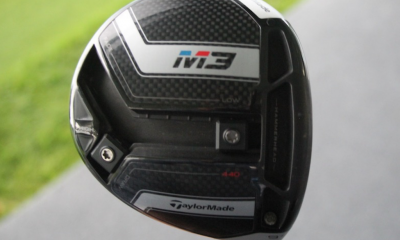
Over the years, I gamed the later offerings from Titleist as well as the latest clubs from TaylorMade, Callaway, Tour Edge, Cobra and Ping. I’ve tried most and make a point of keeping up to date with the latest technology. But how much more technical has it become? It’s interesting that Dan Pohl’s leading stats are now laughable compared with numbers of Tony Finau, who hits it an average of 314 yards per poke. That’s 40 yards folks!
There are now titanium heads, carbon heads, composite heads, face inserts, moveable weights, speed slots, and variable lofts and lies. Launch monitor technology has given us access to knowledge and a level of customization far beyond what we once knew. My specs from 20 years ago were “8.5 degrees with a stiff shaft.” Now I can print off a sheet that looks like it was generated by NASA highlighting my smash factor, spin rates, launch angles, ball speed and what I had for breakfast. A pro can now recommend the perfect club for me.
Over the last 10 years, the big buzz has been the spring-like effect known as Coefficient of Restitution (COR). Coupled with head size getting to space-hopper proportion, the authorities decided to step in to limit what was possible. So COR is now limited to 0.830 and the maximum club head size to 460 cubic centimeters in an attempt to “maintain the challenge of the game.”
It’s now all about materials science, manufacturing tolerances and optimizing shape for maximum speed. Scientists have access to nanomaterials that are used in aerospace construction. Callaway just co-designed their latest offering with help from Boeing! Moveable weight systems coupled with variable lofts and lies means we can tweak our drivers to our heart’s content if an effort to optimize a high-launch, low-spin, straight drive. We now also have our own custom colors and decals.
Imagine what our drivers will look like in 30 years! Oh, and then there is the “frigging golf ball”, as Jack so eloquently put it, but that’s a whole ‘nother rant!











This past Monday, I played in the U.S. Amateur local qualifier at Rock Creek Country Club in Portland, Oregon. A full tee sheet from 7:30 a.m. to 1:55 p.m., the top 11 scores would make it to the U.S. Amateur final qualifying.
I teed off at 10:48 a.m.. With the 7:30 am tee time, you can get a feel for the leaders’ pace, and they were off and running on the challenging setup at Rock Creek.
View this post on Instagram
Getting to the highlight of the round on the par five 17th, a drive up the left side and 212 yards left to the front hole location. I took out a 5-iron with plans of middle of the green. The ball ended up 8 feet left of the hole, pin high. A slight downhill putt dropped in for an eagle 3 on the 17th. With the cut line looking to be anywhere from -2 to even par. This was the boost I had been waiting for all day.
With making par from the trees on 18, it was time to wait for a potential playoff with a posted score of one under par 71.
Three hours later, it was playoff time. 8 players for 6 spots. I made par on the playoff hole, which was good enough to advance to the U.S. Amateur final qualifying in July. USGA qualifiers sure deliver on all of the emotions in golf!
Club Junkie
Building my 2026 gamer WITB: Ranking the contenders and new putter projects – Club Junkie Podcast

The annual What’s In The Bag build is underway, and on this episode of Club Junkie, Brian breaks down the clubs currently leading the race for a spot in his 2026 gamer setup. From drivers and fairway woods to irons, wedges, and shafts, he ranks the equipment that’s performing best and explains what’s separating the front runners from the rest of the field.
Brian also heads into the workshop to discuss several putter projects currently on the bench. From head options and shaft choices to build ideas and testing plans, he shares what he’s working on and which putters could become serious contenders for the bag this season.
If you’re a gear junkie who loves equipment testing, club building, and the never-ending pursuit of the perfect setup, this episode is for you.
Follow Club Junkie:
Instagram: @clubjunkiepod
TikTok: @clubjunkiepod
Threads: @clubjunkiepod
X: @ClubJunkiePod
Club Junkie
Tour Edge Exotics mini driver review + TaylorMade Spider ZT Max first look – Club Junkie

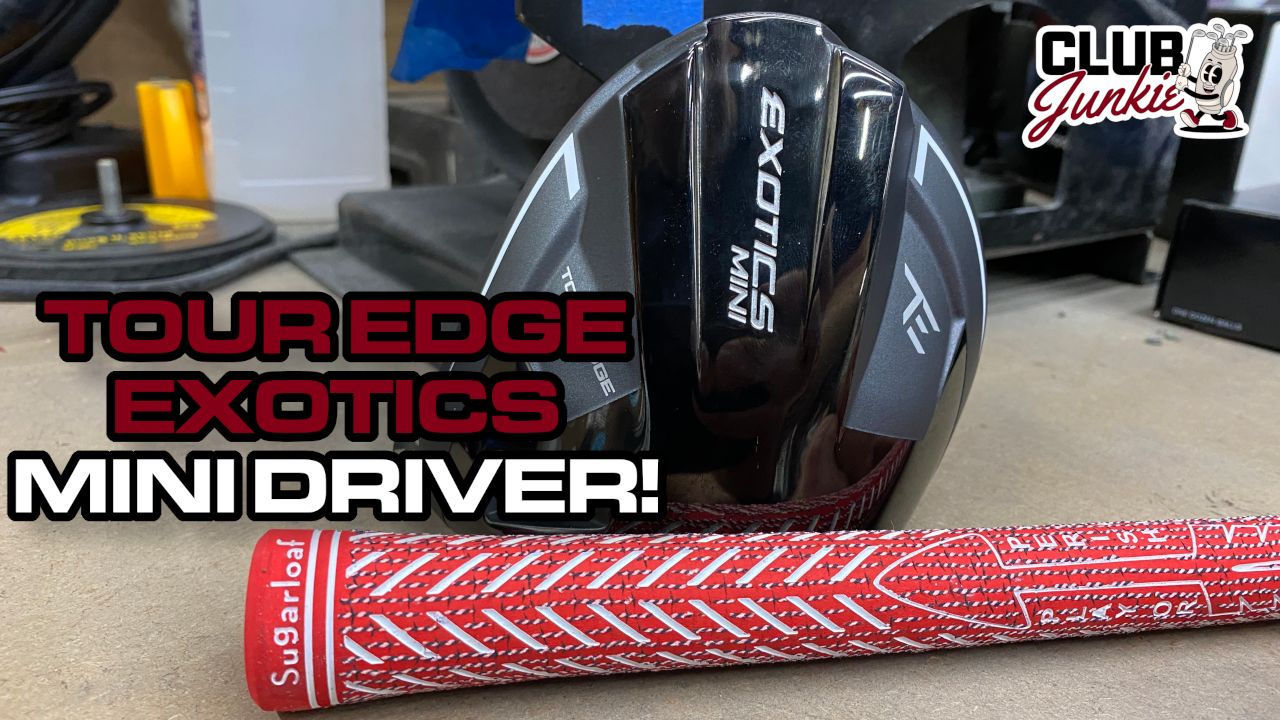
On this episode of Club Junkie, I put the new Tour Edge Exotics Mini Driver to the test and break down the performance, forgiveness, distance, and where it fits compared to a traditional driver or strong fairway wood. If you have been curious about adding a mini driver to the bag, this one is worth a look.
I also dive into the new TaylorMade Spider ZT Max putter that was recently spotted and discuss the growing zero torque putter trend. Plus, there is a closer look at the new Project X Titan Yellow shaft showing up on the PGA Tour and what makes it different from other profiles currently out there.

Justin Rose WITB 2026 (April): Full WITB breakdown with new McLaren irons

What’s the story behind Webb Simpson’s custom-stamped irons?

Memorial Tournament Tour Report: Rory McIlroy, Cameron Young switch up drivers, and more

Cadillac Championship Tour Report: Spieth’s sizable changes, McLaren Golf launches, and more

Russell Henley’s winning WITB: 2026 Charles Schwab Challenge

Kristoffer Reitan’s winning WITB: 2026 Truist Championship

Best irons 2026: Best irons overall, most forgiving irons, and more

J.T. Poston’s winning WITB: 2026 Memorial Tournament

Aaron Rai’s winning WITB: 2026 PGA Championship

Cameron Young’s winning WITB: 2026 Cadillac Championship


Bud Cauley WITB 2026 (June)
Bud Cauley had >14 clubs in his bag when photographed prior to the Memorial Tournament. Driver: Titleist GTS2 (8 degrees) Shaft: Fujikura...


Hannah Green WITB 2026 (June)
Driver: Titleist GTS3 (10 degrees, D4 SureFit setting) Shaft: Mitsubishi Chemical Diamana RB 53 S 3-wood: Titleist GT3 (15 degrees,...


Asterisk Talley WITB 2026 (June)
Driver: TaylorMade Qi4D (9 degrees) Shaft: Fujikura Ventus Blue 6 S 3-wood: TaylorMade Qi4D (16.5 degrees) Shaft: Fujikura Ventus Blue...

Brianna Do WITB 2026 (June)
Driver: Callaway Quantum Triple Diamond (9 degrees) Shaft: KBS PGW 3-wood: Callaway Elyte Titanium (15 degrees) Shaft: KBS PGW 5-wood:...
-
 Equipment6 days ago
Memorial Tournament Tour Report: Rory McIlroy, Cameron Young switch up drivers, and more
-
 News2 weeks ago
Russell Henley’s winning WITB: 2026 Charles Schwab Challenge
-
 Equipment3 days ago
Best irons 2026: Best irons overall, most forgiving irons, and more
-
 Whats in the Bag4 days ago
J.T. Poston’s winning WITB: 2026 Memorial Tournament
-
 Equipment1 week ago
Details on Jason Day’s latest prototype Avoda iron setup
-
 Equipment3 weeks ago
CJ Cup Byron Nelson Tour Report: Koepka and Kim’s newest putters finally get hot
-

 News2 weeks ago
Charles Schwab Challenge Tour Report: MacIntyre, Åberg and Spaun all switch putters, TaylorMade launches new Spider
-
 Equipment2 weeks ago
Details on J.J. Spaun’s surprise putter switch


Christosterone
Sep 1, 2016 at 3:08 pm
This:
http://www.persimmongolfclubs.com/acatalog/JOE-ANDERSON-DISPLAY-CLUB.jpg
Wm
Aug 27, 2016 at 10:31 am
In the not too distant future they will be marketing customized one piece drivers where the head will be fused to the shaft. The marketers will claim more stability and better feel.
RAT
Aug 26, 2016 at 10:15 am
They should take the gloves off and let it be NO LIMITS on balls and clubs !
Tim
Aug 26, 2016 at 12:54 am
I would bet there are still some big changes coming the the shafts. They are going to give us shafts that flex and kick straight as the club face with tips that stay on line no matter how fast or had you hit the ball. I would bet we may even see shafts that have some kind of adjust ability for the amateur golfer to play around with…and then there will be lots of grip advancements with adjust ability in them also….lots of things to work on for the OEM’s to keep us buying the next hot new gimmick.
Chuck
Aug 25, 2016 at 9:49 pm
Others have already mentioned it; I am not so sure that the difference between a 2016 driver and a 2046 driver will be so dramatic, as the difference between a 1980 driver and a 2010 driver.
Just think about it; for 30 years — more, actually — tournament/tour golf saw virtually NO change in drivers. In the 1970’s and 80’s, the absolute rage among tour players and elite amateurs was to find very pure MacGregor drivers designed by player/designer Toney Penna from the 1950’s. Just about every major championship in golf for four decades was won with a persimmon driver that was generally about 20 years old. Jack Nicklaus was winning majors in the 1970’s with a 3-wood from the 1950’s. Players used to say that it was harder to find a good driver than it was to find a good wife. And once they found a gamer, they played with it until it broke. Then they got it repaired. And only after a club broke about three more times would they ever give up on it.
J.B.
Aug 25, 2016 at 8:09 pm
Materials since will dictate the future of clubs. With additive manufacturing, the face will be a graduated blend of materials to optimize the sweet spot to make the entire face respond at the edge of the rules. Clubs will stop being a head and a shaft, rather a single piece. The single piece clubs will be so well weighted and aero optimized that grandma will be showing 95+ mph swing speeds.
Professor smizzle
Aug 26, 2016 at 11:06 am
This man knows^^^^
The future is not development of the head, but of an entire one piece club optimised for each player.
mhendon
Aug 25, 2016 at 3:13 pm
I doubt I’ll be alive 30 years from now much less still playing.
Justin
Aug 25, 2016 at 1:22 pm
Technology is allowing more players to play the game effectively. I truly believe that more golfers could have competed on tour back in the day had the technology been better. The technology helps the bombers hit it straighter and helps everyone catch up to the pure ball strikers.
Id be happy if everything stayed the way it was. I can deal with guys like Justin Thomas carrying the ball 300+ yards in the air, but when you have 50+ guys on tour start to carry it the distance that Dustin, Bubba, and Rory do now…. that’s when we need to worry.
dsd
Aug 25, 2016 at 12:50 pm
just remember in the 200 years prior to the last 30 years club tech remained relatively unchanged. Similar to any industrial revolution, I don’t expect leaps and bounds of improvements over and over again.
Bruce Ferguson
Aug 25, 2016 at 12:44 pm
I would love to see new designs which would incorporate the dispersion/distance characteristics of today’s 460cc driver in a 360-400cc head. Whatever the future has in store, please don’t let it be even larger driver heads!
Tom
Aug 25, 2016 at 7:47 pm
M2 3 wood
Jnak97
Aug 27, 2016 at 1:08 am
Aeroburner mini driver
alfriday
Aug 25, 2016 at 12:41 pm
The last thirty or so years have been a transformative period in driver tech. I doubt the next thirty will go through anything nearly as drastic. The size of drivers has been limited. The spring effect has been limited. Newer, more exotic materials are available, but most are cost prohibitive. As companies push the envelop on the set performance limits, the changes will by necessity be less drastic.
The Real Swanson
Aug 25, 2016 at 12:39 pm
“Imagine what clubs looked like 30 years ago.” would be a more appropriate title.
Johnnylongballz
Aug 25, 2016 at 12:09 pm
Hopefully they don’t look that much different than today’s drivers. I hope that the USGA/R&A can limit technology’s impact on the game, maybe even roll it back a bit.
KJ
Aug 25, 2016 at 5:32 pm
C’mon now. Manufacturers are always going to be looking for something new, something different. It happens in every single industry with all products, Its called capitalism and the chase for the almighty dollar.