
Opinion & Analysis
The Grandfather of Golf: Old Tom Morris

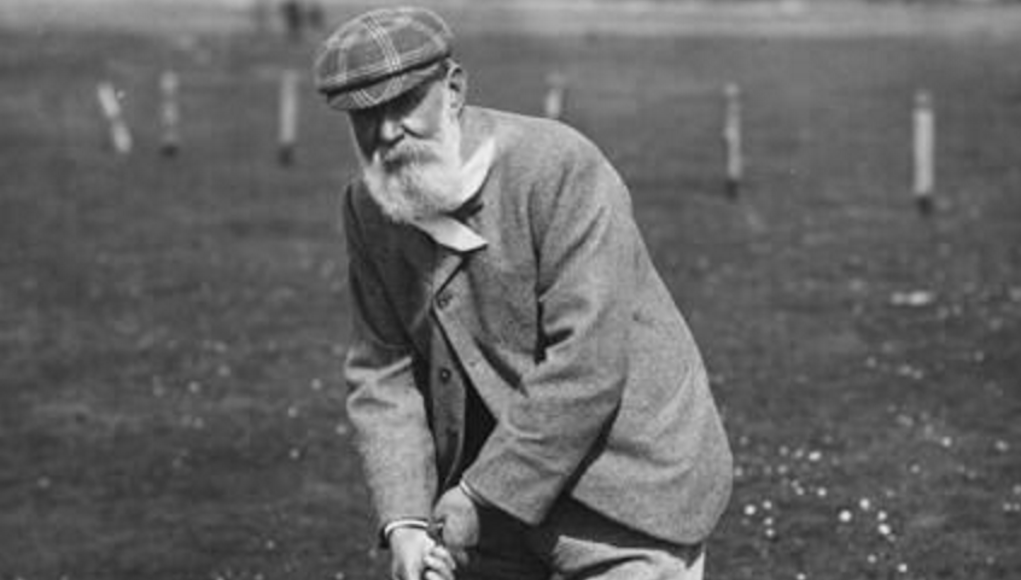
I don’t normally do requests, but a GolfWRX reader asked me to consider penning an article featuring Old Tom Morris.
I was lucky enough to be a member of the New Club in St. Andrews for a few years while I worked in Edinburgh in the 1990s. The club and the town hold fantastic memories for me, and I considered my time playing there to be a privilege. Just by being in St. Andrews you get a sense of history. Golf is in the blood; it is part of the fabric of the town. The game that is now played all around the world really stemmed from here, and we have Tom Morris to thank for that. He didn’t invent the game, but you would be hard pressed to find an individual who made such an impact. So I feel like I have a link to the town and the man, who spent a lot of his later life in the New Club.
Imagine working a 12-hour day, including some heavy laboring, digging out gorse, humping sand from the beach, mowing the greens, repairing clubs, making golf balls, giving lessons and then acting as starter for some foursome matches and allocating caddies. Sounds like a busy day, right? But then imagine playing three rounds of golf the very next day (12-hole rounds) to win The Open. Well that’s what Tom Morris did in the 1864, beating 15 other competitors at Prestwick in the fifth British Open. The prize then was £6, a good return when you considered the average annual wage was just twice that. But you can bet Old Tom was back at work the next day. In fact, that seemed like the norm for the average club professional back then. There was little glamour and a lot of hard work.
Thomas Mitchell Morris was born in 1821 in St. Andrews and he started caddying and playing golf from a young age. His father was a weaver, but that industry was in decline and unusually he was hired as an apprentice at age 14 to Allan Robertson, generally regarded as the world’s first professional golfer. He worked with Robertson for several years, making balls and clubs, caddying and playing as his partner in matches. The team became known as “The Invincibles,” and they were never formally beaten. By the time Morris was in his early 20s, he was the second-best player in St. Andrews. He eventually left St. Andrews after falling out with Robertson over golf ball technology (the feathery vs. the guttie), and took a job on the West coast of Scotland at Prestwick in 1851. He returned to St. Andrews in 1865 and took over as Keeper of the Links. He remained at St. Andrews until his death at 87 years old in 1908.
It seems a bit far-fetched but Tom and his peers really were the early pioneers of the professional game of golf. Up to that point, the game was only really for the well-heeled. The landed gentry played their own championships, but it was generally acknowledged that the hacks (the caddies) had much more talent for getting the ball around in fewer strokes. These players, though, were generally socially shunned for various reasons, including raggedy appearance and alcohol use. But over time, and supported by an appetite for gambling, the gentry supported the early advances of the professional game. They found sport backing their favorites to do battle in exhibition matches. Tens of thousands would turn up to watch these matches, with partisan crowds and lots of gambling. Tom was at the right place at the right time and had the perfect combination of talent, hard work and personality to make it happen.
As a golfer, Tom was at least the equal of any man living for a great number of years. Although the first few Opens were rather limited in entrants, his achievements still stand the test of time. For the record, Tom won the Open Championship four times: in 1861, 1862, 1864 and 1867. He still holds the record of the oldest winner at 46 in 1867. And with his son, Young Tom Morris, he holds the record as being part of the only father/son pair to finish as winner and runner up (in 1869).
Tom would have won a lot more if he’d been a better putter. He suffered terribly from the yips, and it seemed to have cost him dearly. Put him 12 feet from the hole and not a better holer-out could be named. But his Achilles heel was 18 inches to two feet. In later life, he improved, but at one point it was a heavy reputation he had to shoulder. Even his son and foursome partner Young Tom was quoted as saying, in jest, “Gin the hole was a yaird nearer him, my fawther wad be a guid putter.” And a practical joker in his day, Wolfe Murray once went so far as to address a letter to “The Misser of Short Putts, Prestwick,” which the postman took straight to the champion.
Not only was he the best player in his day, he was a visionary in terms of club design, course design and green keeping. His use of sand on the greens was discovered by accident. He was carrying sand from the beach to fill a bunker when the wheelbarrow broke and his load was spilled out over a green. He brushed most of it up and got on with his task, but in the following few weeks he discovered a lot of growth in the area where the sand was. Accidentally, he’d invented top dressing. And he also introduced the concept of actively managing hazards (in the past, bunkers and the like were largely left to their own devices, becoming truly “hazardous”).
It’s all too easy to refer to people these days as legends. That status is given very freely, especially in sport and it dilutes the really great ones. But Old Tom was truly one of the legends of the game.
If this story has whetted your appetite, I can recommend a great book: Tommy’s Honor: The Story of Old Tom Morris and Young Tom Morris, Golf’s Founding Father and Son by Kevin Cook. I hear they are making it into a movie, and I hope they do. It should be great.



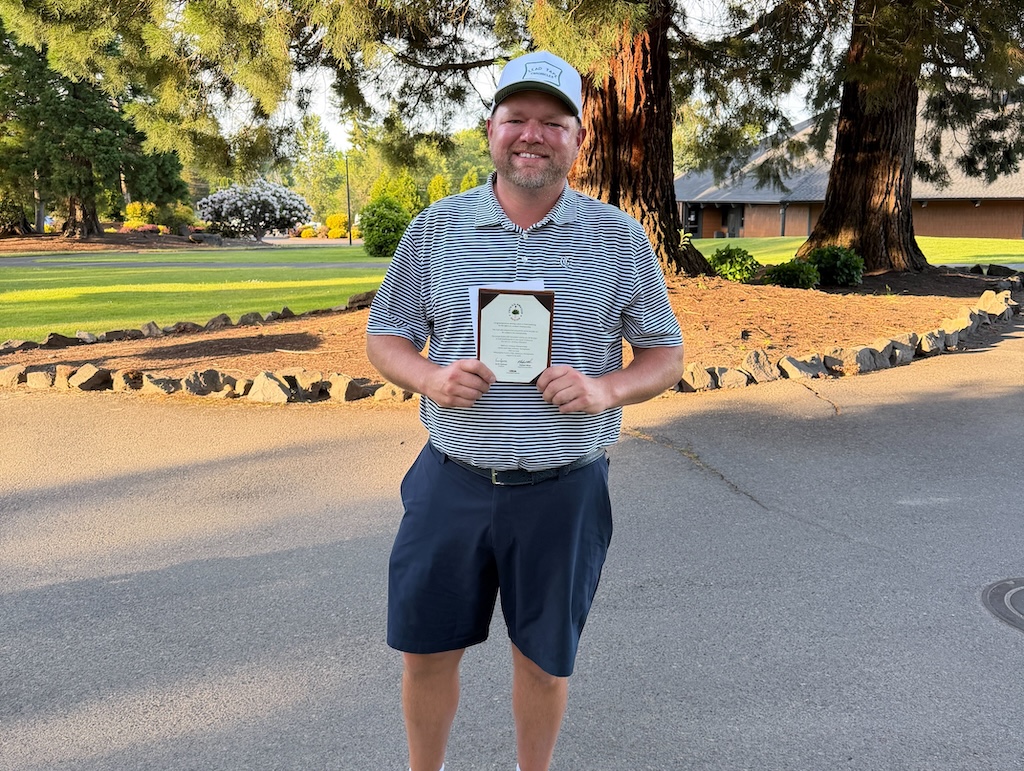
This past Monday, I played in the U.S. Amateur local qualifier at Rock Creek Country Club in Portland, Oregon. A full tee sheet from 7:30 a.m. to 1:55 p.m., the top 11 scores would make it to the U.S. Amateur final qualifying.
I teed off at 10:48 a.m.. With the 7:30 am tee time, you can get a feel for the leaders’ pace, and they were off and running on the challenging setup at Rock Creek.
View this post on Instagram
Getting to the highlight of the round on the par five 17th, a drive up the left side and 212 yards left to the front hole location. I took out a 5-iron with plans of middle of the green. The ball ended up 8 feet left of the hole, pin high. A slight downhill putt dropped in for an eagle 3 on the 17th. With the cut line looking to be anywhere from -2 to even par. This was the boost I had been waiting for all day.
With making par from the trees on 18, it was time to wait for a potential playoff with a posted score of one under par 71.
Three hours later, it was playoff time. 8 players for 6 spots. I made par on the playoff hole, which was good enough to advance to the U.S. Amateur final qualifying in July. USGA qualifiers sure deliver on all of the emotions in golf!
Club Junkie
Building my 2026 gamer WITB: Ranking the contenders and new putter projects – Club Junkie Podcast

The annual What’s In The Bag build is underway, and on this episode of Club Junkie, Brian breaks down the clubs currently leading the race for a spot in his 2026 gamer setup. From drivers and fairway woods to irons, wedges, and shafts, he ranks the equipment that’s performing best and explains what’s separating the front runners from the rest of the field.
Brian also heads into the workshop to discuss several putter projects currently on the bench. From head options and shaft choices to build ideas and testing plans, he shares what he’s working on and which putters could become serious contenders for the bag this season.
If you’re a gear junkie who loves equipment testing, club building, and the never-ending pursuit of the perfect setup, this episode is for you.
Follow Club Junkie:
Instagram: @clubjunkiepod
TikTok: @clubjunkiepod
Threads: @clubjunkiepod
X: @ClubJunkiePod
Club Junkie
Tour Edge Exotics mini driver review + TaylorMade Spider ZT Max first look – Club Junkie

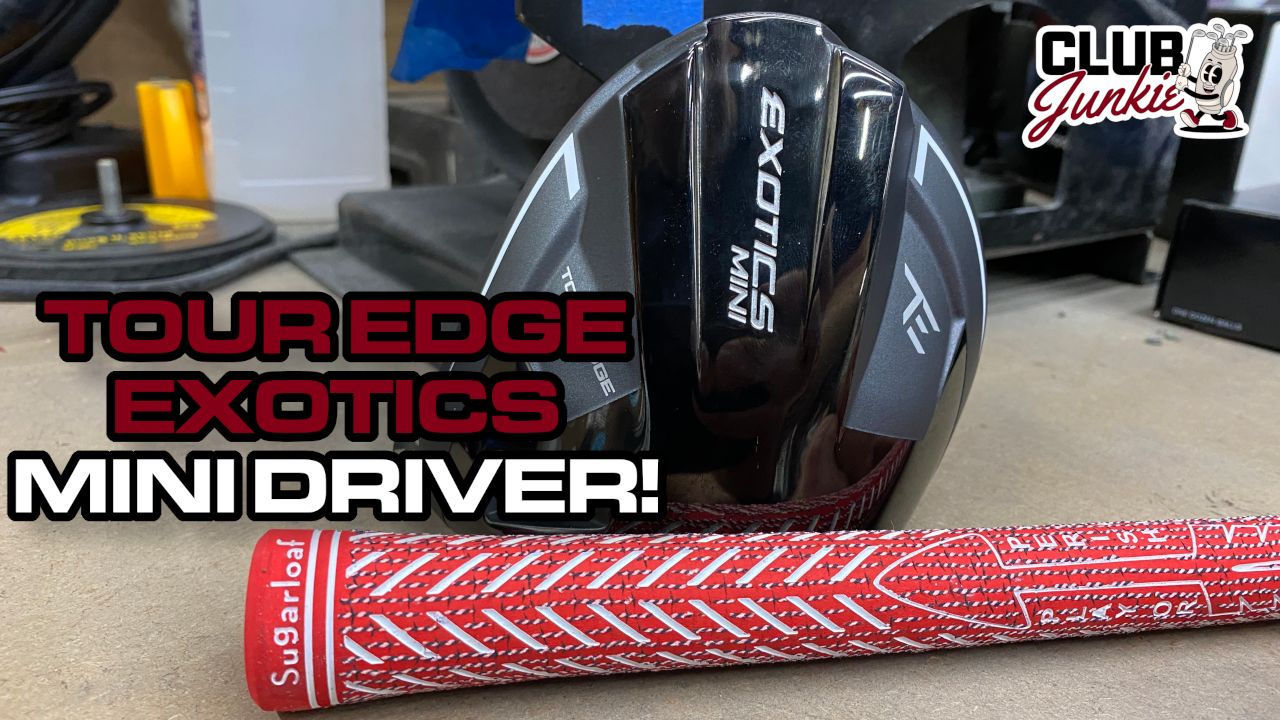
On this episode of Club Junkie, I put the new Tour Edge Exotics Mini Driver to the test and break down the performance, forgiveness, distance, and where it fits compared to a traditional driver or strong fairway wood. If you have been curious about adding a mini driver to the bag, this one is worth a look.
I also dive into the new TaylorMade Spider ZT Max putter that was recently spotted and discuss the growing zero torque putter trend. Plus, there is a closer look at the new Project X Titan Yellow shaft showing up on the PGA Tour and what makes it different from other profiles currently out there.

Justin Rose WITB 2026 (April): Full WITB breakdown with new McLaren irons

What’s the story behind Webb Simpson’s custom-stamped irons?

Memorial Tournament Tour Report: Rory McIlroy, Cameron Young switch up drivers, and more

Cadillac Championship Tour Report: Spieth’s sizable changes, McLaren Golf launches, and more

Russell Henley’s winning WITB: 2026 Charles Schwab Challenge

Kristoffer Reitan’s winning WITB: 2026 Truist Championship

Best irons 2026: Best irons overall, most forgiving irons, and more

J.T. Poston’s winning WITB: 2026 Memorial Tournament

Aaron Rai’s winning WITB: 2026 PGA Championship

Cameron Young’s winning WITB: 2026 Cadillac Championship


Bud Cauley WITB 2026 (June)
Bud Cauley had >14 clubs in his bag when photographed prior to the Memorial Tournament. Driver: Titleist GTS2 (8 degrees) Shaft: Fujikura...


Hannah Green WITB 2026 (June)
Driver: Titleist GTS3 (10 degrees, D4 SureFit setting) Shaft: Mitsubishi Chemical Diamana RB 53 S 3-wood: Titleist GT3 (15 degrees,...


Asterisk Talley WITB 2026 (June)
Driver: TaylorMade Qi4D (9 degrees) Shaft: Fujikura Ventus Blue 6 S 3-wood: TaylorMade Qi4D (16.5 degrees) Shaft: Fujikura Ventus Blue...

Brianna Do WITB 2026 (June)
Driver: Callaway Quantum Triple Diamond (9 degrees) Shaft: KBS PGW 3-wood: Callaway Elyte Titanium (15 degrees) Shaft: KBS PGW 5-wood:...
-
 Equipment6 days ago
Memorial Tournament Tour Report: Rory McIlroy, Cameron Young switch up drivers, and more
-
 News2 weeks ago
Russell Henley’s winning WITB: 2026 Charles Schwab Challenge
-
 Equipment3 days ago
Best irons 2026: Best irons overall, most forgiving irons, and more
-
 Whats in the Bag4 days ago
J.T. Poston’s winning WITB: 2026 Memorial Tournament
-

 Equipment1 week ago
Details on Jason Day’s latest prototype Avoda iron setup
-
 Equipment3 weeks ago
CJ Cup Byron Nelson Tour Report: Koepka and Kim’s newest putters finally get hot
-

 News2 weeks ago
Charles Schwab Challenge Tour Report: MacIntyre, Åberg and Spaun all switch putters, TaylorMade launches new Spider
-

 Equipment2 weeks ago
Details on J.J. Spaun’s surprise putter switch


doesnotno
Jul 1, 2016 at 9:06 am
Love the postman story!
Andra Kirkcaldy (another old St Andrean of the era) once received a letter from Ben Sayers (clubmaker, runner up in the Open 1888) addressed to ‘Andra Kirkcaldy, Hell Bunker, St Andrews’.
Jason
Jul 1, 2016 at 12:00 am
“Tommy’s Honor” was a book that I could not put down. Fabulous.
Greg V
Jun 30, 2016 at 4:11 pm
Fine article, Mark.
If you want to read a comprehensive book on Morris, “Tom Morris of St Andrews: Colossus of Golf” is a wonderful book.
RedX
Jun 30, 2016 at 8:21 pm
Agreed Greg.
“Tommy’s Honor” as Mark recommends is also a good read.
I can’t comment (yet) as to the film adaptation released this year.
I fear Chamblee would refer to Old Tom as having “never won on the PGA Tour” and being “incapable of contenting with strokes gained putting stats like those!”
Thanks for the reminder Mark.