
Opinion & Analysis
What’s so difficult about Oakmont, anyway?

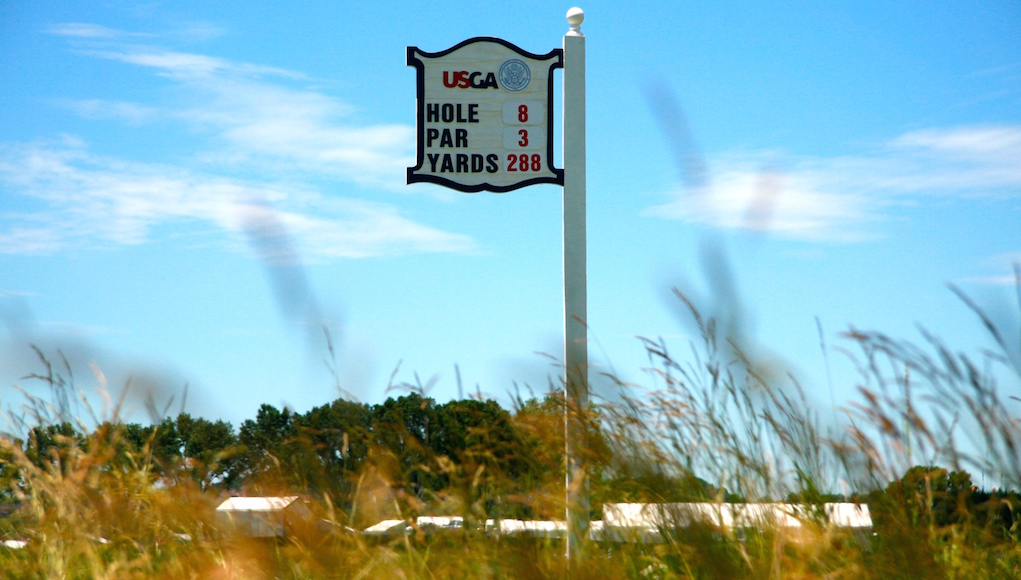
It’s a golf tradition unlike any other; players complaining about the U.S. Open setup ahead of the event. The course is either too long, too dried out, the rough too long, the greens too fast, or some combination of all those factors. And golf fans relish in hearing the complaints. It’s one of the few times each year when the best players in the world make fools of themselves when competing against par.
There’s something different about how players talk about this year’s U.S. Open at Oakmont Country Club, though. When they talk about the setup, or how how difficult the course is, there’s legitimate fear in their eyes. Every year the media, course members and players predict an over-par winning score, but at Oakmont you can sense that everyone is serious about it.
What makes Oakmont so difficult? I traveled there to find out, and asked the fans what they believe makes the course so treacherous.
What bunkers?
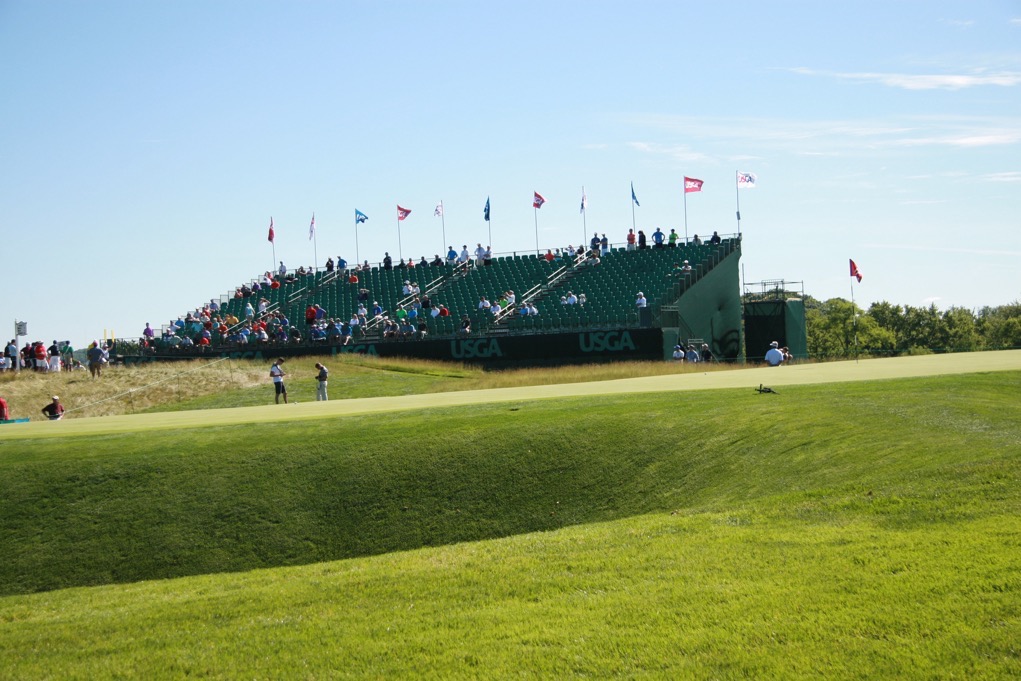
A look at the “Big Mouth” bunker guarding No. 17 green. You can’t even tell there’s sand in it!
“The biggest problem is that you can’t even see some of these bunkers they’re so deep,” one fan said.
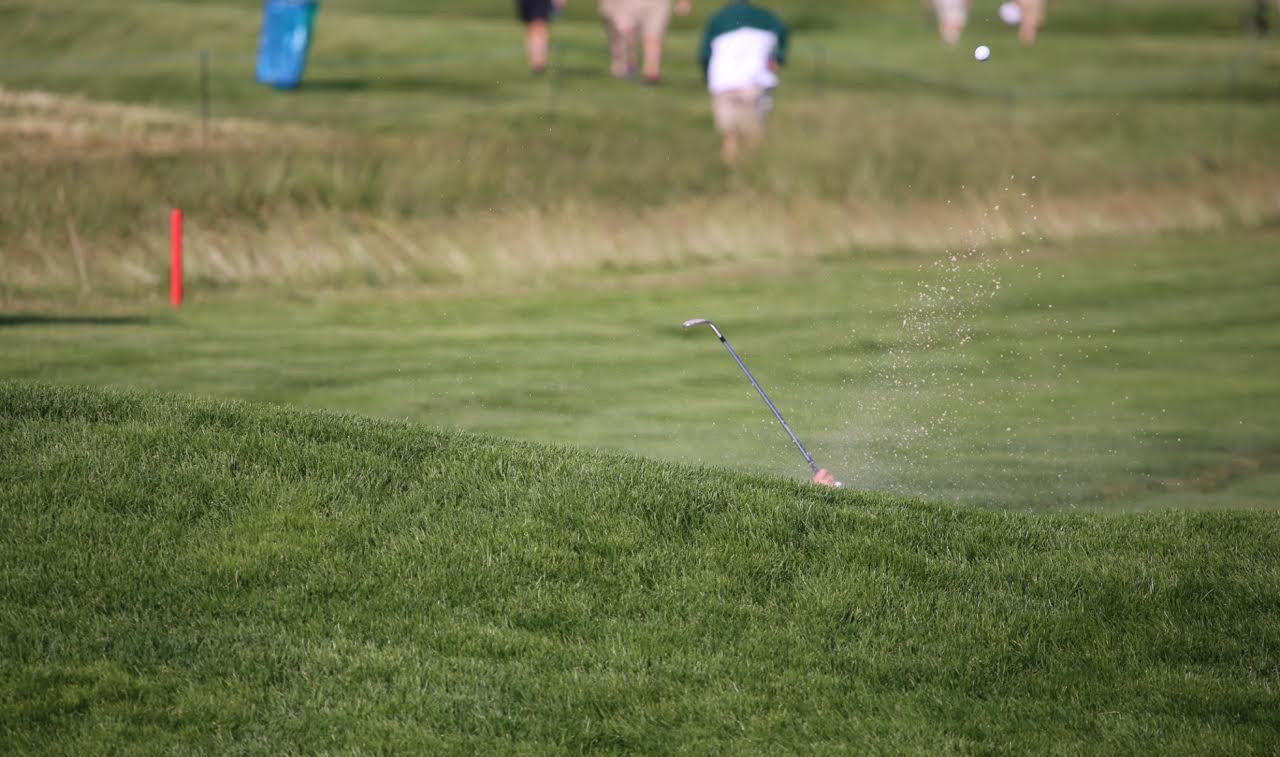
While U.S. Open contestants will know where all the bunkers are located, they won’t be able to see many of them from the tee or from the fairway. And the bunkers they can’t see are some of the deepest, most penalizing bunkers on the course.
“I’d be stuck in some of these bunkers and would never get out,” a fan said.
-

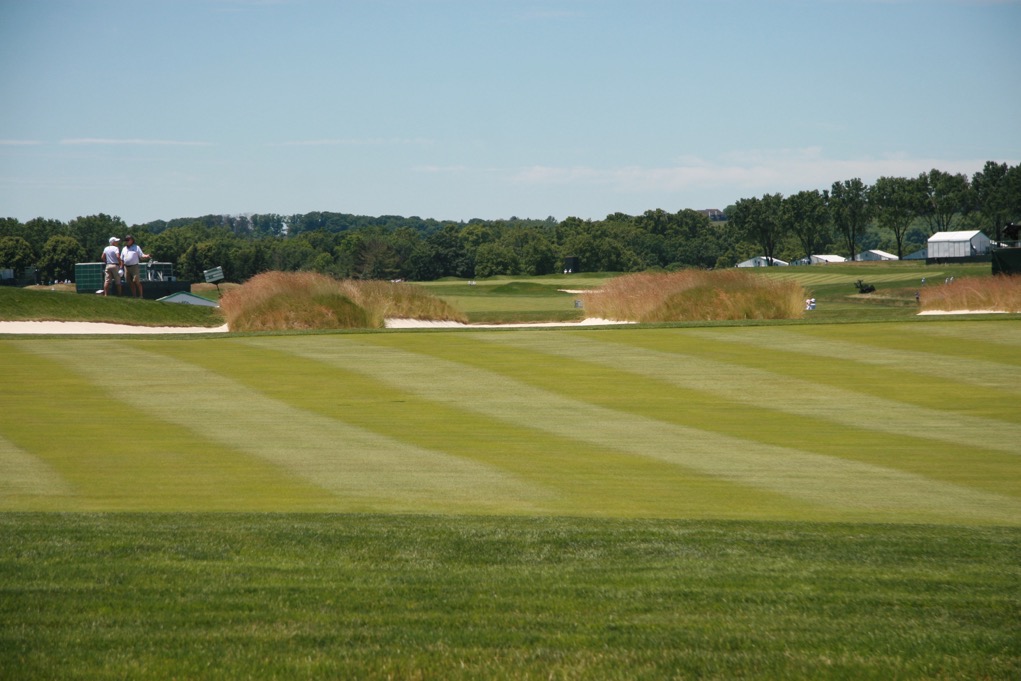
- Church Pews, hole No. 3
-

- The mounds in the Church Pew bunker are taller than they appear on video.
-

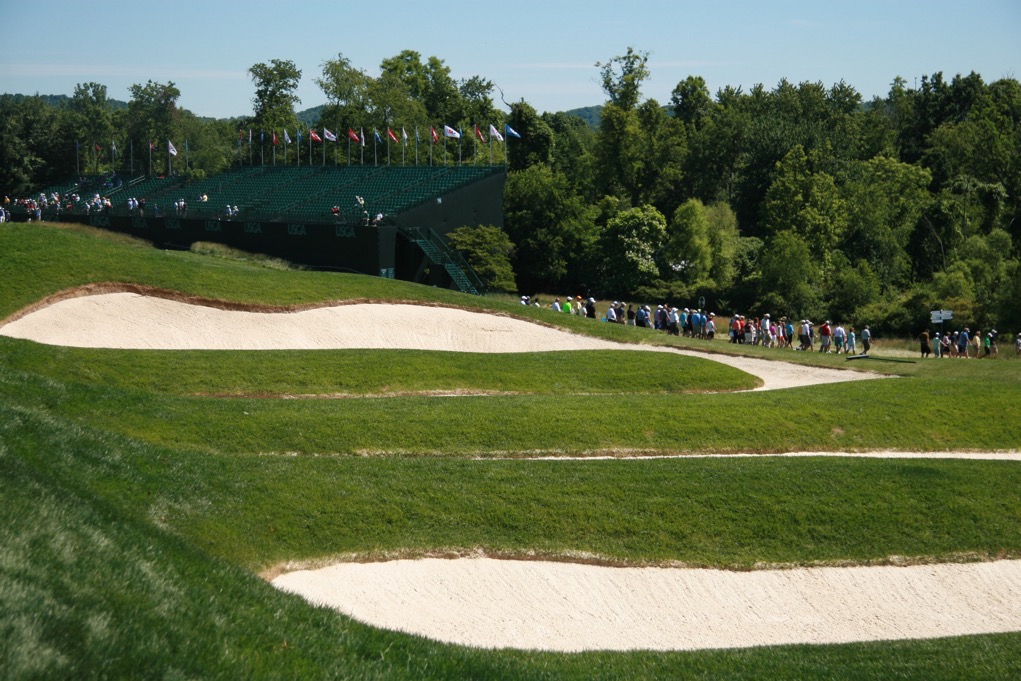
- Church Pew bunker, hole No. 15
-

- A bunker guarding the green at hole No.6, with a lip nearly taller than this player.

And when you do see the bunkers, like the Church Pews on the left of Nos. 3 and 4, or the Church Pews on the left of No. 15 — actually most, of the 200-plus bunkers on the course — you wish you hadn’t.
The green complexes are… complex

The green at hole No. 18.
On No. 2 green, I watched players, caddies, coaches and whoever else was in the practice-round entourage gather at the center of that green, rolling and dropping golf balls to see how they would react. On multiple occasions, I watched someone drop a golf ball in the center of the green only to watch it slowly funnel off of the green down into the fairway.
“One second you’re putting, and then all the sudden you’re chipping,” one fan told me. “For me, I’d be putting, putting and then chipping,” his friend responded.

Another coach in disbelief of the speed of No. 2 green.
The green complexes are firm, diabolical, and just purely fast. They’re rumored to be running at a 14 on the Stimpmeter. That’s unheard of for any golf course that isn’t named Augusta, which doesn’t release its green speeds.
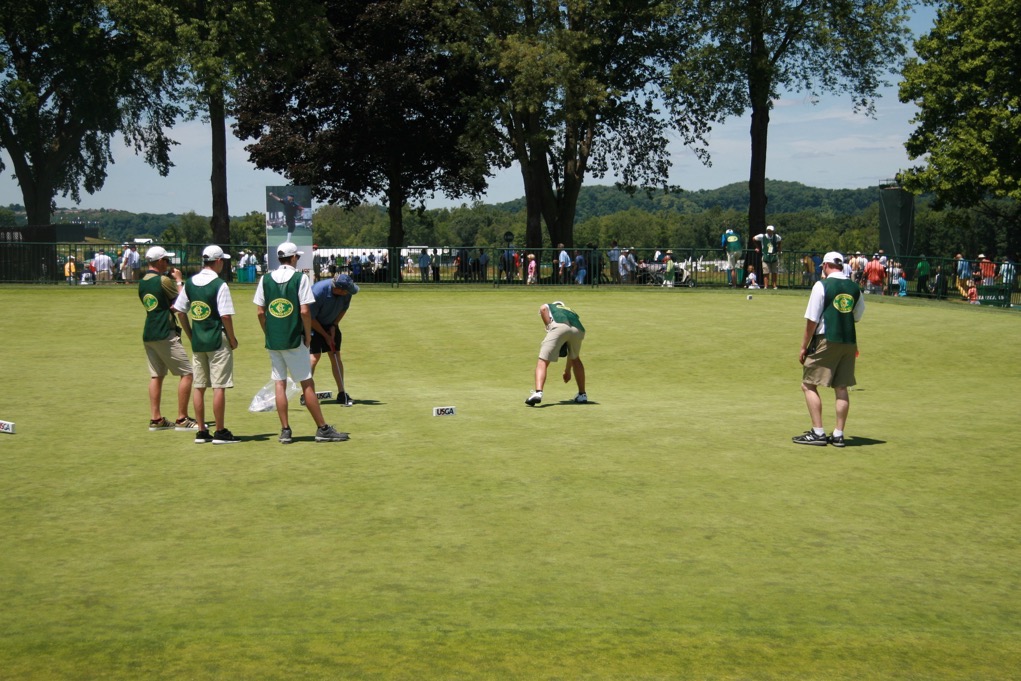
A fan putts on the replica of Oakmont’s 18th green, while a caddie gives him the read.
To give fans an experience of the greens at Oakmont, the USGA set up an exact replica of the 18th green for fans to test out their strokes. Oakmont caddies were stationed at the greens to help out.
“It’s like putting on a sloped basketball court,” one fan told me.
Maybe Rory McIlroy wasn’t kidding when he said he’d rather have a 30-footer uphill than an 8-footer downhill.
Where art thou iron byron?
“I could bring a portable Iron Byron out here and not hit every fairway,” a fan told me.
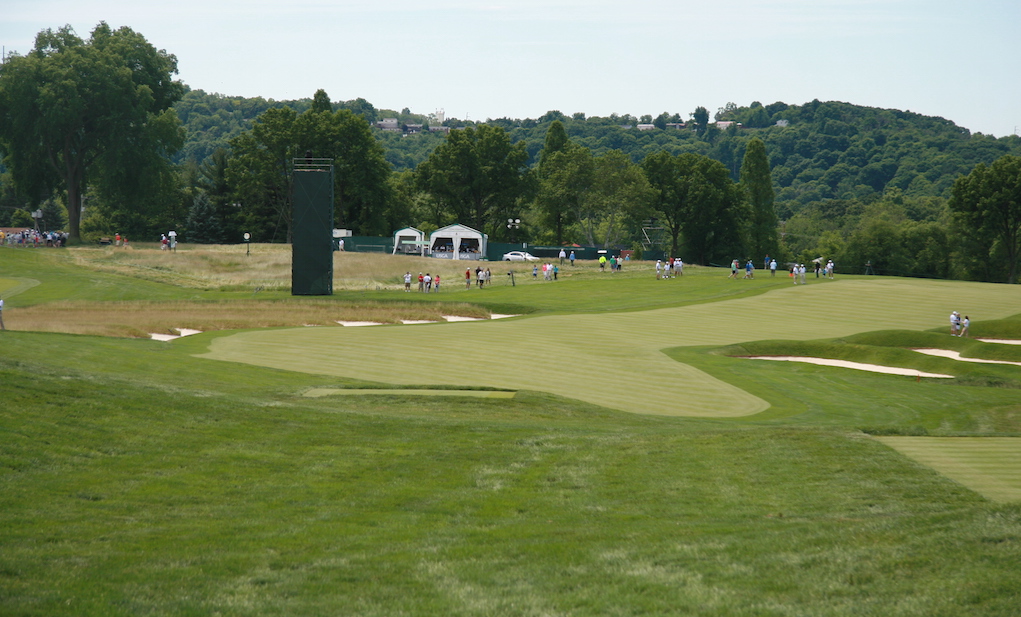
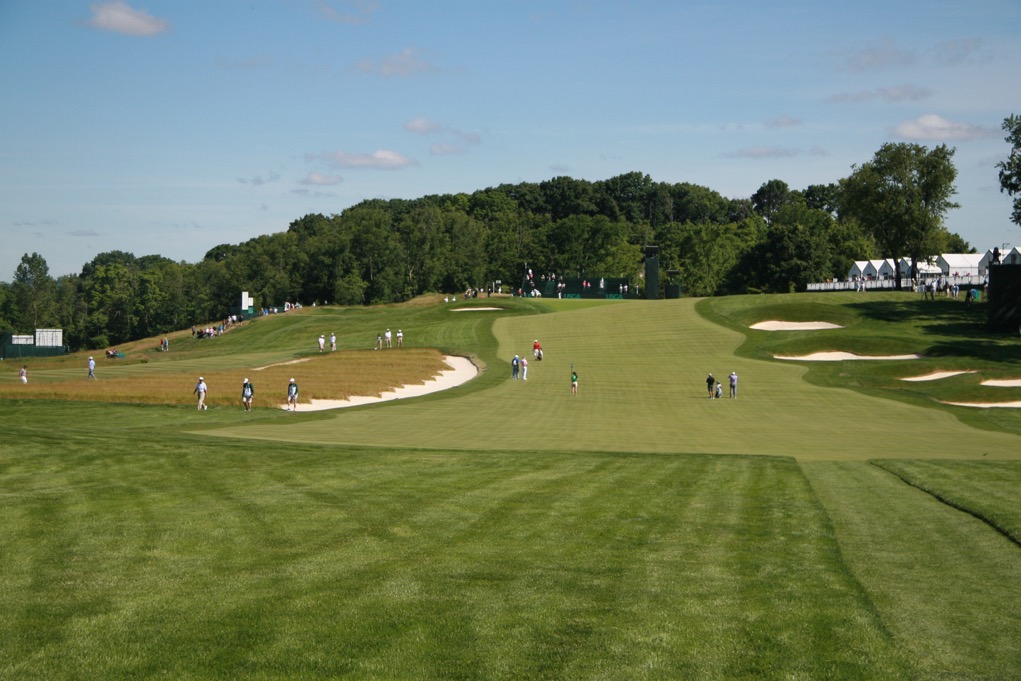
Hole No. 3. The tee box sits roughly 100 yards behind where I took this photo.
Oakmont is long, a par-70 that will play around 7,200 yards depending on the tees, but it’s not THAT long compared to some of the other U.S. Open venues, or even regular Tour stops. It’s how tight some of the landing areas are that makes it play longer. It’s a must that players keep their ball in the fairway due to long rough and deep bunkers. That’s why you’ll hear many of them saying they’ll only use driver off the tee 4-8 times each round, opting for more control with long irons, fairway woods woods and hybrids off the tees.
“It’s one of those courses where if you drink a few too many beers, you could be walking in the fairway, stumble just a little, and end up in the rough. The fairways are just stupid tight,” said one fan.
He may have already had a few beers that day, as well.
The blind leading the blind
“I didn’t realize how much elevation change was at this place,” a fan said. “You can hardly see anything on some holes.”
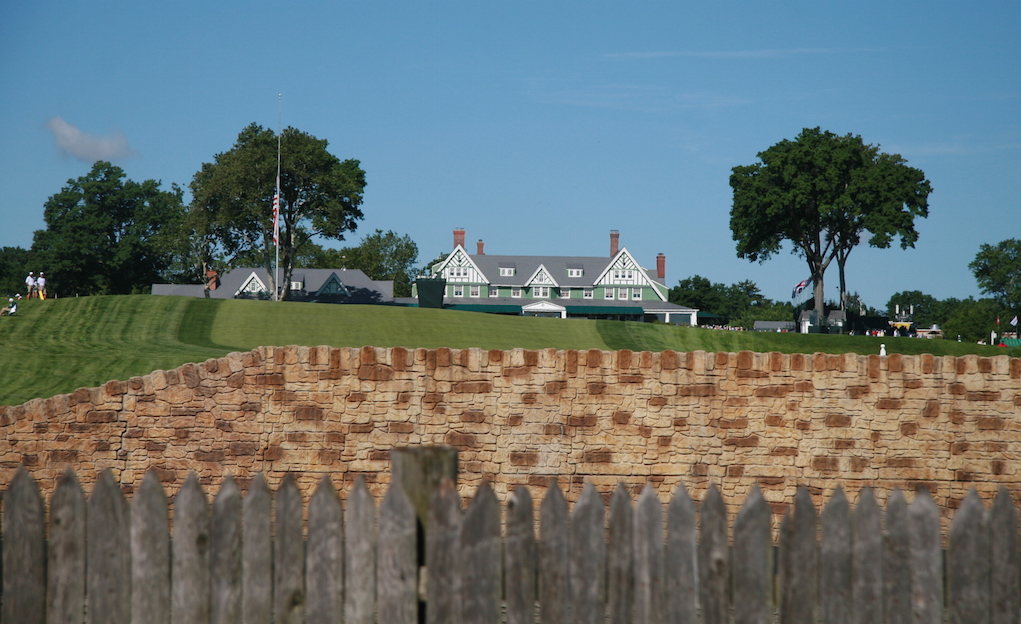
A look at No. 9 fairway from across the road. The players can see even less from the tee box.
Like the bunkers, it’s difficult to see many of the landing areas from the tees at Oakmont, especially on Nos. 1, 5, 9, 15 and 17. That means players must put their ultimate trust in their preparation and the target lines they’ve established prior to the event.
The Hardest Hole
I got a different answer to the question “What do you think is the hardest hole out here?” from nearly everyone I asked, but the most common answers were holes 1, 2, 7, 8 and 18.
No. 1 (Par 4, 482 yards)
Why not? A 118-yard putt on the first hole at #Oakmont. pic.twitter.com/GRU0E29Zvu
— Guy Cipriano (@GCIMagazineGuy) April 25, 2016
This video says it all.
No. 2 (Par 4, 340 yards)

See above: One second you’re rolling balls onto the green, the next, you’re following the balls as they roll off the green.

No. 7 (Par 4, 479 yards)
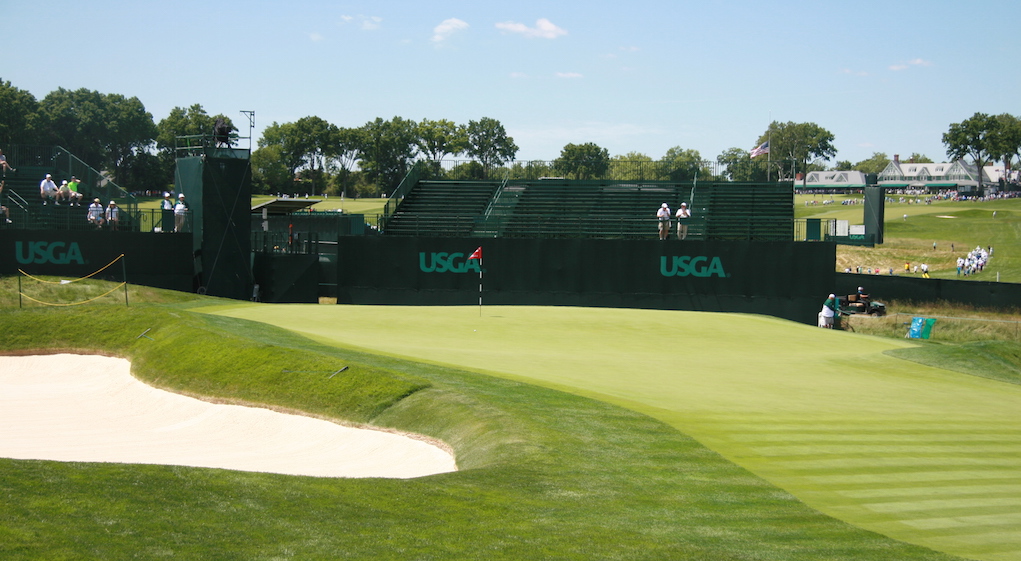
“That hole seems too unfair from all the way back where they need to play from,” said a fan, shaking his head.
I’m sure some of the players agree, especially when you consider how the green slopes hard from left-to-right.
No. 8 (Par 3, 288/250 yards)
“I’d probably hit driver-6 iron here, and then have a short chip on.”
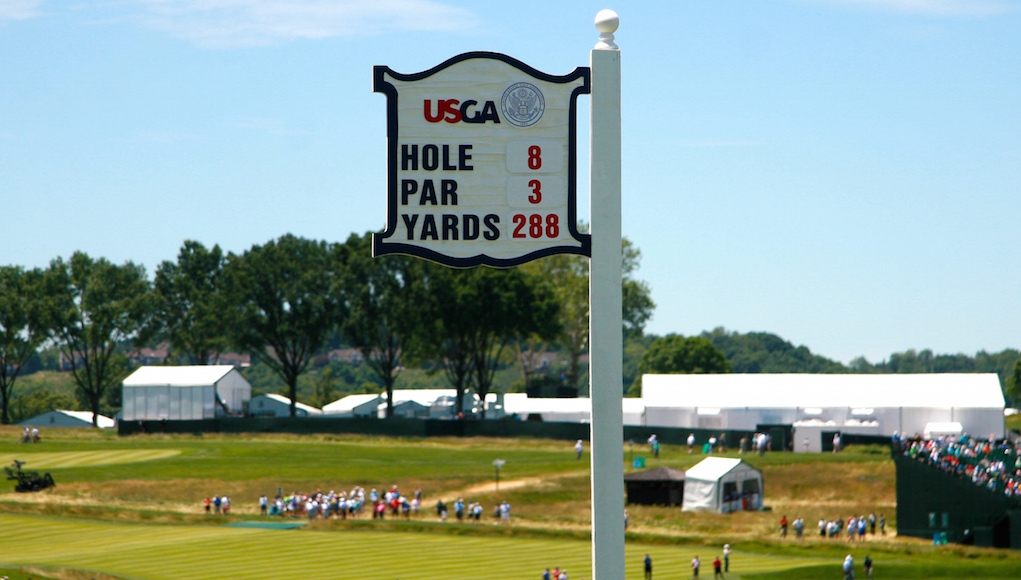
This 288-yard par 3, or 250 yards, depending what tee box the USGA uses that round, is cause of terror for most fans who collect on that tee box. But the truth is, most of the players hit hybrids and long irons. Angel Cabrera hit a 6-iron (gasp) during Monday’s practice round.
“The ball gets a nice ground hook once it lands in front of the green, so you only have to carry it about 250,” one caddie said.
A 250-yard 6-iron is still a big hit, regardless.
No. 18 (Par 4, 484 yards)
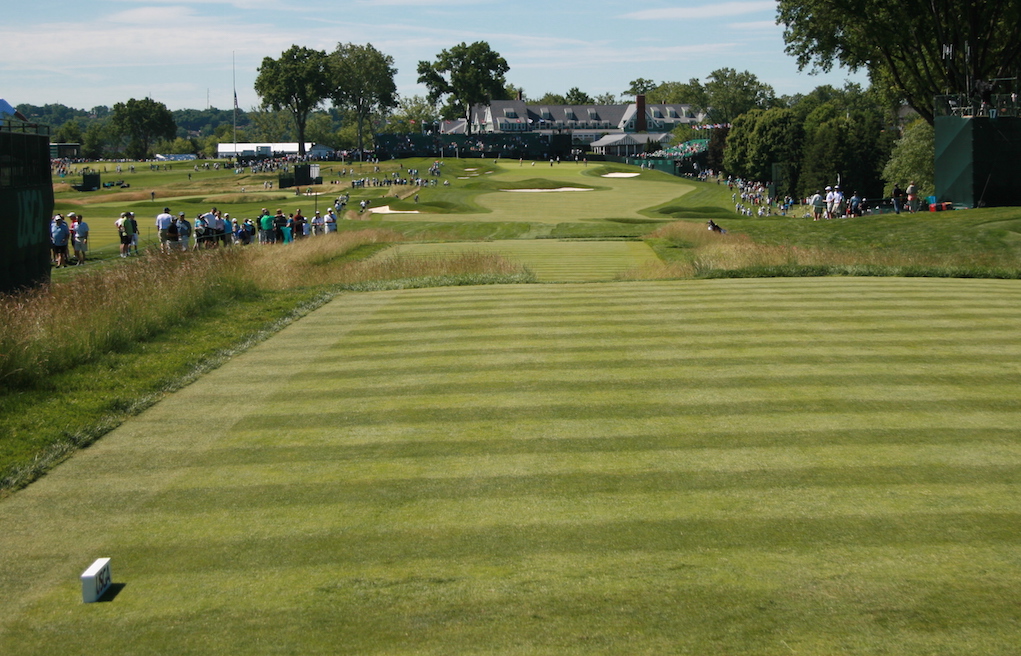
It may be the most difficult finishing hole in golf. In 2007, only 43 percent of the players hit the green in regulation, and it was statistically the most difficult hole on the course in relation to par.
“I’m not sure whether the hole itself is that hard, or it’s just because you’ve been beaten to shreds on the previous 17,” a fan hypothesized.
Probably a bit of both.
The rough is longer than…
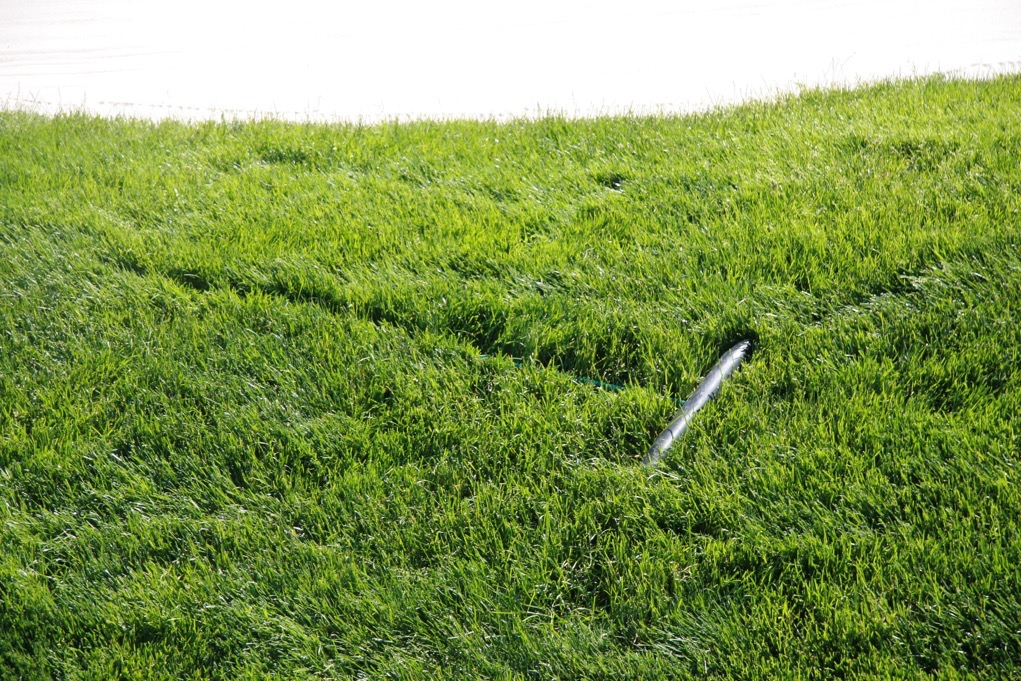
A rake, enveloped by the rough, sitting greenside on hole No. 18.
There’s been plenty of talk, visuals and Twitter videos from players and media about how long the rough is at Oakmont. But none more hilarious than this interaction between a couple in their mid-twenties.
“This rough is longer than my…” said the man.
“Yea, a lot longer,” says the woman.
Ouch.
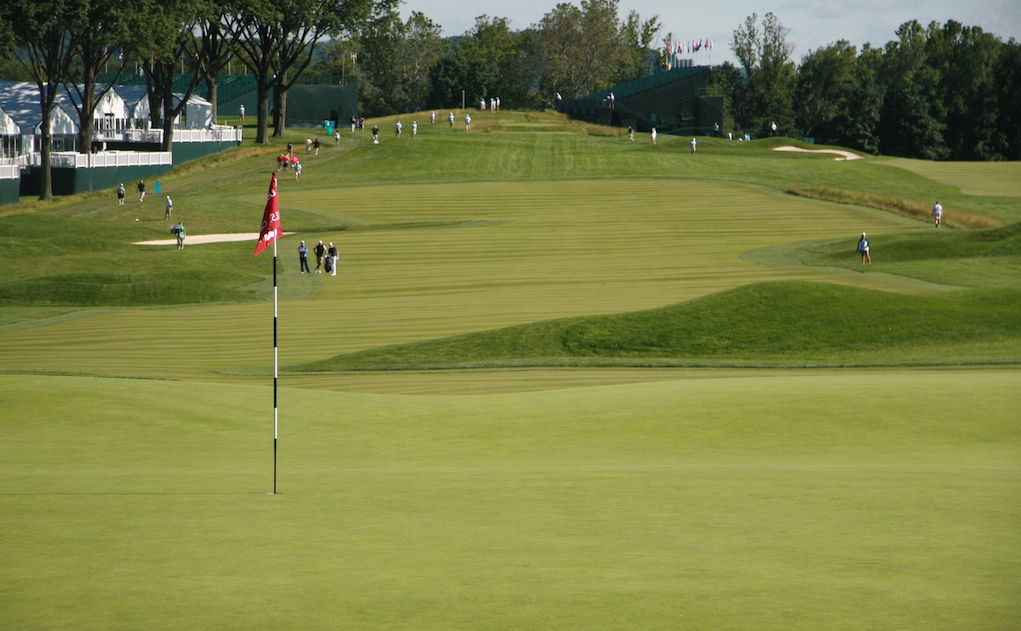
No. 18 at Oakmont, looking back from the grandstands behind the green.
So what makes Oakmont so difficult? It’s the combination of not just one thing, or a few of these things, but ALL of these factors. Oakmont might very well be the most difficult test of golf in the U.S., and we may very well see a winning score in the black.
When asked if he would cherish the opportunity to play a course like this, a 4-handicap golfer answered “Ain’t nothin’ fun about not breaking 90.” We may just see a U.S. Open participant fail to break 90 this week, as well.
Thanks to all of the fans who put up with my questions during the practice rounds!



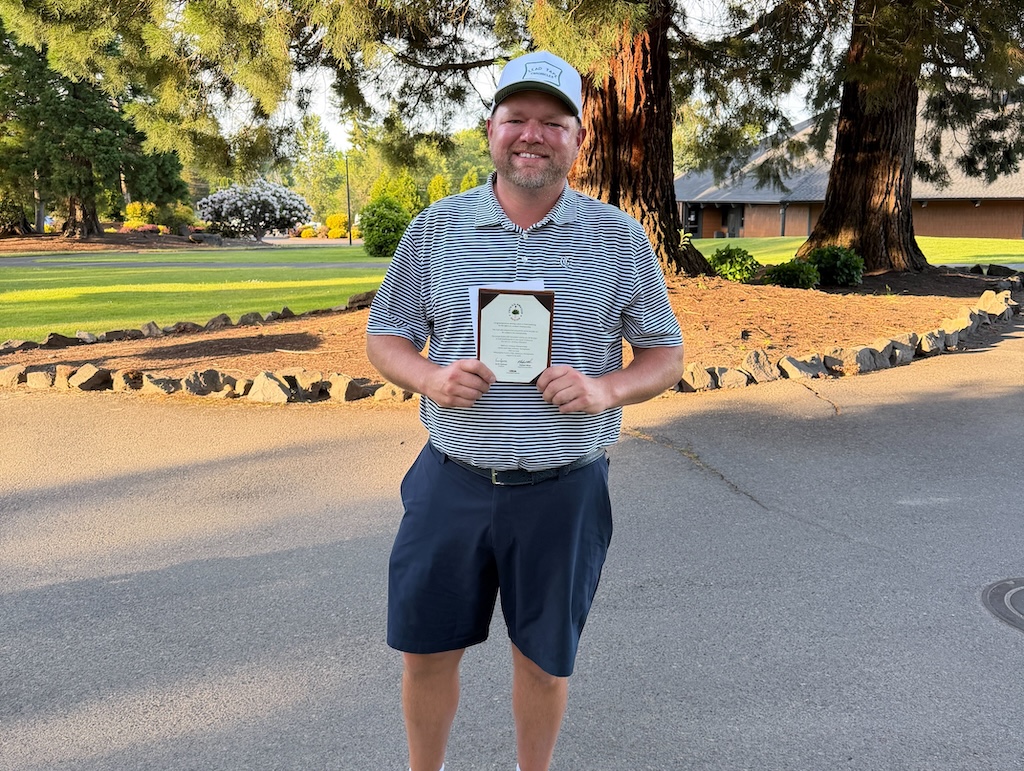
This past Monday, I played in the U.S. Amateur local qualifier at Rock Creek Country Club in Portland, Oregon. A full tee sheet from 7:30 a.m. to 1:55 p.m., the top 11 scores would make it to the U.S. Amateur final qualifying.
I teed off at 10:48 a.m.. With the 7:30 am tee time, you can get a feel for the leaders’ pace, and they were off and running on the challenging setup at Rock Creek.
View this post on Instagram
Getting to the highlight of the round on the par five 17th, a drive up the left side and 212 yards left to the front hole location. I took out a 5-iron with plans of middle of the green. The ball ended up 8 feet left of the hole, pin high. A slight downhill putt dropped in for an eagle 3 on the 17th. With the cut line looking to be anywhere from -2 to even par. This was the boost I had been waiting for all day.
With making par from the trees on 18, it was time to wait for a potential playoff with a posted score of one under par 71.
Three hours later, it was playoff time. 8 players for 6 spots. I made par on the playoff hole, which was good enough to advance to the U.S. Amateur final qualifying in July. USGA qualifiers sure deliver on all of the emotions in golf!
Club Junkie
Building my 2026 gamer WITB: Ranking the contenders and new putter projects – Club Junkie Podcast

The annual What’s In The Bag build is underway, and on this episode of Club Junkie, Brian breaks down the clubs currently leading the race for a spot in his 2026 gamer setup. From drivers and fairway woods to irons, wedges, and shafts, he ranks the equipment that’s performing best and explains what’s separating the front runners from the rest of the field.
Brian also heads into the workshop to discuss several putter projects currently on the bench. From head options and shaft choices to build ideas and testing plans, he shares what he’s working on and which putters could become serious contenders for the bag this season.
If you’re a gear junkie who loves equipment testing, club building, and the never-ending pursuit of the perfect setup, this episode is for you.
Follow Club Junkie:
Instagram: @clubjunkiepod
TikTok: @clubjunkiepod
Threads: @clubjunkiepod
X: @ClubJunkiePod
Club Junkie
Tour Edge Exotics mini driver review + TaylorMade Spider ZT Max first look – Club Junkie

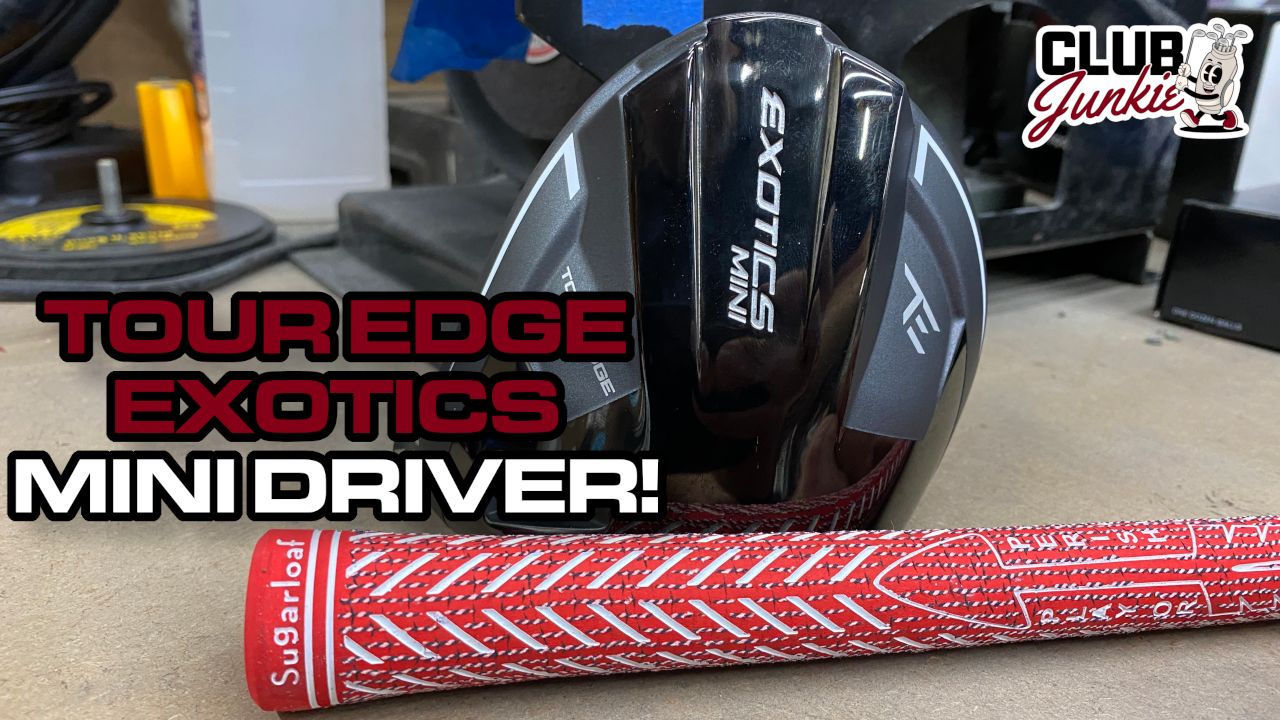
On this episode of Club Junkie, I put the new Tour Edge Exotics Mini Driver to the test and break down the performance, forgiveness, distance, and where it fits compared to a traditional driver or strong fairway wood. If you have been curious about adding a mini driver to the bag, this one is worth a look.
I also dive into the new TaylorMade Spider ZT Max putter that was recently spotted and discuss the growing zero torque putter trend. Plus, there is a closer look at the new Project X Titan Yellow shaft showing up on the PGA Tour and what makes it different from other profiles currently out there.

Justin Rose WITB 2026 (April): Full WITB breakdown with new McLaren irons

What’s the story behind Webb Simpson’s custom-stamped irons?

Memorial Tournament Tour Report: Rory McIlroy, Cameron Young switch up drivers, and more

Cadillac Championship Tour Report: Spieth’s sizable changes, McLaren Golf launches, and more

Russell Henley’s winning WITB: 2026 Charles Schwab Challenge

Kristoffer Reitan’s winning WITB: 2026 Truist Championship

J.T. Poston’s winning WITB: 2026 Memorial Tournament

Best irons 2026: Best irons overall, most forgiving irons, and more

Aaron Rai’s winning WITB: 2026 PGA Championship

Cameron Young’s winning WITB: 2026 Cadillac Championship


Bud Cauley WITB 2026 (June)
Bud Cauley had >14 clubs in his bag when photographed prior to the Memorial Tournament. Driver: Titleist GTS2 (8 degrees) Shaft: Fujikura...


Hannah Green WITB 2026 (June)
Driver: Titleist GTS3 (10 degrees, D4 SureFit setting) Shaft: Mitsubishi Chemical Diamana RB 53 S 3-wood: Titleist GT3 (15 degrees,...


Asterisk Talley WITB 2026 (June)
Driver: TaylorMade Qi4D (9 degrees) Shaft: Fujikura Ventus Blue 6 S 3-wood: TaylorMade Qi4D (16.5 degrees) Shaft: Fujikura Ventus Blue...


Brianna Do WITB 2026 (June)
Driver: Callaway Quantum Triple Diamond (9 degrees) Shaft: KBS PGW 3-wood: Callaway Elyte Titanium (15 degrees) Shaft: KBS PGW 5-wood:...
-
 Equipment6 days ago
Memorial Tournament Tour Report: Rory McIlroy, Cameron Young switch up drivers, and more
-
 News2 weeks ago
Russell Henley’s winning WITB: 2026 Charles Schwab Challenge
-
 Whats in the Bag4 days ago
J.T. Poston’s winning WITB: 2026 Memorial Tournament
-
 Equipment3 days ago
Best irons 2026: Best irons overall, most forgiving irons, and more
-

 Equipment1 week ago
Details on Jason Day’s latest prototype Avoda iron setup
-

 Equipment3 weeks ago
CJ Cup Byron Nelson Tour Report: Koepka and Kim’s newest putters finally get hot
-

 News2 weeks ago
Charles Schwab Challenge Tour Report: MacIntyre, Åberg and Spaun all switch putters, TaylorMade launches new Spider
-

 Equipment2 weeks ago
Details on J.J. Spaun’s surprise putter switch


Dave
Jun 19, 2016 at 10:34 pm
love the comments . But like logical said its getting old
PuffyC
Jun 19, 2016 at 3:50 pm
At some point you cross from difficult to silly, where dumb luck starts to play a factor in who wins and loses. I’d rather see a course that rewards true skill, not luck on blind tee shots, bad kicks into knee length rough, or a ball that happens to stick on the green instead of rolling back into the fairway. It’s not fun to watch and I assume not fun to play.
Tom
Jun 19, 2016 at 9:07 am
Although its turf conditions are second to none (no doubt about that), the course barely squeaks into the top 5 in Western PA alone.That “return the golf course to its original splendor” line that the USGA uses is total crap. Oakmont’s logo is a squirrel!!!!!!!! I love the US Open but the USGA has become the emperor with no clothes. Yesterday, I heard an announcer describing all the blind shots at Oakmont like it was a good thing. And it wasn’t even Jim Nance.
Hole11
Jun 17, 2016 at 9:21 am
How about fairways 10 yards wide and 12 inch rough. Oh boy would that be tough. No…it would just be stupid. Or greens so fast and sloped no ball would stay on so you’d have to chip it in to finish the hole. Bunkers so deep only an unplayable lay could get you out. Approaching silliness is not impressive, it’s just plain dumb.
.
Other Paul
Jun 16, 2016 at 9:12 pm
i would want to play twice. Once to get adjusted, a night to relax and then another try at it. I have some length, and that makes me brave. Or sometimes stupid…
michael johnson
Jun 16, 2016 at 6:04 pm
i shot an easy 62 the other day at oakmont, so yeah, its really not that difficult.
ooffa
Jun 16, 2016 at 2:01 pm
They all play the same course. Low score wins. Whoever is putting the best this week will win just like every other week on tour. Easy or hard makes no difference. It’s just just another week and another golf course to the pros.
Logical
Jun 16, 2016 at 1:31 pm
This is a silly article. There’s no difference in how they are talking about the course this year, there’s no “fear in their eyes”. There have been many tough setups at US Opens, this isn’t any more or less “special”.
Come on, stop trying to hype the heck out of the course. It’s getting old.