
Opinion & Analysis
The Mystery Behind the Mulligan

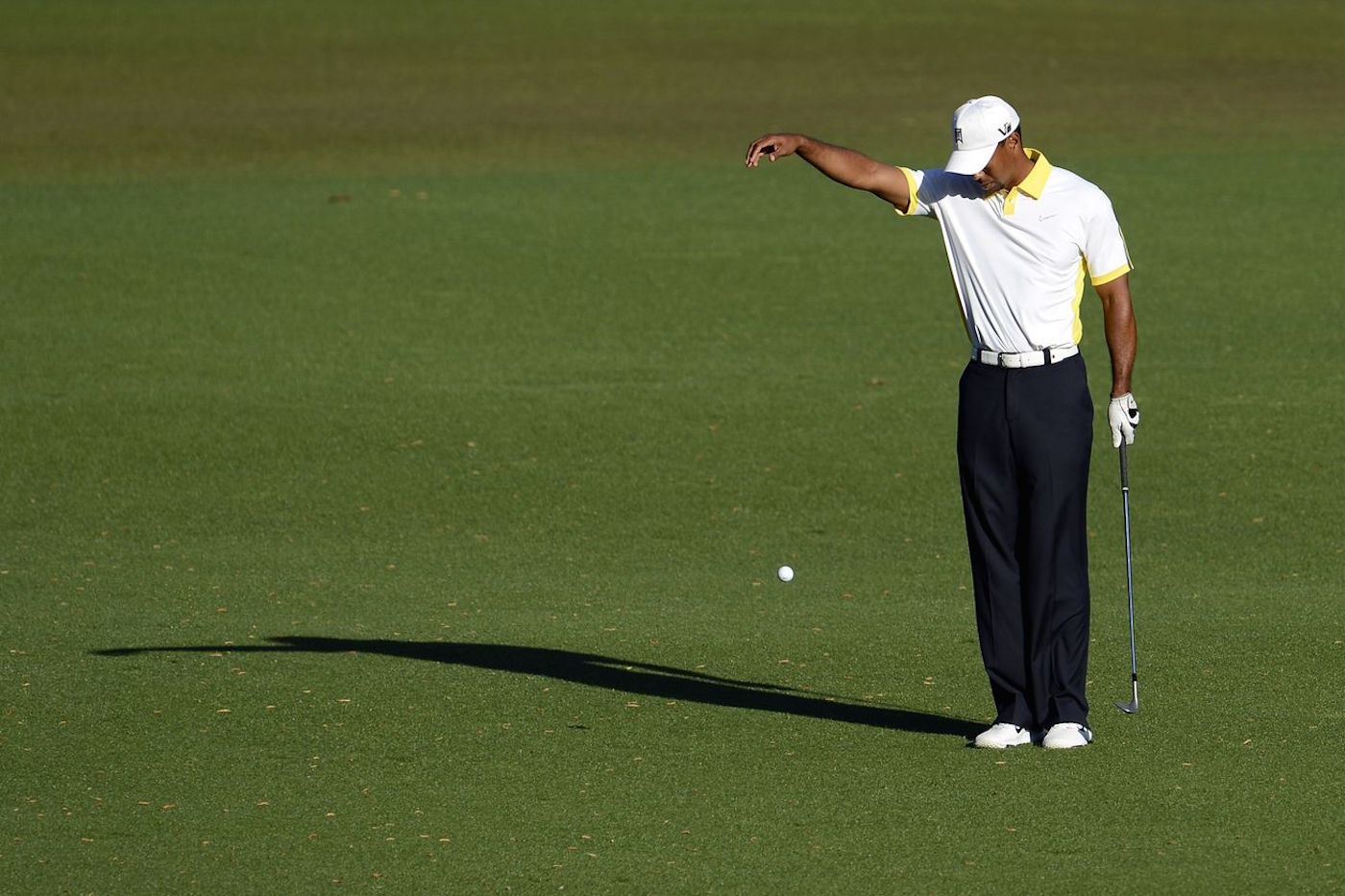
Twenty years ago, I played a lot of golf with a guy we had nicknamed “The Best Mulligan Player in Golf.” He’d perfected the art by keeping an extra ball in his front left pants pocket and incorporating a reach for it into his cut short follow-through before his first ball had even hit the apex of its flight. It was a near seamless (and shameless) motion that allowed him to hit again without even slowing play. The thing that constantly amazed me, though, was not his rapid re-load and ability to get off successive shots in a manner that might have rivaled the supposed prowess of Lee Harvey Oswald, but how his mulligan was always so good following a shot that was so bad just an instant prior. How could the same swing that had produced a snap hook or a dead block 40 yards offline seemingly find the middle of the fairway, or drop a ball a foot or two from the pin with relative ease the next?
Now were he truly unique, I’d suggest we bring him in to a lab somewhere to be studied, but truth be told, he’s not alone. Whether you call it a mulligan a breakfast ball or just a plain do-over, golf’s most redemptive invention often seems to have an almost magical way of showing us glimpses of the hidden aptitudes inside each and every one of us that are just waiting to be released… but does it? Because if it’s really as easy as just dropping a second ball, then maybe it’s long past time we studied its origins, how it has become so pervasive, and what we can all learn from the mystery behind the mulligan.
The term mulligan came into regular use somewhere between the 1920s and the 1940s in the U.S. There are two generally accepted theories of the term’s origin, which are both credible and particularly notable because it appears that mulligan is the only regularly used golf term named after a particular person or persons. One of those persons was a Canadian amateur by the name of David Bernard Mulligan, a prominent former member of Winged Foot Golf Club in New York. As the story goes, Mulligan would drive his regular foursome to the club back in the 1920s. Upon arrival, Mulligan always complained about the fact that his hands were numb from navigating the rough and bumpy roads along the way. On one such day, he teed up a second ball on the first tee, declaring he was hitting a “correction shot” after a particularly poor drive. His playing partners asked him what he would call that. “A Mulligan,” he said, and his foursome all laughed. Considering the circumstances, they agreed to let him go ahead and play the second ball.
After Mulligan and his partner ended up winning the match by a shot, there was some discussion about the second ball he had played, and the resulting agreement was that henceforth you could play a second ball from the first tee if you didn’t like the first one. Once other members heard about the practice, its use spread along with the story to the point that Mulligan was even interviewed about it a generation later.
Despite that well-chronicled story, there is at least one other that apparently has enough merit that it’s proudly noted on the responsible club’s website. John A. “Buddy” Mulligan was a locker room attendant in the 1930s at Essex Fells Country Club in New Jersey. Mulligan was apparently often sucked into money games with assistant professional Dave O’Connell and Des Sullivan, the eventual golf editor of the Newark Evening News, during the week when few members were around because of The Depression. One afternoon, after hitting a poor opening tee shot, Mulligan begged his partners to be given another shot since they had been practicing all morning and he had not. After receiving a pardon for his poor opening tee shot, Mulligan proudly bragged to his members in the locker room for months about having negotiated the extra shot. The members apparently loved the idea so much they began giving themselves Mulligans, and Sullivan subsequently began using the term in his pieces in the Newark Evening News.
Now as interesting as those stories are, and whether or not either of the latter two is the true origin of why most of us now call our desire to re-hit certain shots now and then a mulligan, I believe the reasons why we hit those first shots so poorly and why we so often hit those second shots better a much more intriguing line of conversation. And if you’ve read this far, I’ll assume it has more to do with learning how to capture some of the magic of the mulligan on that first shot, rather than anything to do with my gifted story-telling.
Well, first of all, the reasons each of us hit poor shots on the first tee and elsewhere are obviously as numerous as the stripes on the balls of the driving ranges of the world. Fear, nerves, unrealistic expectations, unreliable swing mechanics, pressure, mis-placed focus, a lack of confidence, failure to commit to the shot, failure to trust our swing, an inability to stay in the present, being overly attached to our out-sized egos, and a laundry list of other things can each individually be enough to cause a poor golf shot. And when you combine two or more of these issues together, you can have a wicked combination that makes it no small wonder that we actually manage to ever hit that first shot well.
The most obvious reason we perform better when we reach for a mulligan is that, other than unreliable swing mechanics, most of those excuses, contributing factors, and conditions for why we hit poor shots initially are either absent or at least much diminished. And if you need the ever-present potential of being able to drop a second ball to hit a decent golf shot now and then, for better or worse, your problems on that first shot are more mental than mechanical. Like the guy or gal who has won the U.S. Open three times on the driving range, but who suddenly slices it into the woods like Judge Smails once it actually counts, if we struggle with executing once the spotlights are on, the pressure is mounting, and or when it’s time to actually start counting all those ill-fated attempts then we need to start this journey by taking a hard look inward. And if you’re the type who plays with a second ball in your front pants pocket to help relieve some of that pressure, while you may be on the course, in a sense, you’ve never even left the range.
Before taking that inward glance, though, I need to say that when I first set out to write this, I had intended to offer a few strategies, backed up by the latest neuroscience, to help you get things right the first time. Some simple mindfulness practices that I use with students every day can really help tone down that mental-space junk we tend to have floating around in our heads that contribute to the problem. Along the way, though, I’ve come to a couple of conclusions.
- Just as the reasons for why you struggle on that first shot are individual and varied, so are the potential fixes and diving into those waters in this brief space would force me to paint everyone with too broad a brush to remotely do it justice.
- There is one element to this that is nearly universal, and so incredibly basic about our love/hate relationship with the mulligan and how it effects our psyche that I think it gets instinctively overlooked… how it reinforces our belief in the better golfer that resides somewhere deep inside us all.
So when it comes to that inward glance, we need to start by making sure we’ve taken an honest look at all those mulligans to ensure we aren’t viewing them through the rose-colored lenses of self-delusion. Is that second ball really always so magical? Have we, without being aware of it, mentally discarded all those times when our mulligans weren’t all that special because we so want to identify with those times when it was? Could our desire to identify with that mysteriously talented golfer we believe is somewhere inside of us resulted in us unintentionally deluding ourselves into believing that the only thing standing in the way of letting that better golfer out is ourselves?
Maybe our true first step needs to be a re-examination of that storyline running inside our heads to see if it’s actually grounded in fact. Have we truly put in the work? Have we even once performed to the standard we’ve been subconsciously holding ourselves to? That little voice in our heads gets awfully loud in moments of pressure, but is it even louder when it’s scolding us for not performing up to what we’ve deluded ourselves into believing is our true ability?
Now please don’t confuse what I’m saying here as a cry to collectively lower our standards. If you read my article on club championships you know I think in many ways they need to be raised, and belief in our potential is a fire I want to stoke, not extinguish. That belief and the hope it instills in us is the biggest part of what drives us to improve (what pays my mortgage), and, like that one good shot on the last hole, is truly what keeps us coming back. We need to be realistic, however, and make sure we’re not confusing belief in our potential with the belief that we’ve done everything we can and should do to live up that potential.
So what the mulligan may ultimately represent is not just our desire to score better, but to be better, and prove to ourselves that given the right set of circumstances we can. Most of us have come to terms with the fact that something, something related to how we’re handling pressure, the spotlight, or even the maddening specter of not living up to our true potential is getting in the way with letting the true golfer that lies buried somewhere deep inside of us out. And a big part of why we keep at it, day after day, round after round, month after month, year after year, is to discover that missing link between the golfer we are, and the one we know we can be.
So where do we start the search? Well, the first place you need to look is at your expectations and make sure they are in line with your abilities. And if those abilities aren’t truly up to the level of your expectations, then I’d like to selfishly suggest a visit to your local PGA Pro. Just remember, the secret to any self-improvement, like Ben Hogan once said, is nearly always hidden in the dirt of a little hard work.
Second, believe in your ability, if you’ve done it even once before you have the ability to hit that ball right the first time, even if it’s not every time, and don’t let that little voice get too loud at times when you don’t.
Next, take the temptation of that second ball out of your front left pants pocket or wherever else it might reside. The security blanket that little escape hatch has been providing and the temptation to use it just might have been at least part of the problem all along.
And finally, if circumstances (and the rules) dictate that you must hit a second ball, instead of declaring it a mulligan, a breakfast ball or whatever else you may have referred to it in the past, try calling it what the Scots do… three from the tee.




This past Monday, I played in the U.S. Amateur local qualifier at Rock Creek Country Club in Portland, Oregon. A full tee sheet from 7:30 a.m. to 1:55 p.m., the top 11 scores would make it to the U.S. Amateur final qualifying.
I teed off at 10:48 a.m.. With the 7:30 am tee time, you can get a feel for the leaders’ pace, and they were off and running on the challenging setup at Rock Creek.
View this post on Instagram
Getting to the highlight of the round on the par five 17th, a drive up the left side and 212 yards left to the front hole location. I took out a 5-iron with plans of middle of the green. The ball ended up 8 feet left of the hole, pin high. A slight downhill putt dropped in for an eagle 3 on the 17th. With the cut line looking to be anywhere from -2 to even par. This was the boost I had been waiting for all day.
With making par from the trees on 18, it was time to wait for a potential playoff with a posted score of one under par 71.
Three hours later, it was playoff time. 8 players for 6 spots. I made par on the playoff hole, which was good enough to advance to the U.S. Amateur final qualifying in July. USGA qualifiers sure deliver on all of the emotions in golf!
Club Junkie
Building my 2026 gamer WITB: Ranking the contenders and new putter projects – Club Junkie Podcast

The annual What’s In The Bag build is underway, and on this episode of Club Junkie, Brian breaks down the clubs currently leading the race for a spot in his 2026 gamer setup. From drivers and fairway woods to irons, wedges, and shafts, he ranks the equipment that’s performing best and explains what’s separating the front runners from the rest of the field.
Brian also heads into the workshop to discuss several putter projects currently on the bench. From head options and shaft choices to build ideas and testing plans, he shares what he’s working on and which putters could become serious contenders for the bag this season.
If you’re a gear junkie who loves equipment testing, club building, and the never-ending pursuit of the perfect setup, this episode is for you.
Follow Club Junkie:
Instagram: @clubjunkiepod
TikTok: @clubjunkiepod
Threads: @clubjunkiepod
X: @ClubJunkiePod
Club Junkie
Tour Edge Exotics mini driver review + TaylorMade Spider ZT Max first look – Club Junkie

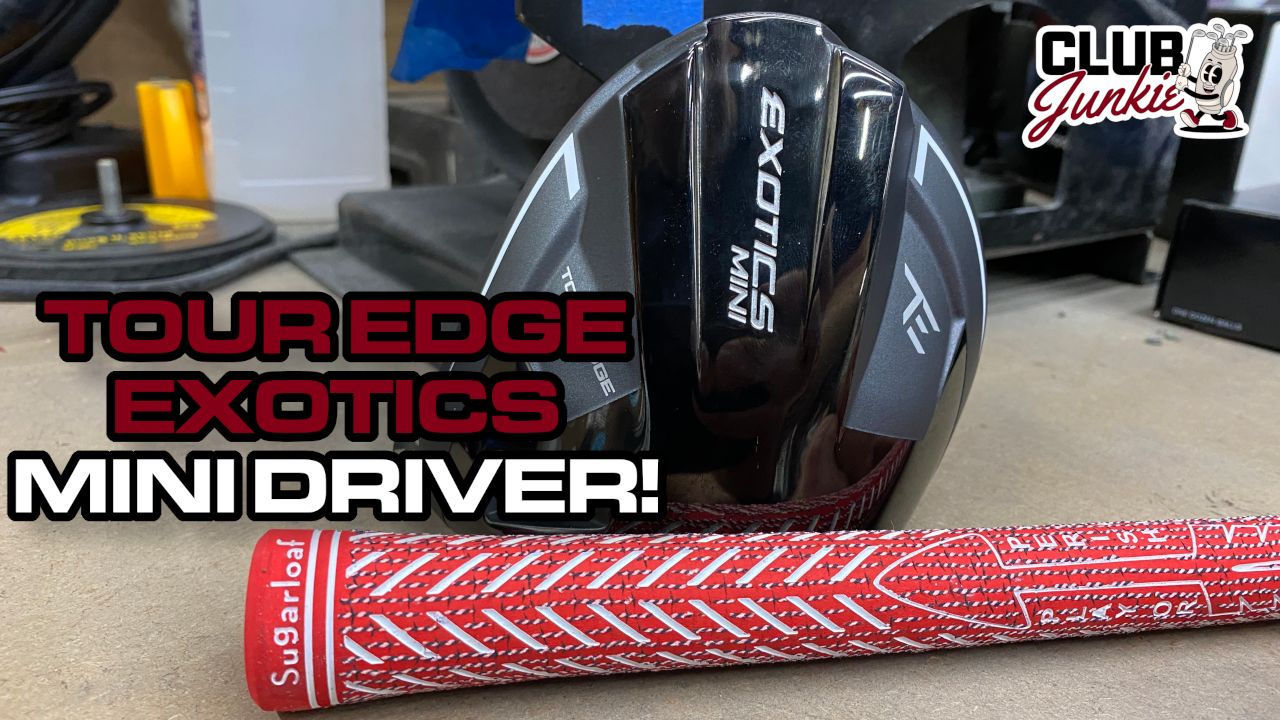
On this episode of Club Junkie, I put the new Tour Edge Exotics Mini Driver to the test and break down the performance, forgiveness, distance, and where it fits compared to a traditional driver or strong fairway wood. If you have been curious about adding a mini driver to the bag, this one is worth a look.
I also dive into the new TaylorMade Spider ZT Max putter that was recently spotted and discuss the growing zero torque putter trend. Plus, there is a closer look at the new Project X Titan Yellow shaft showing up on the PGA Tour and what makes it different from other profiles currently out there.

Justin Rose WITB 2026 (April): Full WITB breakdown with new McLaren irons

What’s the story behind Webb Simpson’s custom-stamped irons?

Memorial Tournament Tour Report: Rory McIlroy, Cameron Young switch up drivers, and more

Cadillac Championship Tour Report: Spieth’s sizable changes, McLaren Golf launches, and more

Russell Henley’s winning WITB: 2026 Charles Schwab Challenge

Kristoffer Reitan’s winning WITB: 2026 Truist Championship

Best irons 2026: Best irons overall, most forgiving irons, and more

J.T. Poston’s winning WITB: 2026 Memorial Tournament

Aaron Rai’s winning WITB: 2026 PGA Championship

Cameron Young’s winning WITB: 2026 Cadillac Championship


Bud Cauley WITB 2026 (June)
Bud Cauley had >14 clubs in his bag when photographed prior to the Memorial Tournament. Driver: Titleist GTS2 (8 degrees) Shaft: Fujikura...


Hannah Green WITB 2026 (June)
Driver: Titleist GTS3 (10 degrees, D4 SureFit setting) Shaft: Mitsubishi Chemical Diamana RB 53 S 3-wood: Titleist GT3 (15 degrees,...


Asterisk Talley WITB 2026 (June)
Driver: TaylorMade Qi4D (9 degrees) Shaft: Fujikura Ventus Blue 6 S 3-wood: TaylorMade Qi4D (16.5 degrees) Shaft: Fujikura Ventus Blue...


Brianna Do WITB 2026 (June)
Driver: Callaway Quantum Triple Diamond (9 degrees) Shaft: KBS PGW 3-wood: Callaway Elyte Titanium (15 degrees) Shaft: KBS PGW 5-wood:...
-
 Equipment6 days ago
Memorial Tournament Tour Report: Rory McIlroy, Cameron Young switch up drivers, and more
-
 News2 weeks ago
Russell Henley’s winning WITB: 2026 Charles Schwab Challenge
-
 Equipment3 days ago
Best irons 2026: Best irons overall, most forgiving irons, and more
-
 Whats in the Bag4 days ago
J.T. Poston’s winning WITB: 2026 Memorial Tournament
-

 Equipment1 week ago
Details on Jason Day’s latest prototype Avoda iron setup
-

 Equipment3 weeks ago
CJ Cup Byron Nelson Tour Report: Koepka and Kim’s newest putters finally get hot
-

 News2 weeks ago
Charles Schwab Challenge Tour Report: MacIntyre, Åberg and Spaun all switch putters, TaylorMade launches new Spider
-
 Equipment2 weeks ago
Details on J.J. Spaun’s surprise putter switch


Koyote Ken
Jul 11, 2016 at 4:34 pm
My foursome calls them simply “DCT’s”………..
Stands for “Don’t Count That!”
Powder skier
Jul 8, 2016 at 7:00 pm
Now please explain why the maker of a hole in one buys drinks
Devin
Jul 6, 2016 at 12:54 pm
“The thing that constantly amazed me, though, was not his rapid re-load and “ability to get off successive shots in a manner that might have rivaled the supposed prowess of Lee Harvey Oswald”
Really?
No WMD
Jul 6, 2016 at 1:38 pm
I know, right? The exaggerations of these writers make them sound so pedestrian and immature
alexdub
Jul 6, 2016 at 11:27 am
I love these types of articles here. Good research and great write up, Mike.
mike dowd
Jul 6, 2016 at 11:57 am
Thanks Alex. Glad you enjoyed it. It’s amazing how when it comes to golf so often that the more things change, the more things stay the same. While they might not have been called Mulligans or Breakfast Balls before the 1930’s, I’m sure people were still taking them. 🙂
RG
Jul 6, 2016 at 9:56 am
Breakfast ball, gotta love’em.
Double Mocha Man
Jul 7, 2016 at 11:32 am
Don’t forget the Lunch Ball, for the back nine. The Happy Hour Ball if you bring an adult drink onto the course. The Appetizer Ball, the Dinner Ball, the Dessert Ball, the After-Dinner-Cigar Ball and the Twilight-I-Didn’t-See-Where-That-Ball-Went Ball. It just depends on what time of day and in what situation you need to hit a second ball. BTW, one man scrambles are perfect for those who like to hit a second ball.
Tom
Jul 5, 2016 at 1:48 pm
I apply the same ” do over” principle to relationships. That’s why I’ve been married three times….lol
Philip
Jul 5, 2016 at 3:14 pm
Darn! You got me by 1/2 – I’ve only been married 2 1/2 times – lol
Double Mocha Man
Jul 5, 2016 at 6:50 pm
Does the 1/2 equal a proposal not yet accepted?
No WMD
Jul 6, 2016 at 1:39 pm
No it equals a man