
Opinion & Analysis
What I learned from talking to 23 mental game experts in 6 months

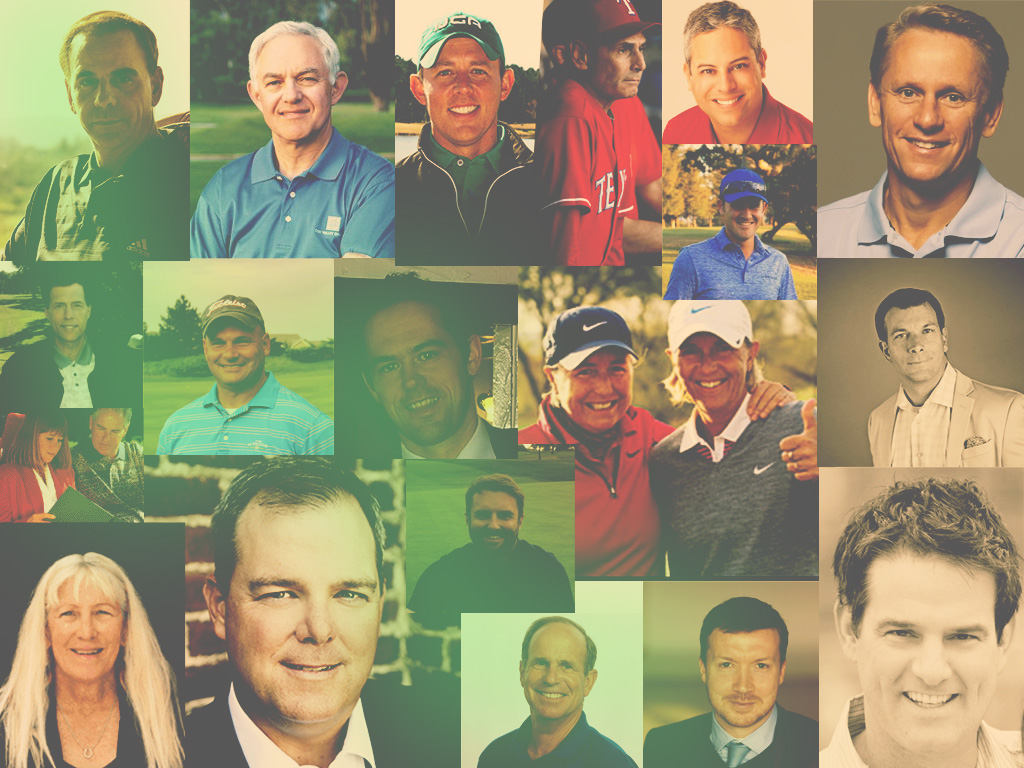
Over the past 6 months, I’ve sat down and talked with some of the leaders in the field of mental performance: everyone from researchers such as Dr. Debbie Crews, psychologists such as Dr. Joseph Parent, and coaches such as Lynn Marriot and Pia Nilsson.
I’d like to extend a huge thank you to everyone who took the time to speak with me, and in this story I’m going to do my best to pass along what I’ve learned. I’ve spent some time trying to tease out the similarities and foundational elements that every golfer should know, and here this is initial list I’ve developed.
The Results Are Out of Our Control
“It’s just a whole lot simpler if we focus on the process and let the results take care of themselves. When we do focus on the results and when that is going to indicate how good we are … it’s a lot more difficult to deal with the expectations, with confidence, with self talk if we just could focus and sell out to the process.”
— Dr. Rob Bell
I also heard about this concept from Dr. Michael Lardon, talking about the mental scorecard that he developed with Phil Mickelson. Dr. Lardon shared that he didn’t want to know someone’s actual score. He wanted to know the mental scorecard. How well did they do with what they can control? Golfers can put their emotions and feelings of success or failure in something that’s out of their hands, for the most part, and score is out of their hands. Bad bounces and gusts of wind are all out of their control. The only thing they can control is their process and commitment for each individual shot.
So if golfers don’t have a mental process or system they use before they execute before a shot, they need one. When we leave things open to chance, we open ourselves up to stress on the course. Why? Because we have a choice. A golfer’s process should be one they can trust and know no matter the situation. And again, they can’t let the results dictate their confidence, demeanor and self image.
You Have to be Aware
“Mindfulness is being completely awake to the present moment: what you are experiencing, while you are experiencing it, and being aware of what you are doing while you are doing it. Awareness is a bigger sense of your place in the environment, mentally, emotionally and physically, as well as an internal awareness asking, ‘Am I present, or is my mind some place else?’ And if it is some place else, come back to the here and now.’”
— Dr. Joseph Parent
Awareness is a foundational element of good golf. It touches everything from a golfer’s mental state to the expectations he or she brings into a round (which are often way too high) to body awareness. If golfers want to hit a golf shot, they don’t want to be thinking about the past or the future; they have to be in the present moment hitting that shot. And every golfer gets caught up with the past — the last double bogey, or the memory of the last time he or she played the whole. But if golfers are pulling the trigger with those thoughts, it’s not predictive of good performance.
Golfers need to be present when hitting a golf shot, and most of us get that. But far too often, we don’t have the awareness or determination to back off a shot when we’re not. Sure, golfers don’t want to slow down play, but backing off a shot and spending 10 more seconds to increase their chance success isn’t going to slow down their round. Don’t do a pre-shot routine simply for the sake of doing a pre-shot routine. What you’re after is a brain state that’s predictive of good performance, and that doesn’t need to take 45 seconds every time.
Brain State Predictive of Good Performance
“I kept seeing this pattern of synchrony; so as the left is quieting in the last second before people move, the right may become slightly more active. But what you achieve is balance or synchrony in the brain, and it was the last second of data that was predictive of performance.”
— Dr. Debbie Crews
We’re looking for the brain to be synchronized. And if you think back to your best golf, you will probably say that you weren’t thinking about anything. You were just swinging.
When Dr. Crews talked with those who were performing very well, the last thing they thought about before they started moving was often either the target or a feel. These are great triggers to help get golfers in the right state.
The Power of Breath
“Breathing, mind and stress all go together. We are not only sending messages from our brain, but our brain is monitoring our body. So, if you take deep breaths and calm yourself down, your brain gets the message, ‘Hey, we are not in danger.’ If you are holding your breath, that’s what we do when we are in danger and the brain says, ‘Uh-oh, we are still in danger,’ and all sorts of tension and adrenalin flows from there.”
— Dr. Joseph Parent
When we’re in danger, in fight-or-flight mode, everything is on high alert: our heart rate, adrenaline and how fast we’re breathing. So if we can work on that aspect, we can control breath. We can impact our entire state. We run into a lot of fear on the golf course, because that’s how we’re wired. We don’t like to look bad in front of others and want to do anything we can to avoid it.
The Golf Course is a Threatening Place
“Human beings are completely dependent on other human beings to survive. What the golf course presents to us is an opportunity to make ourselves look great. We can hit the ball down the fairway. We can hole that putt out. We can hit the ball really close to the pin in a fantastic shot. But equally, we can’t do that as well. There is a chance that all might all go wrong and that’s very threatening to our brain.”
— Dr. Jon Finn
Golfers need to understand that all the things they feel on the golf course are natural. They happen to everyone, although everyone tries to pretend they don’t. It’s OK; being aware of it helps us figure out what to do.
Dealing with Stress
“Stress can be good and bad, but it all depends on how you interpret it, and also how you manage it. So, it’s important that when we experience stress, we do successfully manage it.”
— Dr. Adam Nicholls
Too many people don’t have the self awareness to recognize stress or pressure, so they far too often let whatever happens, happen. There is no plan implemented or coping strategy put into place. If golfers improve their level of awareness and have positive coping strategies, they’ll start to do better in clutch situations. But it’s a skill that needs to be built like any other, so don’t expect yourself to be perfect from the very beginning.
Take the time and put yourself in challenging and stressful situations with the goal of coping positively. Dr. Nicholls has done journal studies with elite athletes in all sports, and even though they might look calm and collected on TV, they’re not.
If you want to listen to this in audio version you can do so below!



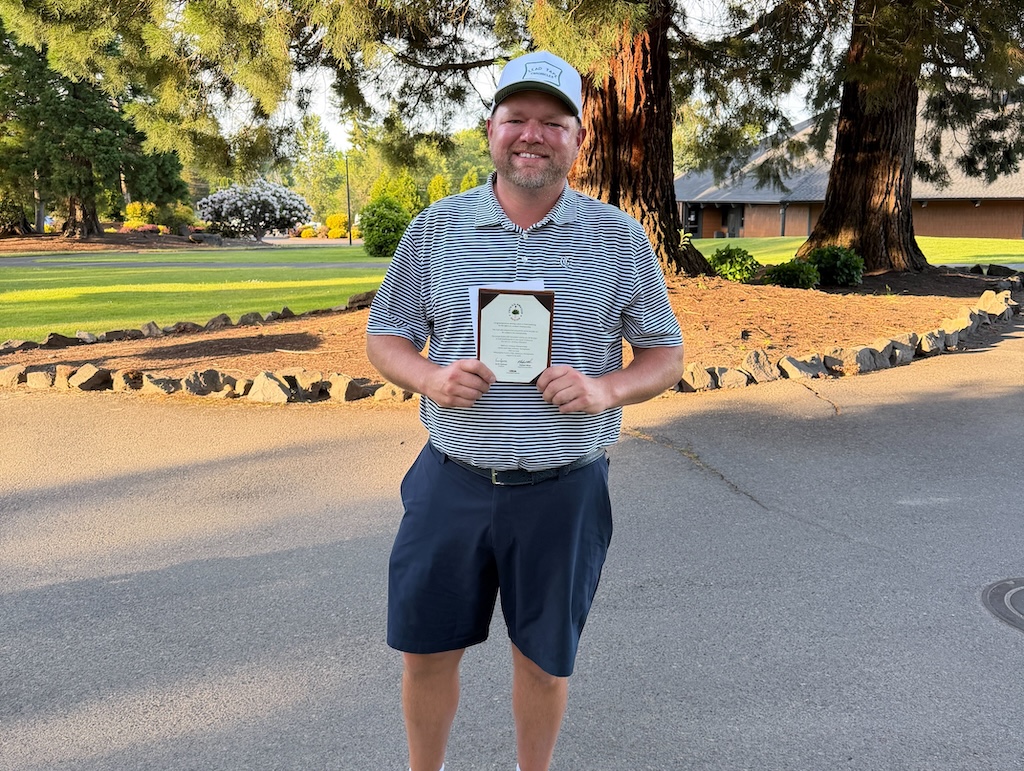
This past Monday, I played in the U.S. Amateur local qualifier at Rock Creek Country Club in Portland, Oregon. A full tee sheet from 7:30 a.m. to 1:55 p.m., the top 11 scores would make it to the U.S. Amateur final qualifying.
I teed off at 10:48 a.m.. With the 7:30 am tee time, you can get a feel for the leaders’ pace, and they were off and running on the challenging setup at Rock Creek.
View this post on Instagram
Getting to the highlight of the round on the par five 17th, a drive up the left side and 212 yards left to the front hole location. I took out a 5-iron with plans of middle of the green. The ball ended up 8 feet left of the hole, pin high. A slight downhill putt dropped in for an eagle 3 on the 17th. With the cut line looking to be anywhere from -2 to even par. This was the boost I had been waiting for all day.
With making par from the trees on 18, it was time to wait for a potential playoff with a posted score of one under par 71.
Three hours later, it was playoff time. 8 players for 6 spots. I made par on the playoff hole, which was good enough to advance to the U.S. Amateur final qualifying in July. USGA qualifiers sure deliver on all of the emotions in golf!
Club Junkie
Building my 2026 gamer WITB: Ranking the contenders and new putter projects – Club Junkie Podcast

The annual What’s In The Bag build is underway, and on this episode of Club Junkie, Brian breaks down the clubs currently leading the race for a spot in his 2026 gamer setup. From drivers and fairway woods to irons, wedges, and shafts, he ranks the equipment that’s performing best and explains what’s separating the front runners from the rest of the field.
Brian also heads into the workshop to discuss several putter projects currently on the bench. From head options and shaft choices to build ideas and testing plans, he shares what he’s working on and which putters could become serious contenders for the bag this season.
If you’re a gear junkie who loves equipment testing, club building, and the never-ending pursuit of the perfect setup, this episode is for you.
Follow Club Junkie:
Instagram: @clubjunkiepod
TikTok: @clubjunkiepod
Threads: @clubjunkiepod
X: @ClubJunkiePod
Club Junkie
Tour Edge Exotics mini driver review + TaylorMade Spider ZT Max first look – Club Junkie

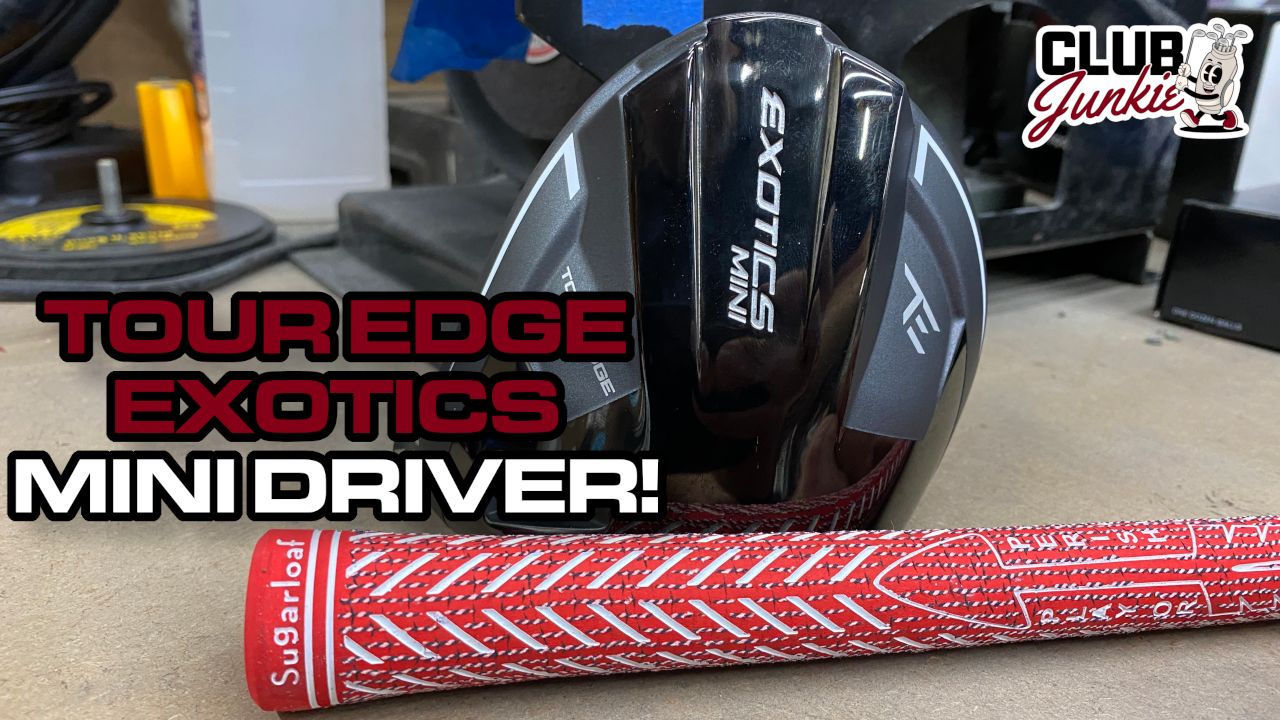
On this episode of Club Junkie, I put the new Tour Edge Exotics Mini Driver to the test and break down the performance, forgiveness, distance, and where it fits compared to a traditional driver or strong fairway wood. If you have been curious about adding a mini driver to the bag, this one is worth a look.
I also dive into the new TaylorMade Spider ZT Max putter that was recently spotted and discuss the growing zero torque putter trend. Plus, there is a closer look at the new Project X Titan Yellow shaft showing up on the PGA Tour and what makes it different from other profiles currently out there.

Justin Rose WITB 2026 (April): Full WITB breakdown with new McLaren irons

What’s the story behind Webb Simpson’s custom-stamped irons?

Memorial Tournament Tour Report: Rory McIlroy, Cameron Young switch up drivers, and more

Cadillac Championship Tour Report: Spieth’s sizable changes, McLaren Golf launches, and more

Russell Henley’s winning WITB: 2026 Charles Schwab Challenge

Kristoffer Reitan’s winning WITB: 2026 Truist Championship

Best irons 2026: Best irons overall, most forgiving irons, and more

J.T. Poston’s winning WITB: 2026 Memorial Tournament

Aaron Rai’s winning WITB: 2026 PGA Championship

Cameron Young’s winning WITB: 2026 Cadillac Championship


Ryan Palmer WITB 2026 (June)
Driver: Callaway Quantum Triple Diamond (9 degrees) Shaft: Project X HZRDUS Smoke Blue RDX 60 TX 3-wood: TaylorMade Qi10 (15 degrees) Shaft:...


Bud Cauley WITB 2026 (June)
Bud Cauley had >14 clubs in his bag when photographed prior to the Memorial Tournament. Driver: Titleist GTS2 (8 degrees) Shaft: Fujikura...


Hannah Green WITB 2026 (June)
Driver: Titleist GTS3 (10 degrees, D4 SureFit setting) Shaft: Mitsubishi Chemical Diamana RB 53 S 3-wood: Titleist GT3 (15 degrees,...


Asterisk Talley WITB 2026 (June)
Driver: TaylorMade Qi4D (9 degrees) Shaft: Fujikura Ventus Blue 6 S 3-wood: TaylorMade Qi4D (16.5 degrees) Shaft: Fujikura Ventus Blue...
-
 Equipment6 days ago
Memorial Tournament Tour Report: Rory McIlroy, Cameron Young switch up drivers, and more
-
 News2 weeks ago
Russell Henley’s winning WITB: 2026 Charles Schwab Challenge
-
 Equipment3 days ago
Best irons 2026: Best irons overall, most forgiving irons, and more
-
 Whats in the Bag4 days ago
J.T. Poston’s winning WITB: 2026 Memorial Tournament
-

 Equipment1 week ago
Details on Jason Day’s latest prototype Avoda iron setup
-
 Equipment3 weeks ago
CJ Cup Byron Nelson Tour Report: Koepka and Kim’s newest putters finally get hot
-

 News2 weeks ago
Charles Schwab Challenge Tour Report: MacIntyre, Åberg and Spaun all switch putters, TaylorMade launches new Spider
-
 Equipment2 weeks ago
Details on J.J. Spaun’s surprise putter switch


Pingback: What I Learned From Talking to 23 Mental Game Experts in 6 months - Dan Hansen Golf Instruction
Dave
Jun 5, 2016 at 11:36 pm
Bob what a great thing I’m not being a smart ass can’t wait to play in am you are right I used to think I was a good putter and I putted pretty well ,then the negative side of my brain said wait a minute you are not as good as you think you are . Wow I didn’t know what yips were but now I do so going out with the positive side of the junk filled head and will let you know how it is .
BL
Jun 3, 2016 at 10:19 am
#5 is horribly negative. I wouldn’t use his services.
SV
Jun 2, 2016 at 2:54 pm
Results are out of our control. I have read this many times concerning the mental side of the game. However, it’s your ball and your swing that propels it. How is it not within your control? Sometimes an outside agency will affect the ball, but you made the shot and are responsible for at least 90% of the result.
Also, golfers “can’t let results dictate confidence”. If results don’t impact confidence what does? If I have missed five 3 footers in a row, my confidence when I step up to the sixth is not going to be good.
Someone please explain this to me in very simple terms because I don’t get it.
rory
Jun 2, 2016 at 4:26 pm
I think the wording is bad….who wants to show up to anything already knowing things are out of control, very negative and weak….. I prefer to think hit your best and don’t shurk the result but embrace it as natural.
Alex
Jun 3, 2016 at 8:24 am
Agree. It’s more you can’t control the outcome of the shots. You’ve got to move on, or shrug and move on.
And nothing’s worst than planning based on score, you are usually very quickly over your intented score so you’d better have a B plan. If you only plan your shots, recovery won’t be so stressful.
Bob Pegram
Jun 3, 2016 at 1:32 pm
In Arnold Palmer’s book, My Game and Yours from the 1960s, he points out that if somebody thinks he is a good putter, he will end up being a good putter… or driver… or iron player, etc. Obviously that doesn’t work in the short run, but someone who thinks he is a good putter will do what good putters do which will change him into a good putter. We do what matches our view of ourselves.
Obviously that is assuming the physical ability in the case of long drives, etc.
charlie
Jun 3, 2016 at 3:34 pm
It’s poorly articulated….what he’s TRYING to say is that if you’re result attached and oriented in golf you’re doomed to fail. If you play in a monday qualifier for the PGA tour, you’re stepping on the first tee knowing that you HAVE to shoot 64 or better TODAY, or you’re out. The field is huge and it’s not a two day thing where you can make up ground tomorrow. That is an overwhelming thought and if you think like that you don’t stand a chance. However, if you just take it shot by shot, and stay in the moment of the process of what you’re trying to achieve, you could very easily find yourself right in the mix, and the overwhelming anxiety of having to shoot 64 or better becomes much more manageable. This example can be tweaked relatively to any situation at any level of play.