
Opinion & Analysis
PGA Tour Equipment Changes: A behind-the-scenes account

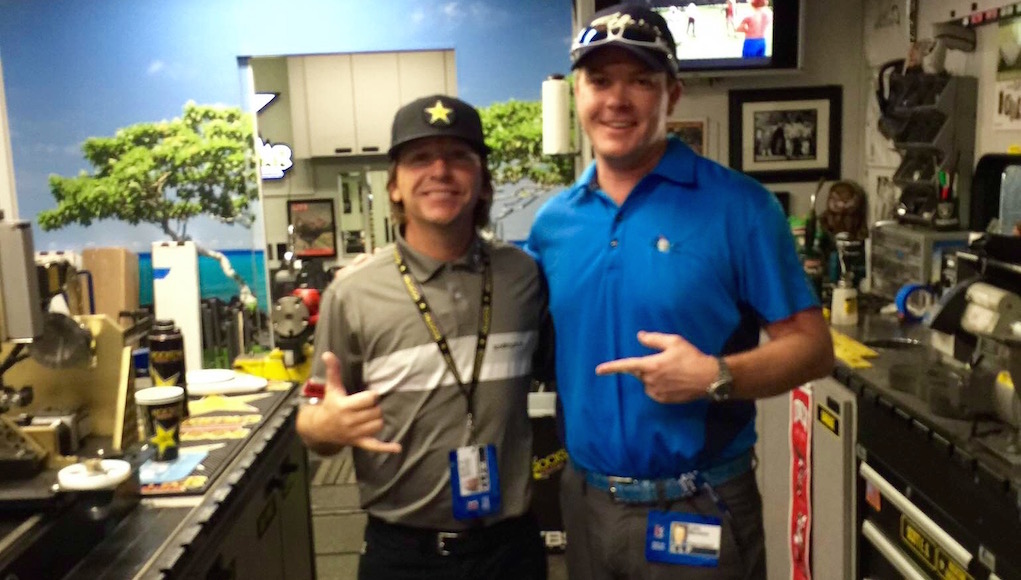
This past week I was back out on the PGA Tour working with a couple players to optimize their equipment performance. As GolfWRX readers know, Tour players are very particular with their equipment, and they want to squeeze every last bit of performance out of their clubs. I wanted to share my experience from last week with GolfWRXers, as I know these kinds of first-person accounts are of great interest to the community.
At the tournament, I was working with a player who I had not seen in a couple months. I have to apologize that I cannot name him. I have to maintain a certain level of client confidentiality about my players, but I can tell you he is a five-time winner.
The first thing I wanted to do, after a careful study of his statistics, was compare the distances he was hitting his short irons. His statistics showed me a weakness from 140-160 yards, so I thought we should first see if it was an equipment-related problem.
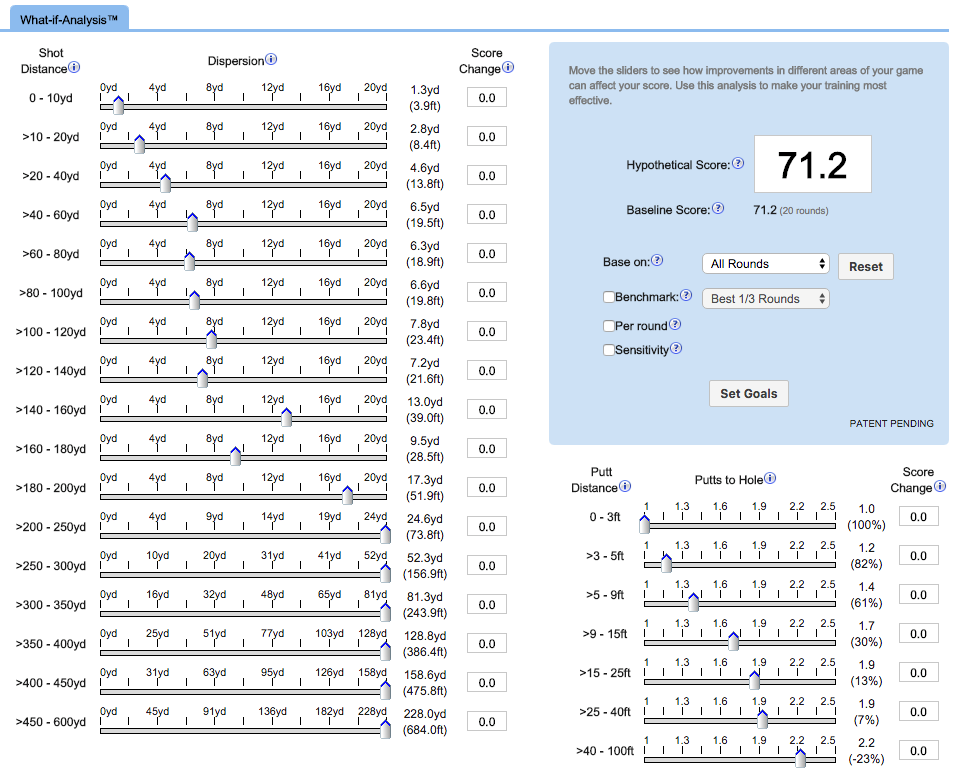
There is a major opportunity to improve performance from 140-160 yards.
I validated his on-course data by testing the carry distances with Trackman, and there was definitely a small gap between his 9 iron and 8 iron. I headed off to the Rockstar Energy truck to see my friend Scott E G (that’s me and him together on the cover image). After going through the lofts, sure enough the 9 iron had slid back 1 degree weaker than where we wanted it.
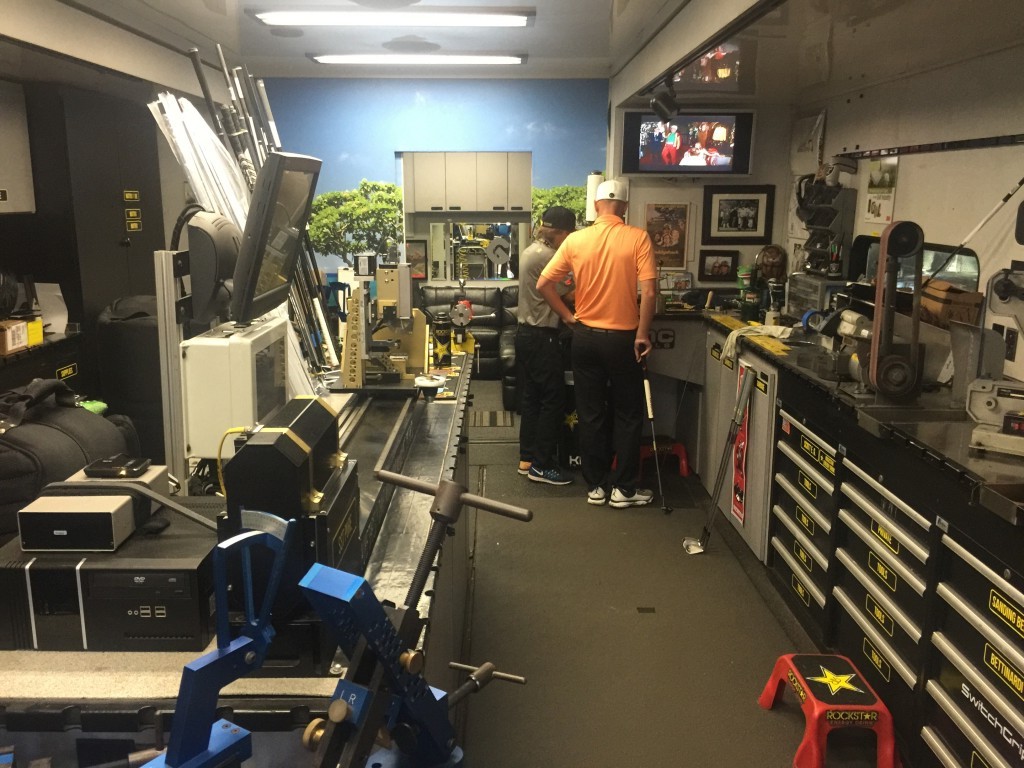
On board the Rockstar Energy truck.
The next order of business was to address the player’s hybrid. Prior to the season, we did significant testing to optimize the static weight of the driver shaft. Back in October, we increased club head speed by 5 mph by switching him from a 53-gram shaft to a 78-gram shaft. I know that sounds weird, but bear with me. My next article is going to be exclusively on shaft weight, and I will do a deep dive on this topic in the coming weeks.
We also nailed the standard 10-gram weight progression in his 3 and 5 woods. Last year, this player’s hybrid was his favorite, and the heaviest club in his bag. This year it was still good, but the 90-gram shaft was 5 grams lighter than his 5-wood shaft, and more than 30-grams lighter than his iron shafts.
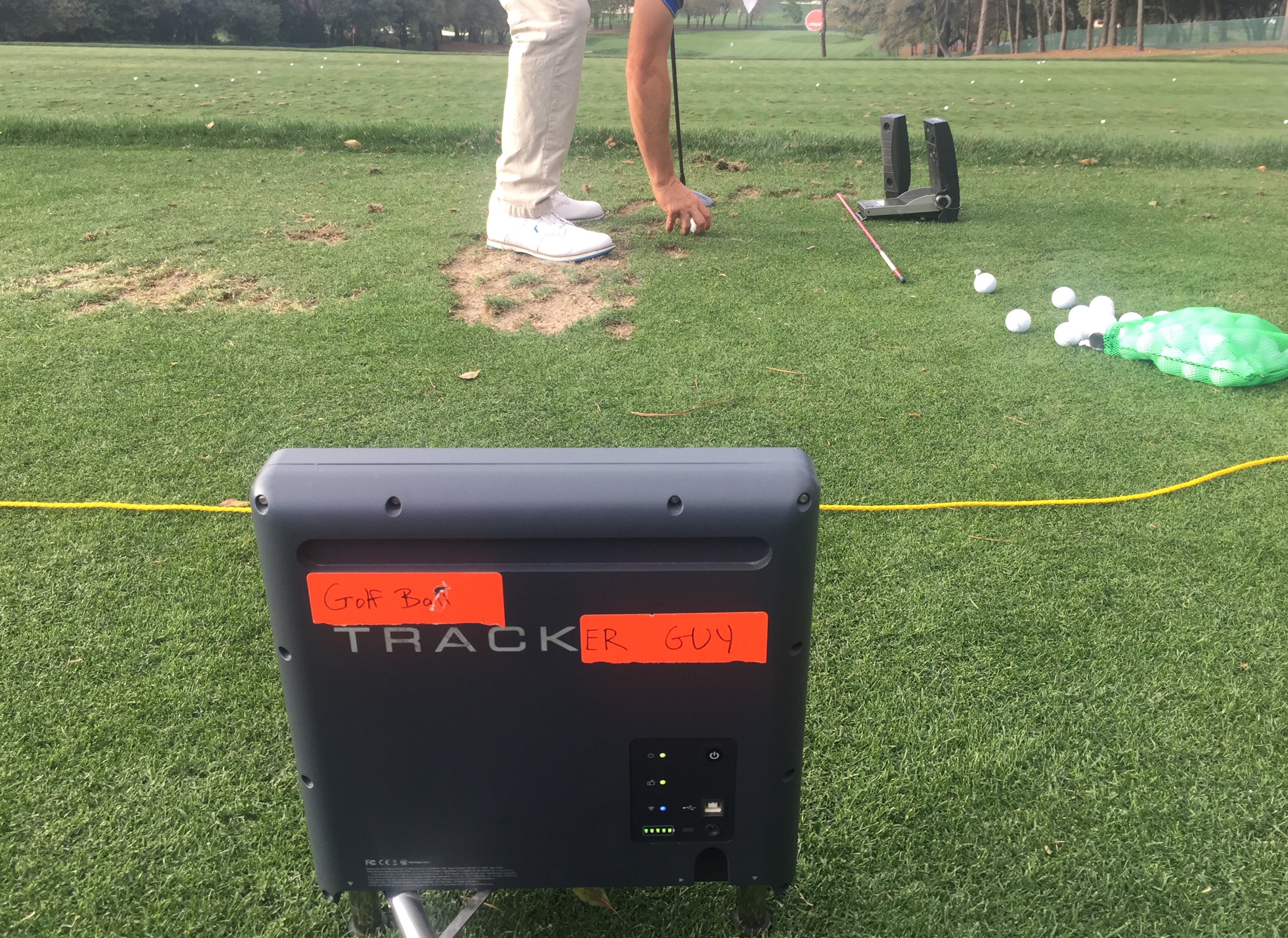
On the range with Foresight and Trackman.
Whenever I am doing testing of drivers, fairway woods, or hybrids, I will use both my Foresight GC2 with HMT and Trackman launch monitors. The HMT unit actually measures impact point, which in my opinion is the most overlooked performance characteristic. In this particular case, impact was dead center with his current gamer.
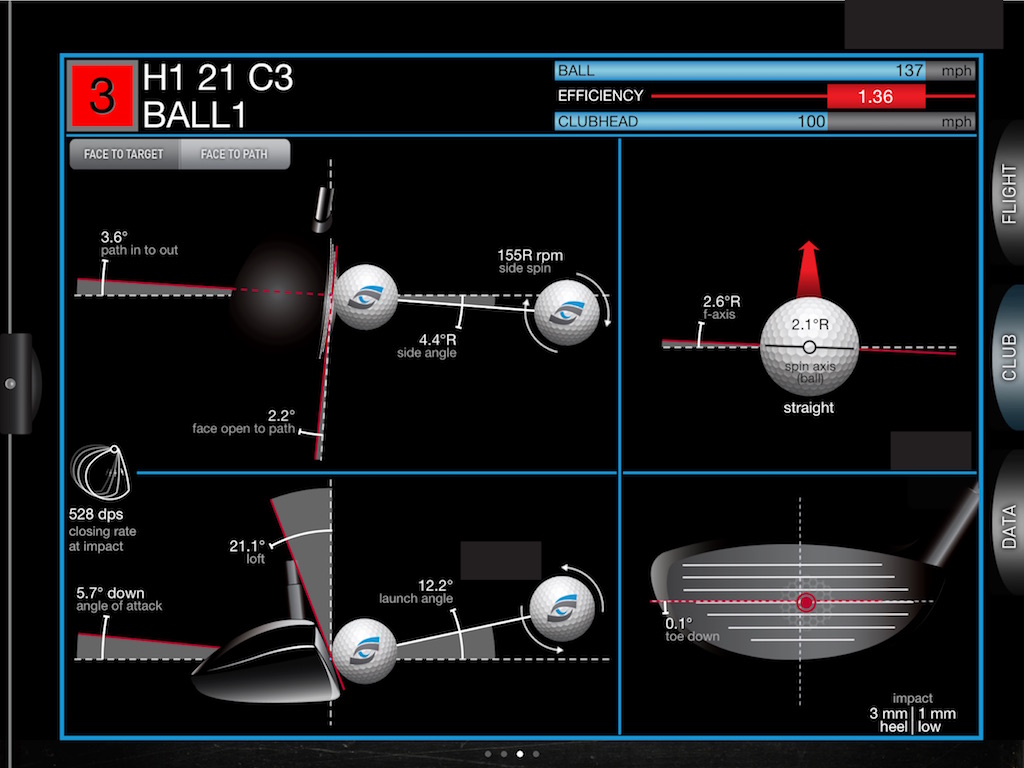
This is about as centered as contact can get.
The current hybrid setup was creating the launch angle we wanted, but the spin rate was so low that the ball was landing too hot to be an effective approach club. The launch and spin number were ones that most club players would probably like, but the resultant shallow landing angle was not going to be easy to control on PGA Tour greens. We got our hands on a couple shafts from Fujikura and Aerotech that were both in the range of 105-110 grams, and the boys over on the Titleist truck had the shafts built up and ready to go in a matter of minutes.
Every last detail, from grip type to tape job to swing weight, is nailed by the tour techs on the van, and it was no different on that day. I can tell you from experience that there is nowhere else in the world where golf clubs have to be built so quickly with such a high level of precision. Shout out to the boys on the TaylorMade truck who were helping with the gear for a couple other players, too.
With the heavier shaft in place, the player instantly started to release the club more naturally and we got the desired increase in spin rate and landing angle we were looking for. It is not uncommon for players to either drag the handle through impact or throw away the lag early in the downswing when the static weight gets too light. Most importantly, center impact was never off now that the player had a more suitable shaft.
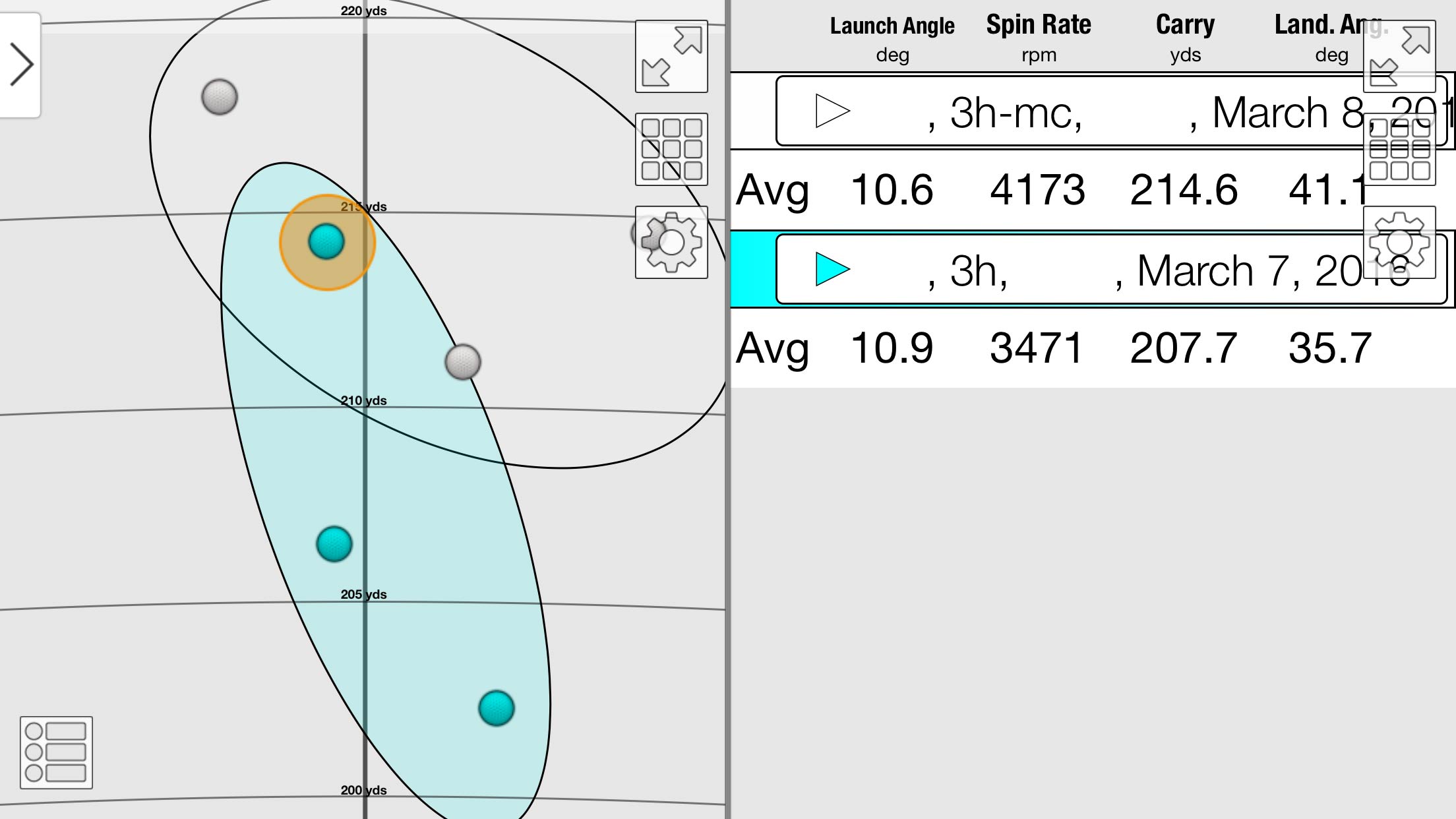
Increasing shaft weight added significantly more spin and steepened the landing angle.
What’s the takeaway for the readers out there?
The simple one is that every last component matters: static weight, loft, lie angle, etc. Having perfectly fitted clubs is a recipe, not a menu. You simply can’t pick and choose what elements you want; it’s about how they blend together to create optimum ball flight.
Don’t ever forget, however, that center impact overrides all other priorities. It doesn’t matter how great your launch and spin numbers are if you’re not making center contact. So if you’re consistently making off-center contact, then contact a local club fitter and start to experiment with weight and flex until you find something that works for you.



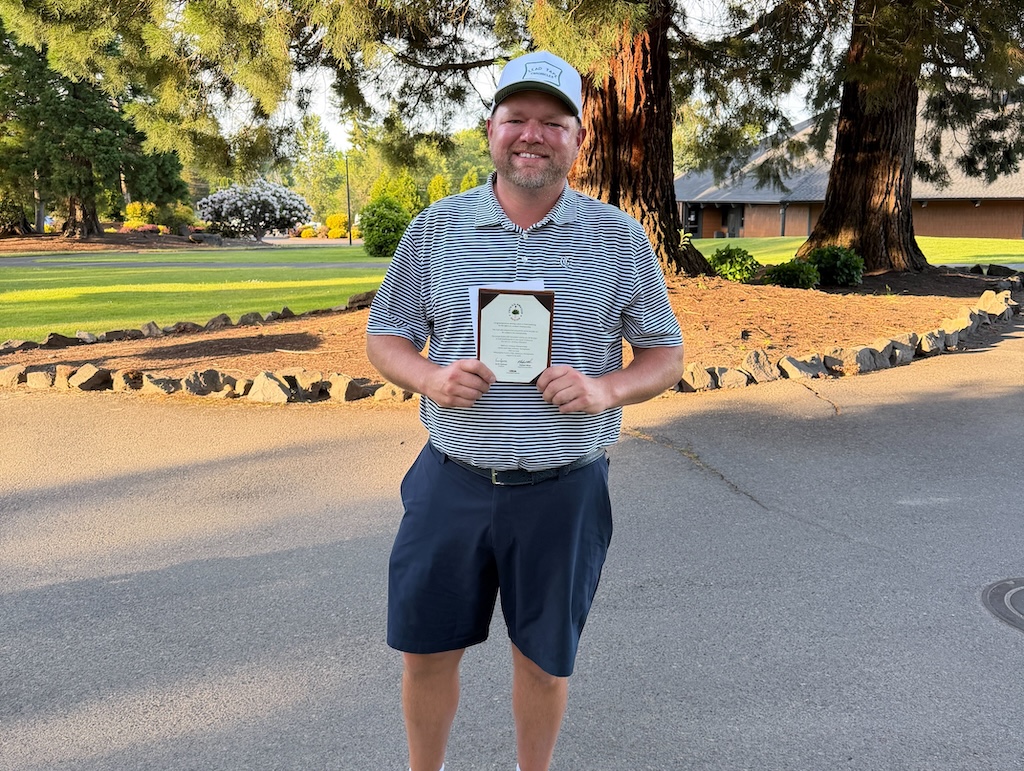
This past Monday, I played in the U.S. Amateur local qualifier at Rock Creek Country Club in Portland, Oregon. A full tee sheet from 7:30 a.m. to 1:55 p.m., the top 11 scores would make it to the U.S. Amateur final qualifying.
I teed off at 10:48 a.m.. With the 7:30 am tee time, you can get a feel for the leaders’ pace, and they were off and running on the challenging setup at Rock Creek.
View this post on Instagram
Getting to the highlight of the round on the par five 17th, a drive up the left side and 212 yards left to the front hole location. I took out a 5-iron with plans of middle of the green. The ball ended up 8 feet left of the hole, pin high. A slight downhill putt dropped in for an eagle 3 on the 17th. With the cut line looking to be anywhere from -2 to even par. This was the boost I had been waiting for all day.
With making par from the trees on 18, it was time to wait for a potential playoff with a posted score of one under par 71.
Three hours later, it was playoff time. 8 players for 6 spots. I made par on the playoff hole, which was good enough to advance to the U.S. Amateur final qualifying in July. USGA qualifiers sure deliver on all of the emotions in golf!
Club Junkie
Building my 2026 gamer WITB: Ranking the contenders and new putter projects – Club Junkie Podcast

The annual What’s In The Bag build is underway, and on this episode of Club Junkie, Brian breaks down the clubs currently leading the race for a spot in his 2026 gamer setup. From drivers and fairway woods to irons, wedges, and shafts, he ranks the equipment that’s performing best and explains what’s separating the front runners from the rest of the field.
Brian also heads into the workshop to discuss several putter projects currently on the bench. From head options and shaft choices to build ideas and testing plans, he shares what he’s working on and which putters could become serious contenders for the bag this season.
If you’re a gear junkie who loves equipment testing, club building, and the never-ending pursuit of the perfect setup, this episode is for you.
Follow Club Junkie:
Instagram: @clubjunkiepod
TikTok: @clubjunkiepod
Threads: @clubjunkiepod
X: @ClubJunkiePod
Club Junkie
Tour Edge Exotics mini driver review + TaylorMade Spider ZT Max first look – Club Junkie

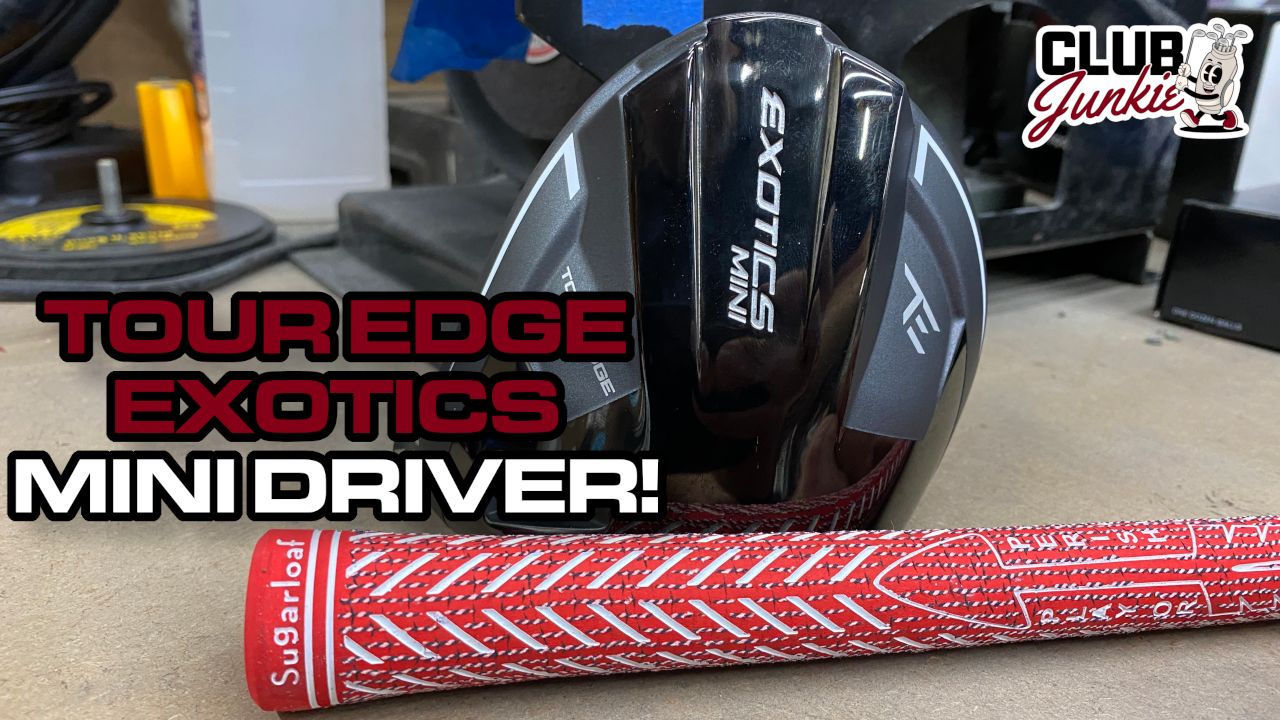
On this episode of Club Junkie, I put the new Tour Edge Exotics Mini Driver to the test and break down the performance, forgiveness, distance, and where it fits compared to a traditional driver or strong fairway wood. If you have been curious about adding a mini driver to the bag, this one is worth a look.
I also dive into the new TaylorMade Spider ZT Max putter that was recently spotted and discuss the growing zero torque putter trend. Plus, there is a closer look at the new Project X Titan Yellow shaft showing up on the PGA Tour and what makes it different from other profiles currently out there.

Justin Rose WITB 2026 (April): Full WITB breakdown with new McLaren irons

What’s the story behind Webb Simpson’s custom-stamped irons?

Memorial Tournament Tour Report: Rory McIlroy, Cameron Young switch up drivers, and more

Cadillac Championship Tour Report: Spieth’s sizable changes, McLaren Golf launches, and more

Russell Henley’s winning WITB: 2026 Charles Schwab Challenge

Kristoffer Reitan’s winning WITB: 2026 Truist Championship

Best irons 2026: Best irons overall, most forgiving irons, and more

J.T. Poston’s winning WITB: 2026 Memorial Tournament

Aaron Rai’s winning WITB: 2026 PGA Championship

Cameron Young’s winning WITB: 2026 Cadillac Championship


Ryan Palmer WITB 2026 (June)
Driver: Callaway Quantum Triple Diamond (9 degrees) Shaft: Project X HZRDUS Smoke Blue RDX 60 TX 3-wood: TaylorMade Qi10 (15 degrees) Shaft:...


Bud Cauley WITB 2026 (June)
Bud Cauley had >14 clubs in his bag when photographed prior to the Memorial Tournament. Driver: Titleist GTS2 (8 degrees) Shaft: Fujikura...


Hannah Green WITB 2026 (June)
Driver: Titleist GTS3 (10 degrees, D4 SureFit setting) Shaft: Mitsubishi Chemical Diamana RB 53 S 3-wood: Titleist GT3 (15 degrees,...


Asterisk Talley WITB 2026 (June)
Driver: TaylorMade Qi4D (9 degrees) Shaft: Fujikura Ventus Blue 6 S 3-wood: TaylorMade Qi4D (16.5 degrees) Shaft: Fujikura Ventus Blue...
-
 Equipment6 days ago
Memorial Tournament Tour Report: Rory McIlroy, Cameron Young switch up drivers, and more
-
 News2 weeks ago
Russell Henley’s winning WITB: 2026 Charles Schwab Challenge
-
 Equipment3 days ago
Best irons 2026: Best irons overall, most forgiving irons, and more
-
 Whats in the Bag4 days ago
J.T. Poston’s winning WITB: 2026 Memorial Tournament
-

 Equipment1 week ago
Details on Jason Day’s latest prototype Avoda iron setup
-
 Equipment3 weeks ago
CJ Cup Byron Nelson Tour Report: Koepka and Kim’s newest putters finally get hot
-

 News2 weeks ago
Charles Schwab Challenge Tour Report: MacIntyre, Åberg and Spaun all switch putters, TaylorMade launches new Spider
-
 Equipment2 weeks ago
Details on J.J. Spaun’s surprise putter switch


graymulligan
Mar 27, 2016 at 6:35 pm
Great write-up. You’ve captured what a few of the technical writers here can’t seem to do, the ability to translate the minutiae of what’s going on with the tech/specs into an article that doesn’t read like a wall of tedious text. Cool stuff, and interesting to read.
Snowman9000
Mar 26, 2016 at 9:23 am
IMO too many recreational players are playing clubs that are too light for them. Even slow swinging players might do better with heavier shafts. From my own attempts to find shafts, I can say that there is a gap in the market for those 90 MPH players who need heavier graphite shafts in woods and irons. I would love to find a good graphite iron shaft that is 100 grams at cut length and is not a stout shaft. There was a time when a 100 gram shaft was super light! 🙂
Lowell
Mar 25, 2016 at 3:47 pm
Great Article and makes me wish I had a chance to really dial in my equipment. One take away I got from the article is this and one that proves that lessons probably will payoff tenfold over new equipment any day. “Don’t ever forget, however, that center impact overrides all other priorities. It doesn’t matter how great your launch and spin numbers are if you’re not making center contact.” So true yet often never achieved consistently enough to worry about what clubs you play. I believe the more consistent a player gets with hitting the center of any of their clubs, the next obvious step in player progression is getting better equipment that suits them.
kn
Mar 25, 2016 at 2:59 pm
I enjoyed reading this article, as it appeals to my wanna-be tech nerd/geek side. All these variables are what keep my attention in the game. Knowing that they exist should make the average golfer realize how important it is to get clubs professionally fit for them (if they are seeking consistent game improvement).
Mike Desy
Mar 25, 2016 at 1:49 pm
My New address e-mail.
TheFightingEdFioris
Mar 24, 2016 at 11:45 pm
Very interesting stuff.. i know it seems cynical and is not the point, but the player is definitely Ryan Moore. I am definitely looking forward to the Shaft Weight article.
Andy
Mar 24, 2016 at 4:28 pm
I think the player is Ben Crane. He has 5 wins on tour, and I think he played a 53 gram shaft in his driver and 90 gram shaft in his hybrid last year. Plus, the photo shows a player wearing True Links shoes, and I believe that Ben wears those.
Scotty P
Mar 24, 2016 at 3:32 pm
How does one become a trackman Master? Thanks!
Liam Mucklow
Mar 24, 2016 at 4:21 pm
You have to become Level 2 certified and then complete and approved research study.
Leon
Mar 24, 2016 at 2:55 pm
Great article. Look forward to the incoming series.
mlecuni
Mar 24, 2016 at 2:47 pm
Great article, please post the next one quickly
: )
Chuck
Mar 24, 2016 at 12:22 pm
Great article. Well written. Smart. Interesting.
One question: If the player’s 9-iron had slid to an extra degree weak, wouldn’t that create a larger and not smaller gap between 8 and 9?
Second question: Do you see irons that are used often in practice on the range generally slipping to weaker lofts, or stronger? I have a Mitchell machine of my own, and I very often see oft-used practice clubs slipping to weaker lofts, and I never understood it. You’d think that banging them with repeated practice would strengthen the lofts.
Third question: Do you trust Trackman on a consistent basis to give you accurate carry distances? Because you and I both know just how exacting (to. the. yard. !) tour players are about carry distances with short irons. Do you ever have to resort to real-life observations with a target and a laser. (I sort of expect you’ll tell me that the players spend hours on that, on their own, without you.)
Thanks much. Looking forward to a lot more of your writing!
Liam Mucklow
Mar 24, 2016 at 1:20 pm
Great questions.
1. The gap did get larger, hence the poor performance from 140-160.
2. I have seen irons move all over the place for different players. Sometime weak, sometimes strong. The same goes with flat and upright. I believe it has to do with the delivery pattern.
3. I have done laser testing to make sure trackman’s carry distances are accurate. They are excellent, you just have to remember that it measures “Carry Flat”, so if it’s downhill it will chart Carry as where the ball is when it falls to the same elevation as the radar.
Joshuaplaysgolf
Mar 24, 2016 at 12:06 pm
LOVE this article. As a true equipment nerd and tinkerer I can fully appreciate playing with weighting, flex, and lofts to get things just right.
Double Mocha Man
Mar 24, 2016 at 12:03 pm
Looking forward to your shaft weight article. When is the tour van coming to my local muni? 🙂
Joshuaplaysgolf
Mar 24, 2016 at 12:40 pm
Lol. Right?? I thought the same thing…we’d probably wear those dudes out considering the difficulty in finding a quality fitter for us ams. Also super excited for the shaft weight article. I’ve got an Oban Kyoshi white 75 gm hanging on my wall that I’m considering reshafting to fit my M1, not sure I love the 65 gm AD-MT currently in it.
Liam Mucklow
Mar 24, 2016 at 1:21 pm
Just come up to Toronto! The Candian dollar is weak 🙂
RAT
Mar 24, 2016 at 9:54 am
Interesting, I purchased a driver that is advertised as “The Right Light” and I felt that it was too light and caused me to hit the ball right side of the fairway. This article makes sense. Interested in more info.