
Opinion & Analysis
Practicing without boundaries: How I rediscovered my short game

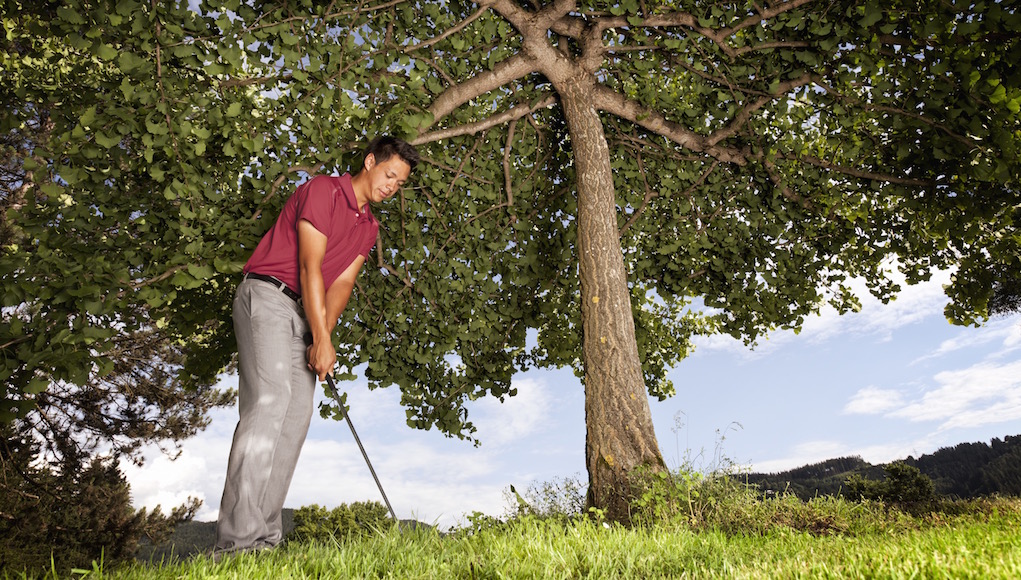
These days you will hear many instructors talking about the concept of technique versus skill as it relates to your golf game. I think this is a very important notion for players who are looking to improve, and I’ve explored it in my new book.
Many golfers become obsessed with perfecting their technique at the expense of their skill, and personally I believe it should be the other way around.
What is skill?
I had a conversation with Andrew Rice last year that stuck in my head, and I’ve been thinking about it a lot ever since. I asked him a simple question about how he felt golfers could practice more effectively. He quickly responded by saying that players should focus more on doing things “outside of the box.”
Andrew, an instructor whose opinion I strongly respect, said that the one thing he noticed with junior players is that many of them have tremendous short games and the ability to pull off all kinds of shots. He believed it had to do with the fact that they were always experimenting, and were not bound by any kind of structure or technical thoughts during their practice sessions.
In other words, they were just playing.
Immediately this made me think of my childhood and how I used to practice. When I was younger I had an amazing short game, and could get up and down from almost anywhere with a variety of shots.
The reason I was able to do this was because I would spend hours in my backyard experimenting with all kinds of wedge shots. Unfortunately, it resulted in tearing up the lawn, hitting a parked cop car, and even a few errant shots striking the house (luckily I avoided the windows). But I did improve.
All of those “play” sessions were so successful because I wasn’t thinking about wrist hinge, where the ball was in my stance, or any kind of other technical cues. I was just seeing if I could get the ball from Point A to Point B in a creative way. If something worked then I tried to recreate that feeling on the next shot.
I didn’t know it at the time, but I was developing my skill as a golfer.
As I grew older my short game got worse and worse, and I began to worry about what was causing it. The more I thought about what I was doing with the club in terms of technique, the more petrified I became of my wedge shots on the course. It got to the point where I was approaching yip territory.
My practice sessions became obsessed with trying to fix these issues, but they didn’t work. Looking back, it was clear that I lost all of the inspiration that made my short game so great as a kid, and I was trying to solve the issue in an adult way. I had lost my ability to work on my skill, and was just worrying about technique.
What changed?
The last couple of years I have regained a lot of my short game skill because I have returned to the kind of practice that got me there. Now I have my own lawn that I am free to tear up, and I spend 15-20 minutes of my practice time trying to experiment.
I throw about 10 balls on the grass and choose a bunch of different targets. One shot will be a low runner to the bucket 20 feet away from me. Another will be a lofted pitch to a towel 60 feet away. I keep shifting from shot to shot, and see what happens.
This is the kind of practice that develops your skill as a golfer. It’s random, and it gets you focusing on a different target each time. There is plenty of evidence from coaches who are looking into cognitive research that support doing this kind of practice rather than just trying to hit the same target over and over again.
Why is skill so important?
Skill is important for a golfer because a round of golf requires you to adapt to all kinds of situations. You might be stuck behind a tree, have a fluffy lie in the rough with a bunker in between you and the green, or have a severely sloped stance in the fairway.
You need to adjust your technique to each situation. I believe that is the essence of skill, being able to adapt. I have seen so many players who are able to execute amazing shots with technique that would be considered unorthodox, but because they had developed their skill as a golfer, they had the confidence to pull them off.
Don’t get me wrong though; there is absolutely a place for proper technique in your golf game. It’s certainly an important fundamental. But golfers are not robots, and I think it’s important to sometimes move your attention away from these technical thoughts and just focus on finding a way to advance the ball to your target. Isn’t that the point of this game?
So the next time you are at the range, or have a few minutes to practice in your backyard, try doing things outside of the box. Imagine there is a tree in front of you and you have to hook your 6-iron around it. Pretend there is a bunker right in front of you that you have to clear to land your wedge shot safely on the green.
Try to have fun, experiment, and play like a child. Don’t worry about your technique so much.



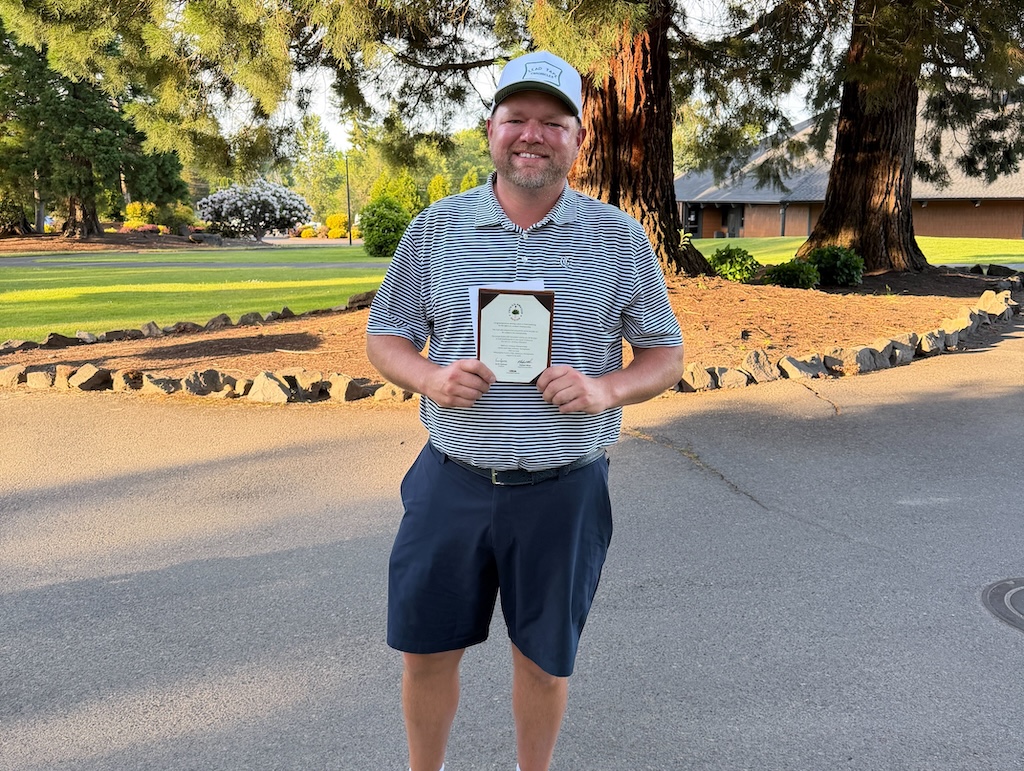
This past Monday, I played in the U.S. Amateur local qualifier at Rock Creek Country Club in Portland, Oregon. A full tee sheet from 7:30 a.m. to 1:55 p.m., the top 11 scores would make it to the U.S. Amateur final qualifying.
I teed off at 10:48 a.m.. With the 7:30 am tee time, you can get a feel for the leaders’ pace, and they were off and running on the challenging setup at Rock Creek.
View this post on Instagram
Getting to the highlight of the round on the par five 17th, a drive up the left side and 212 yards left to the front hole location. I took out a 5-iron with plans of middle of the green. The ball ended up 8 feet left of the hole, pin high. A slight downhill putt dropped in for an eagle 3 on the 17th. With the cut line looking to be anywhere from -2 to even par. This was the boost I had been waiting for all day.
With making par from the trees on 18, it was time to wait for a potential playoff with a posted score of one under par 71.
Three hours later, it was playoff time. 8 players for 6 spots. I made par on the playoff hole, which was good enough to advance to the U.S. Amateur final qualifying in July. USGA qualifiers sure deliver on all of the emotions in golf!
Club Junkie
Building my 2026 gamer WITB: Ranking the contenders and new putter projects – Club Junkie Podcast

The annual What’s In The Bag build is underway, and on this episode of Club Junkie, Brian breaks down the clubs currently leading the race for a spot in his 2026 gamer setup. From drivers and fairway woods to irons, wedges, and shafts, he ranks the equipment that’s performing best and explains what’s separating the front runners from the rest of the field.
Brian also heads into the workshop to discuss several putter projects currently on the bench. From head options and shaft choices to build ideas and testing plans, he shares what he’s working on and which putters could become serious contenders for the bag this season.
If you’re a gear junkie who loves equipment testing, club building, and the never-ending pursuit of the perfect setup, this episode is for you.
Follow Club Junkie:
Instagram: @clubjunkiepod
TikTok: @clubjunkiepod
Threads: @clubjunkiepod
X: @ClubJunkiePod
Club Junkie
Tour Edge Exotics mini driver review + TaylorMade Spider ZT Max first look – Club Junkie

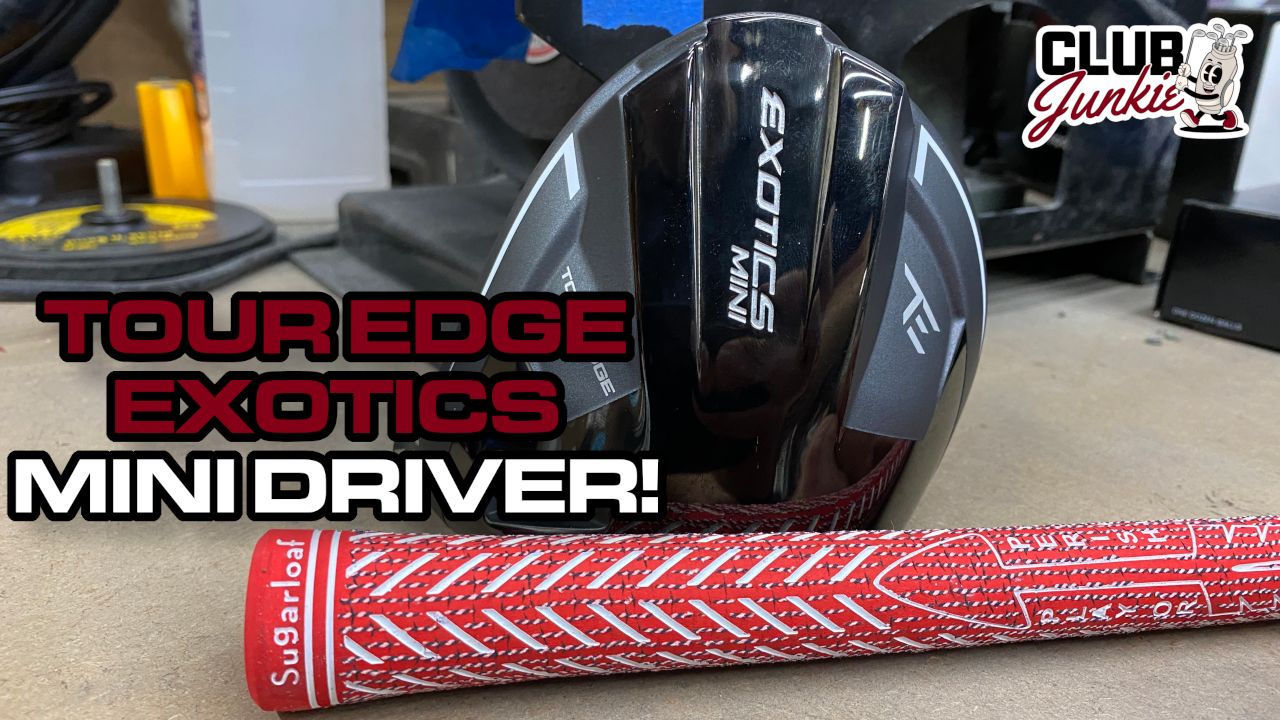
On this episode of Club Junkie, I put the new Tour Edge Exotics Mini Driver to the test and break down the performance, forgiveness, distance, and where it fits compared to a traditional driver or strong fairway wood. If you have been curious about adding a mini driver to the bag, this one is worth a look.
I also dive into the new TaylorMade Spider ZT Max putter that was recently spotted and discuss the growing zero torque putter trend. Plus, there is a closer look at the new Project X Titan Yellow shaft showing up on the PGA Tour and what makes it different from other profiles currently out there.

Justin Rose WITB 2026 (April): Full WITB breakdown with new McLaren irons

What’s the story behind Webb Simpson’s custom-stamped irons?

Memorial Tournament Tour Report: Rory McIlroy, Cameron Young switch up drivers, and more

Cadillac Championship Tour Report: Spieth’s sizable changes, McLaren Golf launches, and more

Russell Henley’s winning WITB: 2026 Charles Schwab Challenge

Kristoffer Reitan’s winning WITB: 2026 Truist Championship

Aaron Rai’s winning WITB: 2026 PGA Championship

J.T. Poston’s winning WITB: 2026 Memorial Tournament

Best irons 2026: Best irons overall, most forgiving irons, and more

Cameron Young’s winning WITB: 2026 Cadillac Championship


Bud Cauley WITB 2026 (June)
Bud Cauley had >14 clubs in his bag when photographed prior to the Memorial Tournament. Driver: Titleist GTS2 (8 degrees) Shaft: Fujikura...


Hannah Green WITB 2026 (June)
Driver: Titleist GTS3 (10 degrees, D4 SureFit setting) Shaft: Mitsubishi Chemical Diamana RB 53 S 3-wood: Titleist GT3 (15 degrees,...


Asterisk Talley WITB 2026 (June)
Driver: TaylorMade Qi4D (9 degrees) Shaft: Fujikura Ventus Blue 6 S 3-wood: TaylorMade Qi4D (16.5 degrees) Shaft: Fujikura Ventus Blue...


Brianna Do WITB 2026 (June)
Driver: Callaway Quantum Triple Diamond (9 degrees) Shaft: KBS PGW 3-wood: Callaway Elyte Titanium (15 degrees) Shaft: KBS PGW 5-wood:...
-
 Equipment6 days ago
Memorial Tournament Tour Report: Rory McIlroy, Cameron Young switch up drivers, and more
-
 News1 week ago
Russell Henley’s winning WITB: 2026 Charles Schwab Challenge
-
 Whats in the Bag3 days ago
J.T. Poston’s winning WITB: 2026 Memorial Tournament
-
 Equipment3 days ago
Best irons 2026: Best irons overall, most forgiving irons, and more
-

 Equipment1 week ago
Details on Jason Day’s latest prototype Avoda iron setup
-
 Equipment3 weeks ago
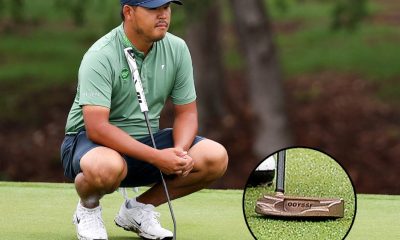
CJ Cup Byron Nelson Tour Report: Koepka and Kim’s newest putters finally get hot
-

 News2 weeks ago
Charles Schwab Challenge Tour Report: MacIntyre, Åberg and Spaun all switch putters, TaylorMade launches new Spider
-
 Equipment2 weeks ago
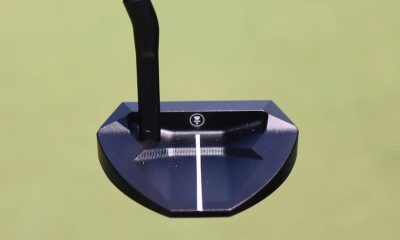
Details on J.J. Spaun’s surprise putter switch


Alex
Mar 15, 2016 at 11:42 am
I’ve just bumped into this article. Your story is my story. Outstanding wedge player as a kid, went sour in my late 20s. I still remember the endless hours of “playing” in my backyard, making up shots and pretending I was about to win the Masters if I holed out from the fringe.
I’ll definitely give it a try. The rest of my game is still in shape. But I need to regain my confidence with my wedges.
Mbwa Kali Sana
Mar 7, 2016 at 1:21 pm
YOUR article confirms what I have always contended ,e.g practicing is useless ,I never go to a driving range nor practice on a practice Green .But I play on the golf course every two days ,18 holes .often alone ,So when There’s nô one in front or behind I play several balls in different ways With different clubs .My short game is very sharp ,And at AGE over 81 ,I Still play to a 7 handicap ,Thanks to m’y short game ,which compensates for loss of distance off the TEE ,due to AGE .
rymail00
Mar 6, 2016 at 12:13 am
Great article.
There’s new articles every few days on the front page, and my personal favorite ones are practice type articles like this. I hope they keep articles like this going on a regular basis. Even if the article is about something I may already do everytime I practice there’s still always a chance of learning something new or different, or even a slightly different approach towards what we are trying to improve at. So these types of things I love reading about.
Jon Sherman
Mar 6, 2016 at 12:10 pm
Thank you! I think a lot of players need some direction in their practice sessions (me included). It’s just a matter of getting some ideas on how you can spend that time effectively.
KK
Mar 5, 2016 at 8:55 pm
Great article. Humans naturally avoid uncomfortable situations. Unfortunately, a round of golf is often full of uncomfortable situations, haha.
Ronald Montesano
Mar 5, 2016 at 7:15 pm
I have a friend (We’ll call him “The Scrambler”) who wants to know distance from the fairway down to the foot, it seems. Get him on the green, or near it, and all that goes away. If I want to bust his chops, I feign revelation of # of feet to hole; he flips out. That’s affirmation of the point you’re making, I think. Full golf is fairly fundamental, while short golf is artistic play.
Jon Sherman
Mar 6, 2016 at 12:11 pm
I would agree with that. The short game requires a lot of creativity, and there are many ways to play each shot. While technique has its place, imagination and skill are just as important.
Andy
Mar 5, 2016 at 5:24 pm
Great post. I think this is applicable to the entire game also. I see way too many people who are playing “golf swing” instead of “golf”. At the end of the day the point of the game is to get the ball in the hole in the fewest number of strokes. I practice my short game where I never hit the same shot twice, similar to what you have described above. At the range I never hit the same club more than three times in a row and spend at least 5-10 minutes hitting crazy low hooks/fades, half shots, high shots, etc. with different clubs….i.e. the shots you actually need 2-3 times a round. This has really forced me to get better and not thinking about technique and just making the ball move a certain way and has lowered my scores.
RAT
Mar 5, 2016 at 3:18 pm
Doesn’t matter how you get there as long as your 1st ( excluding cheating)! I think too many people have been watching too much instruction on TV with all the high tech computer stuff and have forgotten how to practice and play loose. Most people don’t want to learn the tuff shots because they just move the ball where it’s out of trouble and doesn’t require a special shot making attempt. I say if you want to roll the ball go bowling. I have witnessed balls being moved 10-15 feet for an unobstructed shot. I love making the tuff attempts to test my skills and to impress , (Show-n -off)! Grant you I’m not good but I love to dream up stuff and have been fairly lucky in pulling them off.I have a friend we were playing together he was in the woods and I suggested he should hit through an opening in the trees about 15 x15 inches he challenged me to do it and I did and he said 100 bucks if you do it again just a smaller hole about 6 inches over., I did but there was no pay off. Both landed on the green one rolled into the trap-First one was slick..
Philip
Mar 5, 2016 at 2:08 pm
I prefer to be creative on the course. After work, when I finish practicing on the range, take a club (8i) and play 3-4 holes until dark. In addition, during this season every 3rd or 4th round I will carry just a sunday bag with 5-6 clubs and no scorecard, and go out and enjoy the day outside. Even trying to get into trouble to see what I’ll do to get back in play.
Jon Sherman
Mar 5, 2016 at 2:45 pm
I 100% agree with you, and have written an article about that before. If it’s possible, I believe practicing on an actual golf course is one of the best ways to improve. During the summer when it stays darker out later I try to take 4-5 balls on the course and try all kinds of shots on a few holes. Not everyone has access to a situation like that, but if you can do it it will pay big dividends.
Paul Byrne
Mar 5, 2016 at 1:02 pm
Another excellent article Jon. You have hit the nail on the head. Players like yourself, who are skilled at the short game, have learned through experimentation having been exposed to a wide variety of different course conditions, lie, turf hardness, slope etc., in their early years of development. They all possess an innate understanding that if you strike the ball lower down on its circumference, or increase swing speed, it will spin more. Or, if you hit down, it will launcher lower. The skill is in finding the correct balance between each of these elements, given the prevailing conditions, in order to obtain the appropriate launch angle, trajectory and spin rate for the desired shot.
I agree, working on technique or relying on smash factor, spin loft, dynamic loft, attack angle numbers, etc, as advocated by many golf instructors, is no substitute for experimentation as you have described. That approach is more akin to ‘painting by numbers’, and is not the route to mastery.
Look forward to more of your articles.
All the best
Paul
Jon Sherman
Mar 5, 2016 at 2:42 pm
Thank you Paul! As you know it’s a delicate balance between the two.