
Opinion & Analysis
A quiet search for more distance


The purists may argue, but in marketing golf equipment distance is No. 1. All else follows.
When you understand that the USGA capped maximum ball speed on drivers back in 2008, this becomes a marketing challenge that essentially narrows the field to a few large, well-financed companies that can tell a story and have the credibility of Tour presence. Are they telling the truth when they promote a new line as being longer? The answer is yes. But in an absolute sense, the new driver line being touted may not be longer. Remember that clubs are sold to humans, not absolutes.
If I have a good swing path, 100 mph of swing speed and a relatively steep angle of attack, I might pick up yardage from a design that spins the ball less and offers multiple lofts to fine tune launch angle. Conversely, at a furious 85 mph, less spin produces a knuckle ball-like effect and I can lose yardage because I need spin to optimize carry distance. And, to go a step further, the average fairways you play are significant.
I can even try the variety of softer golf balls to see if there is a combination that is optimum. And, here again, this is golf. Optimum off the tee may not produce the same happy results around the greens. As I said, golf is a game of many variables.
Now I don’t have to explain to anyone that I’m well past the retirement age. It’s evident in many ways, not the least of which is my golf swing. I know there is a new data-driven world of smash factor, ball speed, spin and launch angles. In fact, when I occasionally play with a good young golfer, it’s fair to say I don’t speak their language. Sounds like a pure conflict: on the one hand, I bemoan my annual distance loss, on the other I pay little attention to the technical components defining distance.
I have one constant I look for: it’s “quiet,” and I’ll explain. A driver may have forgiveness designed into the head and the purpose is to make mishits somewhat more effective. Those same heads (and all heads) have what we call a “sweet spot,” which is more accurately described as the center of percussion. It’s that very small spot on the face where maximum energy is delivered to a golf ball.
I don’t care what your swing speed is: distance will be optimized by hitting the sweet spot and sound will be the key, or better said, an absence thereof.
Those soft, quiet hits mean that there is very little energy being lost at impact and the golf ball compression is being optimized. To say it a different way, when you feel vibration at impact, you are feeling energy created from an off-center hit and not being delivered to the ball. I realize that today’s 460cc heads are an echo chamber compared to the persimmon of old, but the sound created from a center of percussion hit isn’t robbing you of distance. Every great player I was privileged to watch hit balls had a quiet sound at impact, meaning that they consistently struck the center of percussion.
A good test is longer clubs. To get a 47-inch long driver head back to the ball you will speed up, however, that doesn’t mean all the speed will be at impact. And even if it is, the challenge of hitting the sweet spot is significantly greater. Some can handle it in today’s world of 40-gram shafts. One of the fun things in the game is the possibility that somewhere in the combination of longer, lighter shafts there is an extra 20 yards of distance.
Back to the smash factor, ball speed lobby. Those things are important when you are constantly hitting shots on the center of percussion. It is possible that there is a combination that even allows for a degree of mishits and is still distance friendly. This is golf, you can always find the exception, but most of us are better off looking for that quiet sound that we can produce consistently (especially on Nos. 9 and 18).
In our search, I see this mistake made all the time. A few weeks ago, I watched a demo day for a while at a club where I play. One of my friends was hitting drivers and he hit maybe 10-15 balls with each of 3 to 4 variations. I know I’ve written about this before, but only the first one, maybe two, with each club counted. After that he was setting a new challenge: his ability to adjust to that club. And if one shot along the way does go farther, it’s hard to ignore. This particular guy is an industry all-star. He has the money and buys 4-5 new drivers a year, each being the “greatest.”
We all want longer, and to paraphrase a TV ad, “Go quiet my friends.”



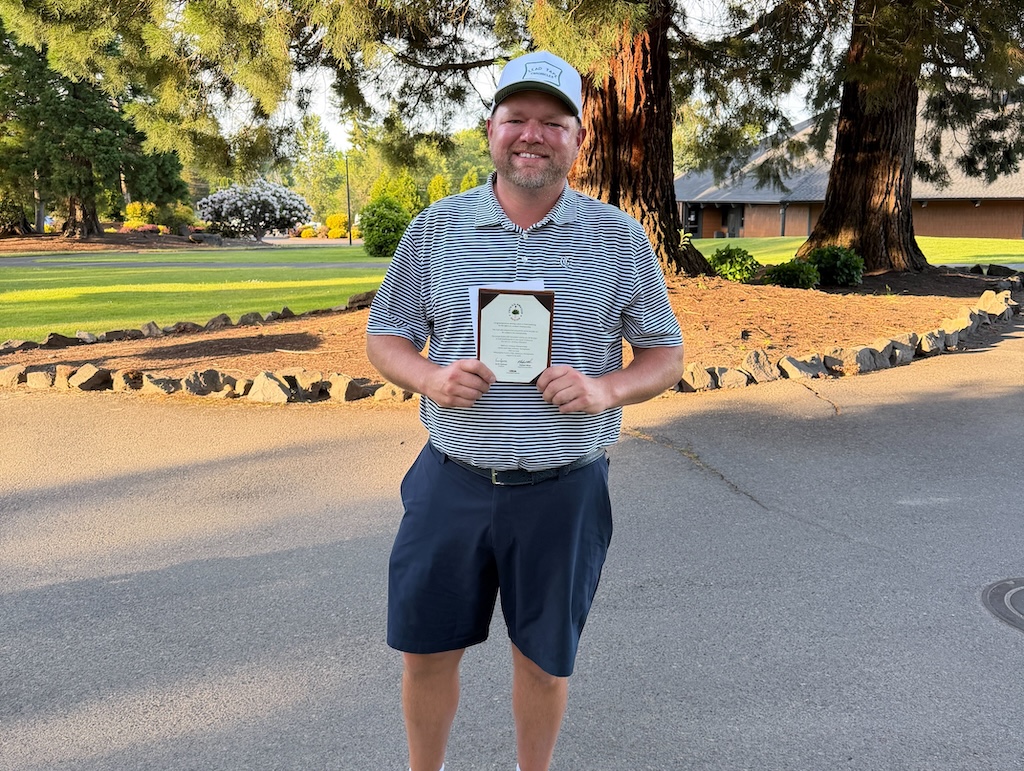
This past Monday, I played in the U.S. Amateur local qualifier at Rock Creek Country Club in Portland, Oregon. A full tee sheet from 7:30 a.m. to 1:55 p.m., the top 11 scores would make it to the U.S. Amateur final qualifying.
I teed off at 10:48 a.m.. With the 7:30 am tee time, you can get a feel for the leaders’ pace, and they were off and running on the challenging setup at Rock Creek.
View this post on Instagram
Getting to the highlight of the round on the par five 17th, a drive up the left side and 212 yards left to the front hole location. I took out a 5-iron with plans of middle of the green. The ball ended up 8 feet left of the hole, pin high. A slight downhill putt dropped in for an eagle 3 on the 17th. With the cut line looking to be anywhere from -2 to even par. This was the boost I had been waiting for all day.
With making par from the trees on 18, it was time to wait for a potential playoff with a posted score of one under par 71.
Three hours later, it was playoff time. 8 players for 6 spots. I made par on the playoff hole, which was good enough to advance to the U.S. Amateur final qualifying in July. USGA qualifiers sure deliver on all of the emotions in golf!
Club Junkie
Building my 2026 gamer WITB: Ranking the contenders and new putter projects – Club Junkie Podcast

The annual What’s In The Bag build is underway, and on this episode of Club Junkie, Brian breaks down the clubs currently leading the race for a spot in his 2026 gamer setup. From drivers and fairway woods to irons, wedges, and shafts, he ranks the equipment that’s performing best and explains what’s separating the front runners from the rest of the field.
Brian also heads into the workshop to discuss several putter projects currently on the bench. From head options and shaft choices to build ideas and testing plans, he shares what he’s working on and which putters could become serious contenders for the bag this season.
If you’re a gear junkie who loves equipment testing, club building, and the never-ending pursuit of the perfect setup, this episode is for you.
Follow Club Junkie:
Instagram: @clubjunkiepod
TikTok: @clubjunkiepod
Threads: @clubjunkiepod
X: @ClubJunkiePod
Club Junkie
Tour Edge Exotics mini driver review + TaylorMade Spider ZT Max first look – Club Junkie

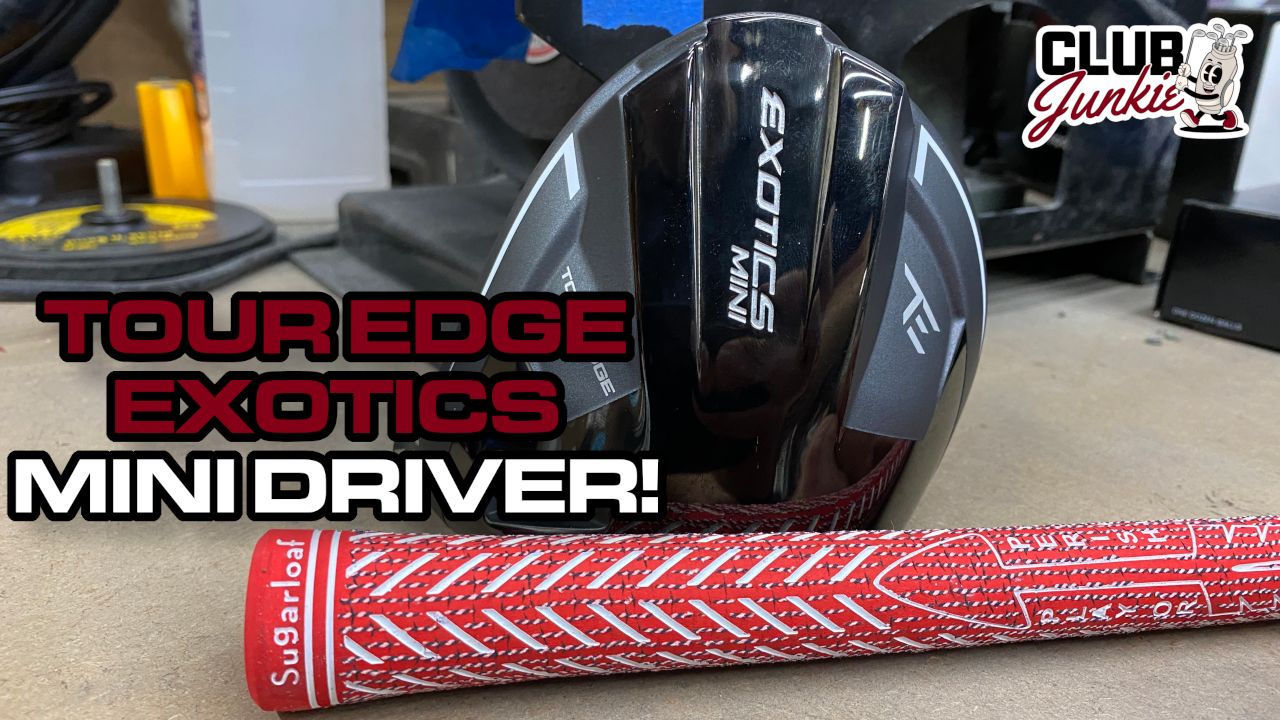
On this episode of Club Junkie, I put the new Tour Edge Exotics Mini Driver to the test and break down the performance, forgiveness, distance, and where it fits compared to a traditional driver or strong fairway wood. If you have been curious about adding a mini driver to the bag, this one is worth a look.
I also dive into the new TaylorMade Spider ZT Max putter that was recently spotted and discuss the growing zero torque putter trend. Plus, there is a closer look at the new Project X Titan Yellow shaft showing up on the PGA Tour and what makes it different from other profiles currently out there.

What’s the story behind Webb Simpson’s custom-stamped irons?

Memorial Tournament Tour Report: Rory McIlroy, Cameron Young switch up drivers, and more

Cadillac Championship Tour Report: Spieth’s sizable changes, McLaren Golf launches, and more

Russell Henley’s winning WITB: 2026 Charles Schwab Challenge

Kristoffer Reitan’s winning WITB: 2026 Truist Championship

Best irons 2026: Best irons overall, most forgiving irons, and more

J.T. Poston’s winning WITB: 2026 Memorial Tournament

Aaron Rai’s winning WITB: 2026 PGA Championship

Cameron Young’s winning WITB: 2026 Cadillac Championship

Details on Jason Day’s latest prototype Avoda iron setup


Ryan Palmer WITB 2026 (June)
Driver: Callaway Quantum Triple Diamond (9 degrees) Shaft: Project X HZRDUS Smoke Blue RDX 60 TX 3-wood: TaylorMade Qi10 (15 degrees) Shaft:...


Bud Cauley WITB 2026 (June)
Bud Cauley had >14 clubs in his bag when photographed prior to the Memorial Tournament. Driver: Titleist GTS2 (8 degrees) Shaft: Fujikura...


Hannah Green WITB 2026 (June)
Driver: Titleist GTS3 (10 degrees, D4 SureFit setting) Shaft: Mitsubishi Chemical Diamana RB 53 S 3-wood: Titleist GT3 (15 degrees,...


Asterisk Talley WITB 2026 (June)
Driver: TaylorMade Qi4D (9 degrees) Shaft: Fujikura Ventus Blue 6 S 3-wood: TaylorMade Qi4D (16.5 degrees) Shaft: Fujikura Ventus Blue...
-
 Equipment6 days ago
Memorial Tournament Tour Report: Rory McIlroy, Cameron Young switch up drivers, and more
-
 News2 weeks ago
Russell Henley’s winning WITB: 2026 Charles Schwab Challenge
-
 Equipment3 days ago
Best irons 2026: Best irons overall, most forgiving irons, and more
-
 Whats in the Bag4 days ago
J.T. Poston’s winning WITB: 2026 Memorial Tournament
-
 Equipment1 week ago
Details on Jason Day’s latest prototype Avoda iron setup
-

 Equipment3 weeks ago
CJ Cup Byron Nelson Tour Report: Koepka and Kim’s newest putters finally get hot
-

 News2 weeks ago
Charles Schwab Challenge Tour Report: MacIntyre, Åberg and Spaun all switch putters, TaylorMade launches new Spider
-

 Equipment2 weeks ago
Details on J.J. Spaun’s surprise putter switch


Jay
May 6, 2015 at 2:03 pm
Great read – as usual – THANKS
Larry
Apr 30, 2015 at 4:44 pm
Agree 100% with Barney, hitting sweet spot with driver is the best way to pick up or in my case (over 65) keep distance. I play very much with a single plane (Graves Academy) type swing (I power that swing almost all arms) and I can say with hitting sweet spot at my age I still drive as long as when I started at age 42…I just finished playing a 2 day scramble with a large group all over 60 and my drives were as good as anyone’s at worst 230 and most a lot farther… I spent a lot of time afterwards showing a handful of my age golfers how I can almost stand in place and hit a drive over 200 yards in play….using that dam Moe Norman funny looking swing putting the sweet spot on the ball…..
Chuck
Apr 30, 2015 at 4:08 pm
I like all of Barney’s contributions, but a serious question here…
I presume — and Barney hasn’t convinced me otherwise — that the Tour players I have watched hit driver all have hot-melted driver heads which lowers the sound of the strike on large titanium heads.
And about advertised distance…
Yes, Barney is right about “distance” being the end-all mantra in selling new equipment. Which of course means club manufacturers taking a driver with an extremely long (46″) and light (55 g) shaft to a mechanical testing lab, where that club would out-perform a shorter (43.5/44″) inch driver with a 70, 80 or 90 gram shaft. Trouble is, real golfers aren’t machines. And most golfer would probably be better off with shorter and less-ultralight drivers. Am I right, Tom Wishon?
Barney Adams
May 6, 2015 at 7:36 pm
Hot Melt aka Rat Glue. Hated working with it still have some shirts with patches. It’s used on tour for a variety of things and while it has a dampening effect that isn’t the primary reason. Roughly 20% of the tour players and 99% of the ” tinkerers”
alan
Apr 30, 2015 at 1:38 pm
guys dont be so literal. sound is a metaphor for good ball striking. in this case quiet sound
UA Golfer
Apr 30, 2015 at 12:49 pm
I know its a good shot when I barely feel the strike.
RG
Apr 30, 2015 at 11:42 am
Another great article Barney! You keep up the good work , young man.
Barney Adams
May 10, 2015 at 11:15 pm
10-4 on the “young” part
Brett H
Apr 30, 2015 at 9:53 am
I dont know about “quiet” shots being the long ones but the shots that you don’t feel definitely are. I can definitely say that when I upgraded drivers after a few years you immediately tell the newer tech has enormous sweet spots/forgiveness. I just cant justify upgrading every year for the amount of golf I play right now or else I probably would.
Ben
Apr 30, 2015 at 9:11 am
I have no idea what I just read
Mcconaughey
Apr 30, 2015 at 4:42 pm
Did you read it
Or did it read you
R
Apr 29, 2015 at 4:24 pm
Same concept applies with hitting your irons. The best shots are the ones you “don’t feel.”
Andy
Apr 29, 2015 at 2:00 pm
LOL… I traded for a brand new custom-fit Krank driver last year, and there is nothing quiet about it, and the face hit location matters not. It is crazy load, and sounds like the aluminum bats making contact at college baseball games. I kind of like it..
Greg V
Apr 29, 2015 at 11:19 am
Love it!
Thanks for another great article. I have one “quiet” driver, but I am always on the lookout for another!