
Opinion & Analysis
What’s easier: Free throws or three footers?

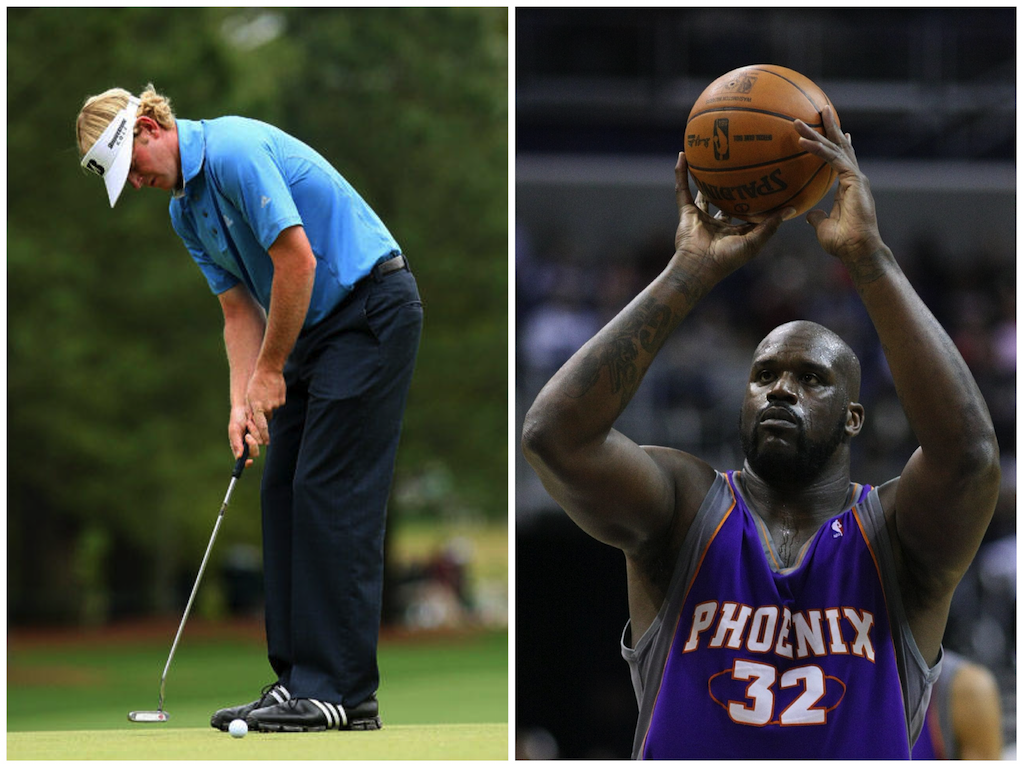
I’ve made three free throws in a row before; before, as in a long, long time ago, and I made maybe five or six in a row during drills when I was at the peak of my teenage game. I’ll also claim 10 in a row when no one was watching. I’ll bet in 35 years of golf, I’ve never made three 15-foot putts in a row, even on a practice green.
Of course there are differences and maybe shooting a free throw and making a putt don’t really correlate. But in this world today, you can statistically compare almost any two things; why not free throws and putts? See which skill is more difficult. Indulge me for a bit of fractured logic that would make Nate Silver shake his head…and if you’re really looking for a serious discussion, well, it’s a big Internet.
The golf hole is about 2.5 times the diameter of the golf ball while the basketball hoop is only 1.8 times larger than the basketball (there won’t be any footnotes to show my calculations). Now there may be some area or volume variables that I don’t understand or account for, but this isn’t fivethirtyeight.com and I’m not smart enough to know that math. Let’s just stipulate that everybody stands 15 feet away from the target. And that it is possible to fit a square peg into a round hole if the square peg is small enough.
My postulation then is, assuming roughly equivalent athleticism and skill levels for the control subjects, it should be easier for a golf ball to fit into a golf hole than it is for a basketball to go into the hoop. The larger the projectile relative to the target’s diameter, the harder it is to fit it in. This isn’t the birds and bees here, kids.
Let’s have the control subjects be top pro athletes; members of the PGA Tour and, even though we’re all crazy with college hoops right now, NBA players.
Okay, this blows my theory to smithereens. From 10-to-15 feet, lasered, this season’s leading tour pro is Matt Every and he has a one-putt from this distance 20.1 percent of the time, making 30 out of 149 tries (through the Valspar Championship). Granted, I doubt if he ever three-putts, but this percentage of makes still seems low. I mean for pros, not for me.
The bottom man on the putting totem pole is Johnson Wagner; he practically laid the goose egg, making a one-putt on just one of 43 tries from 10 to 15 feet in his first 18 rounds this year.
In the NBA, it’s quite a different story from the free throw line; granted, there are no downhill, left-to-right breaking free throws. Stephen Curry and a few others make nine out of 10 tries. And even when the air conditioning is blowing straight into his face, DeAndre Jordan makes nearly 2.5 times as many of his free throws as Matt Every does his 10-to-15-foot putts.
There are many differences, of course. The free throw shooter is facing the basket, holds the ball, looks at his target and knows he has a backboard. The golfer is sideways to the hole, holds a putter, looks at the ball, not the eventual target, and knows he could run it 5 feet by or leave it 4 feet short. Air ball.
Basketball players are likely to be sweaty and in good shape. Pro golfers, too, are in good shape; most look like professional athletes and stand out in a crowd of non-athletes. As for the other: hey, they don’t show the golfers who sweat on TV, at least not during the Sunday afternoon telecasts.
At what distance do pro golfers make the same percentage of putts as NBA players do their free throws?
At 5-to-10 feet, (these stats are only for the distances of the players’ first putt on a green), the PGA Tour percentage doesn’t increase much — a few guys hole 35 out of 100, but no one is making four out of 10 one-putts.
Inside 5 feet, we finally get to a number that fits within the NBA’s free throw percentage range. Kevin Na, at slightly more than 60 percent made one-putts from inside 5 feet, leads the PGA Tour. Kevin would be the guy you’d foul at a crucial point in the game if his sport were hoops, not holes.
The distance that matches the pro golfers’ make percentage with NBA players’ percentage of converting free throws isn’t measured by official PGA Tour statistics. I’d guess that the NBA’s “pro’s par” of 75 percent make-rate is reached by PGA pros at about 2.5-to-3.5 feet, or just outside of tap-in range.
For an NBA player, that distance isn’t a free throw — it’s called a slam-dunk.



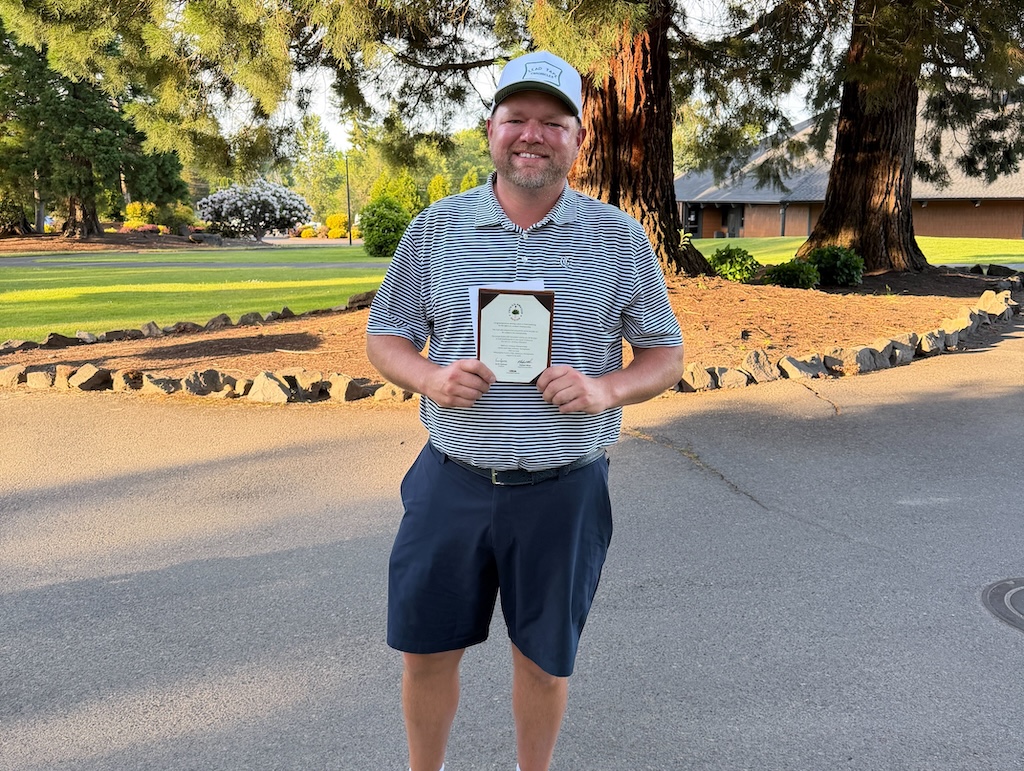
This past Monday, I played in the U.S. Amateur local qualifier at Rock Creek Country Club in Portland, Oregon. A full tee sheet from 7:30 a.m. to 1:55 p.m., the top 11 scores would make it to the U.S. Amateur final qualifying.
I teed off at 10:48 a.m.. With the 7:30 am tee time, you can get a feel for the leaders’ pace, and they were off and running on the challenging setup at Rock Creek.
View this post on Instagram
Getting to the highlight of the round on the par five 17th, a drive up the left side and 212 yards left to the front hole location. I took out a 5-iron with plans of middle of the green. The ball ended up 8 feet left of the hole, pin high. A slight downhill putt dropped in for an eagle 3 on the 17th. With the cut line looking to be anywhere from -2 to even par. This was the boost I had been waiting for all day.
With making par from the trees on 18, it was time to wait for a potential playoff with a posted score of one under par 71.
Three hours later, it was playoff time. 8 players for 6 spots. I made par on the playoff hole, which was good enough to advance to the U.S. Amateur final qualifying in July. USGA qualifiers sure deliver on all of the emotions in golf!
Club Junkie
Building my 2026 gamer WITB: Ranking the contenders and new putter projects – Club Junkie Podcast

The annual What’s In The Bag build is underway, and on this episode of Club Junkie, Brian breaks down the clubs currently leading the race for a spot in his 2026 gamer setup. From drivers and fairway woods to irons, wedges, and shafts, he ranks the equipment that’s performing best and explains what’s separating the front runners from the rest of the field.
Brian also heads into the workshop to discuss several putter projects currently on the bench. From head options and shaft choices to build ideas and testing plans, he shares what he’s working on and which putters could become serious contenders for the bag this season.
If you’re a gear junkie who loves equipment testing, club building, and the never-ending pursuit of the perfect setup, this episode is for you.
Follow Club Junkie:
Instagram: @clubjunkiepod
TikTok: @clubjunkiepod
Threads: @clubjunkiepod
X: @ClubJunkiePod
Club Junkie
Tour Edge Exotics mini driver review + TaylorMade Spider ZT Max first look – Club Junkie

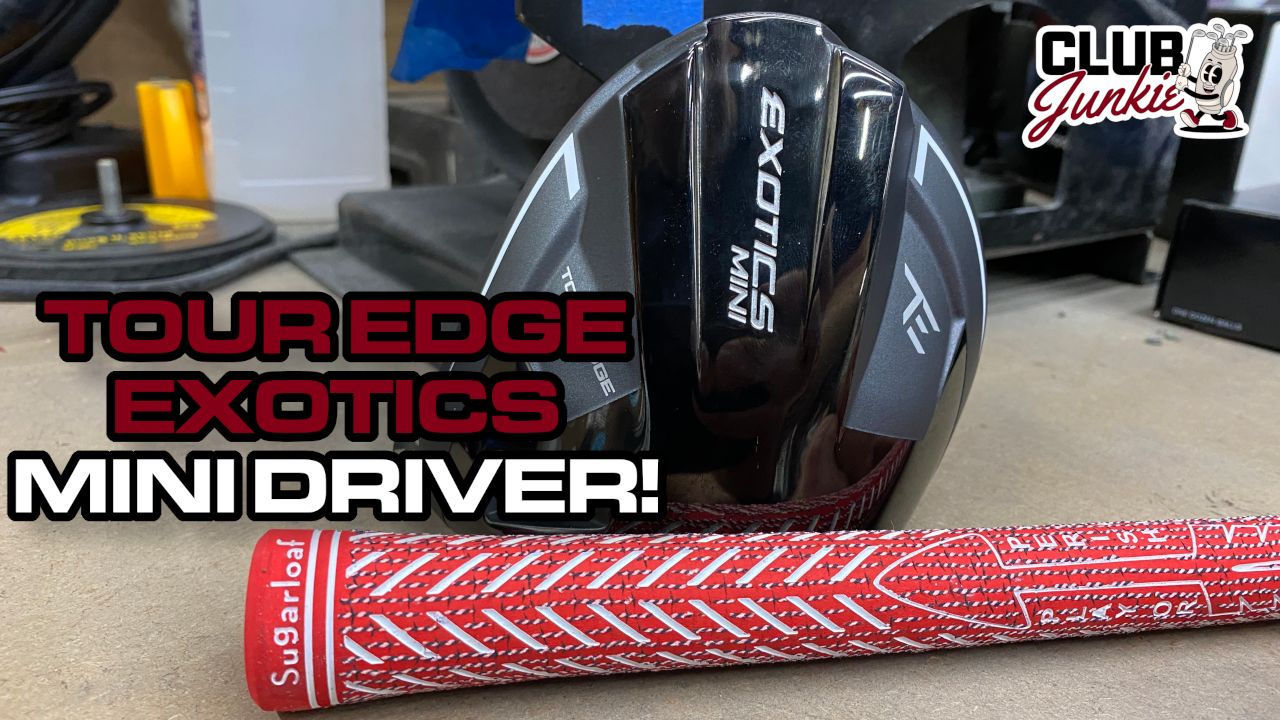
On this episode of Club Junkie, I put the new Tour Edge Exotics Mini Driver to the test and break down the performance, forgiveness, distance, and where it fits compared to a traditional driver or strong fairway wood. If you have been curious about adding a mini driver to the bag, this one is worth a look.
I also dive into the new TaylorMade Spider ZT Max putter that was recently spotted and discuss the growing zero torque putter trend. Plus, there is a closer look at the new Project X Titan Yellow shaft showing up on the PGA Tour and what makes it different from other profiles currently out there.

Justin Rose WITB 2026 (April): Full WITB breakdown with new McLaren irons

What’s the story behind Webb Simpson’s custom-stamped irons?

Memorial Tournament Tour Report: Rory McIlroy, Cameron Young switch up drivers, and more

Cadillac Championship Tour Report: Spieth’s sizable changes, McLaren Golf launches, and more

Russell Henley’s winning WITB: 2026 Charles Schwab Challenge

Kristoffer Reitan’s winning WITB: 2026 Truist Championship

Aaron Rai’s winning WITB: 2026 PGA Championship

J.T. Poston’s winning WITB: 2026 Memorial Tournament

Cameron Young’s winning WITB: 2026 Cadillac Championship

Best irons 2026: Best irons overall, most forgiving irons, and more


Bud Cauley WITB 2026 (June)
Bud Cauley had >14 clubs in his bag when photographed prior to the Memorial Tournament. Driver: Titleist GTS2 (8 degrees) Shaft: Fujikura...


Hannah Green WITB 2026 (June)
Driver: Titleist GTS3 (10 degrees, D4 SureFit setting) Shaft: Mitsubishi Chemical Diamana RB 53 S 3-wood: Titleist GT3 (15 degrees,...


Asterisk Talley WITB 2026 (June)
Driver: TaylorMade Qi4D (9 degrees) Shaft: Fujikura Ventus Blue 6 S 3-wood: TaylorMade Qi4D (16.5 degrees) Shaft: Fujikura Ventus Blue...

Brianna Do WITB 2026 (June)
Driver: Callaway Quantum Triple Diamond (9 degrees) Shaft: KBS PGW 3-wood: Callaway Elyte Titanium (15 degrees) Shaft: KBS PGW 5-wood:...
-
 Equipment6 days ago
Memorial Tournament Tour Report: Rory McIlroy, Cameron Young switch up drivers, and more
-
 News1 week ago
Russell Henley’s winning WITB: 2026 Charles Schwab Challenge
-
 Whats in the Bag3 days ago
J.T. Poston’s winning WITB: 2026 Memorial Tournament
-
 Equipment3 days ago
Best irons 2026: Best irons overall, most forgiving irons, and more
-

 Equipment1 week ago
Details on Jason Day’s latest prototype Avoda iron setup
-

 Equipment3 weeks ago
CJ Cup Byron Nelson Tour Report: Koepka and Kim’s newest putters finally get hot
-

 News2 weeks ago
Charles Schwab Challenge Tour Report: MacIntyre, Åberg and Spaun all switch putters, TaylorMade launches new Spider
-

 Equipment2 weeks ago
Details on J.J. Spaun’s surprise putter switch


NB
Mar 28, 2015 at 9:35 am
Statistics used in this article are incorrect. Just check pgatour.com for accurate 1-putt probabilities. Stats from 5-6 feet: http://www.pgatour.com/stats/stat.344.2014.html
Tom HIll
Mar 28, 2015 at 4:02 pm
Cool NB – those were just the stats I was looking for and couldn’t find – putts made at specific distances – all I could find, that was germane, at that site were putts made from under 5 feet, from 6 to 10, 10 to 15, 15 to 20 etc. Hah – just watched Kevin Na miss a 2-footer at the Valero…
Dave N
Mar 27, 2015 at 2:17 pm
Played basketball in college (85% FT shooter) and I am a mid-capper in golf. IMO, three footers are easier, generally. (Unless we’re talking a lightning fast downhill left to righter–in which a more reasonable comparison would be an outdoors FT with strong wind). Putting is a simpler motion, and most 3 footers are pretty predictable in terms of pace and direction. Shooting FTs involves active participation by so many major muscles (feet, calves, quads, gluten, abs, back, shoulders, triceps, forearms, hands, fingers) that to be out of sync or twitchy a little bit in any area means a likely miss. It’s not a hard shot by any means, but harder than 3 foot putts. To the extent that this matters- I’m rarely upset if I miss a FT in a game, but if I miss a 3 footer, I’m ticked off for days.. Fun topic/comparison.
Jake W
Mar 26, 2015 at 5:22 pm
I come up with about a 3.55 foot putt being equivalent to a free throw.
By my calculation, a free throw is taken 18.95 ball diameters from the hoop. This equates to 31.83″ from the hole on a putt, given that a golf ball is 1.68″ diameter. Then you have to consider the ratio of ball size to hole size (2.53 for golf, 1.89 for basketball). 2.53/1.89 is 1.34. 1.34 times 31.83″ equals 42.65″ which converts to a 3.55 foot putt.
I realize there’s some assumptions made here and it probably doesn’t follow perfect logic, but I’m trying not to over-think this…
Any questions?
Jafar
Mar 26, 2015 at 3:45 pm
I think it’s hard to compare the two because in basketball your fingers are in contact with the ball till the very end of the release so you can add more “feel” to it.
In golf you have a club, and therefore only feel something until after contact has been made.
But I like the idea of correlating the two sports despite this.
Phil
Mar 25, 2015 at 1:54 pm
I’ll have to go with freethrows. Definitely both include pressure and major nerves, but freethrows at the end of a game usually mean you’re exhausted and winded.
Mnmlist Golfr
Mar 25, 2015 at 11:59 am
3-footers on the PGA Tour = Point-After-Touchdown in the NFL
Scooter McGavin
Mar 25, 2015 at 6:56 am
I’m not even good at golf, but as someone who has played both sports, I’m still going to have to say 3 footers are easier.
Vadim
Mar 24, 2015 at 11:19 pm
what is the point of this article again?
Rick
Mar 26, 2015 at 1:49 pm
Jesus-It’s entertainment. lighten up
mike
Mar 24, 2015 at 7:08 pm
At least on the professional side, 3 footers are much easier. Just have to look at 3 footer converstion rates on the PGA tour vs the free throws percentages in the NBA. It’s a no brainer.