
Equipment
2014 Gear Trials: Best Game-Improvement Irons


Let’s start with the assumption that all golf equipment purchases are made by golfers who intend to improve their games. Why then does the golf industry use the label of “game improvement” to almost exclusively describe oversized irons? Isn’t every set of irons, from blades and boxed sets, created for game improvement?
This list, which we are hesitantly calling Best Game-Improvement Irons, includes models that are considerably larger than those on our 2014 Gear Trials: Best Players Irons list. That makes them a better fit for higher-handicap players, as well as golfers who don’t mind a larger-sized iron because of the gains in distance, forgiveness and accuracy they can provide.
How do you know what type of irons you should be playing? This list, combined with our Best Players Irons list, is a great place to start. We’re encouraging our readers to find a reputable fitter who can help them decide whether smaller, more workable players irons or larger, more forgiving game-improvement irons will lead to more pars and birdies.
Before you do that, however, make sure to read through this list and our other Gear Trials: Best Clubs lists to better understand modern golf equipment technology and how it can lead to seriously longer, straighter and more consistent shots when properly fit.
Who votes?
In our past best clubs list, we relied on both the feedback of our equipment editors and an elite panel of custom fitters located across North America. For this year’s list, we decided we needed another component: mass player testing of every major manufacturer’s irons performed by fitters at Miles of Golf in Ypsilanti, Mich. Those fitters spent eight days with 33 different testers of various ability levels evaluating a total of 17 different game-improvement irons. Each of the iron sets had its 6 iron tested with its stock stiff-flex shaft. The data was then normalized by the team at Miles of Golf in order to rank each iron’s launch, spin and smash factor.
After that, we surveyed our five other top custom fitters located across North America: Carl’s Golfland, Modern Golf, Morton Golf and two other custom fitters who chose to remain anonymous on the top performing players irons in each category.
The scoring process
Unlike in years past, this year’s scores were entirely based on the performance of each iron, removing the subjective categories of looks, sound and feel from the equation. What was left was the votes of our custom fitters (60 percent of an iron’s score), the results of our mass player test (30 percent of a iron’s score) and the votes of our staff members (10 percent of a iron’s score).
Now that we’ve added up the scores, we present to you our list of the absolute best game-improvement irons in golf. We consider each of these irons to be a winner, which is why they’re listed in alphabetical order (Note: You can click the images of each iron to enlarge the text).
Distance
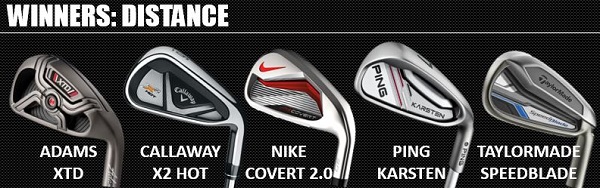 Listed in alphabetic order
Golfers tend to equate game-improvement irons with distance, and this year’s crop of game-improvement irons is the longest in the game’s history. Adams’ XTD, Callaway’s X2 Hot, Ping’s Karsten, Nike’s Covert 2.0 and TaylorMade’s SpeedBlade fly unbelievable distances: like a club or two longer than the one-piece forgings that many of our readers swear by.
We know what you’re thinking: “Why should I care how far I hit my irons?” Remember, none of these Distance-First irons are one-trick ponies. They score very highly in forgiveness as well as distance and just happen to be the longest irons we tested as well.
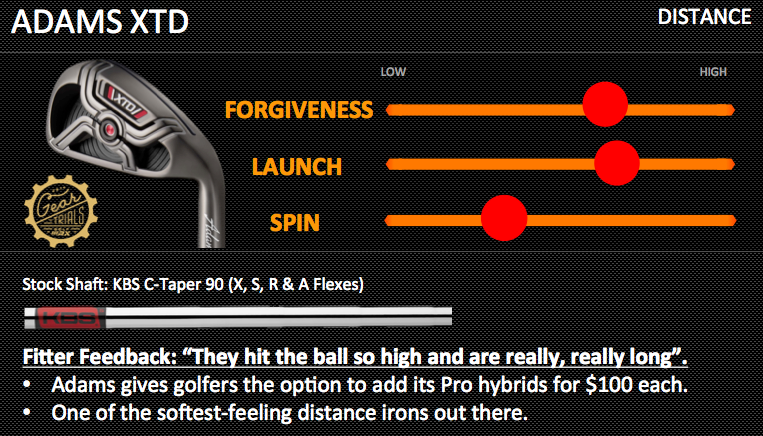
[colored_box color=”white”]Tech Talk: Adams’ XTD irons are a favorite of our panel of custom fitters because of their high launch, which is fueled by these irons’ comparatively weaker lofts (28-degree 6 iron). You’d think that would result in shorter-flying shots, but the opposite is true thanks to the XTD’s extremely thin 450 carpenter stainless steel faces and Cut-Thru slot technology in their soles.
These irons also use what Adams is calling a “Cross Cavity” to move the XTD’s center of gravity deeper in the clubhead. That improves their moment of inertia (MOI), a measure of an iron’s forgiveness, and helps these irons perform more consistently on mishits.
Golfers looking for more height and distance from their long irons can swap the XTD 3 and 4 irons for Adams’ Pro hybrids, which made our 2014 Gear Trials: Best Hybrids list in our Distance-First and Balanced-Performance categories.
[button color=”red” link=”http://www.golfwrx.com/178773/adams-golfs-new-xtd-cross-cavity-irons/”]Read more about the XTD irons irons[/button] [button color=”red” link=”http://www.amazon.com/gp/product/B00J4IC49O/ref=as_li_qf_sp_asin_il_tl?ie=UTF8&camp=1789&creative=9325&creativeASIN=B00J4IC49O&linkCode=as2&tag=golfwrxcom-20&linkId=UXJXRWTIEDOZFWXG”]Buy the XTD irons[/button][/colored_box]
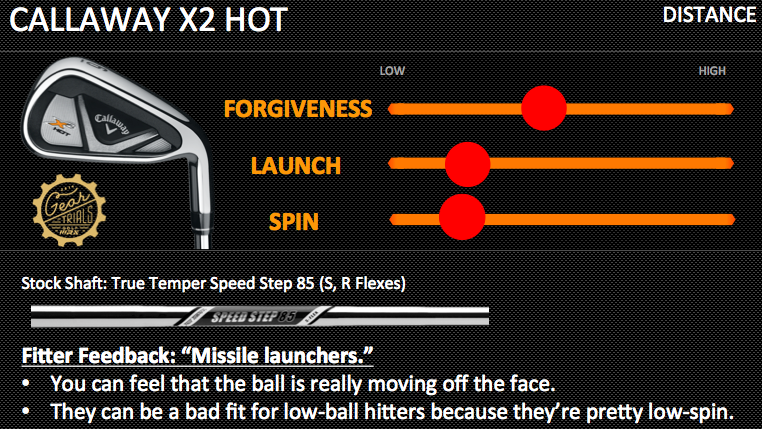
[colored_box color=”white”]Tech Talk: Callaway’s X2 Hot irons are a lot like the company’s Apex irons that we gushed about in our Best Players Irons list except that they’re a little larger and more forgiving. That makes them a better fit for higher-handicap players, and their cast construction also makes them available for the much more palatable price of $699, which is $400 cheaper than the Apex.
Many of our readers don’t equate cast irons with the quality of forged models, but what they might not know is that the casting process offers specific advantages over forgings, particularly with game-improvement irons. These irons have extremely thin faces, which along with their deep undercuts creates more discretionary weight for Callaway engineers to place around the perimeter of the irons to make them more forgiving.
We also love that Callaway decided to include a “stabilizing arch” on the back of the iron faces, which improves sound and maintains more consistent ball speeds on shots hit across the clubface to make your bad shots fly more like your good shots.
[button color=”red” link=”http://www.golfwrx.com/149656/callaway-x2-hot-and-x2-hot-pro-irons/”]Read more about the X2 Hot irons[/button] [button color=”red” link=”http://www.amazon.com/gp/product/B00GASSFO4/ref=as_li_qf_sp_asin_il_tl?ie=UTF8&camp=1789&creative=9325&creativeASIN=B00GASSFO4&linkCode=as2&tag=golfwrxcom-20&linkId=CKZU4WTXTPYN3EPJ”]Buy the X2 Hot irons[/button][/colored_box]
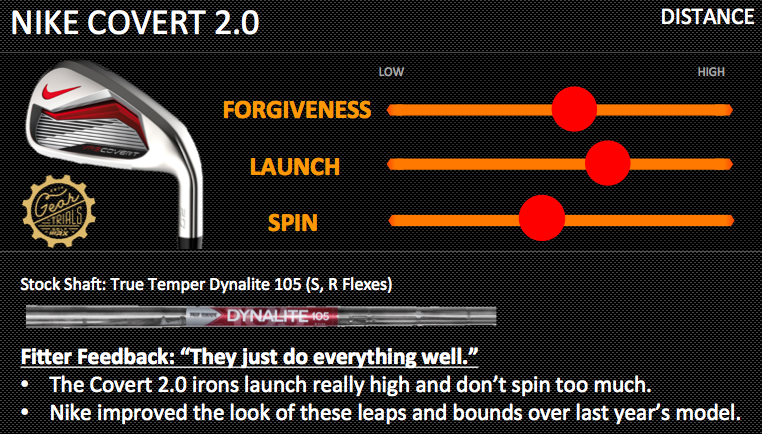
[colored_box color=”white”]Tech Talk: Nike takes the typical game-improvement iron formula a step further with its Covert 2.0 irons, which use the company’s ultra-thin NexCor faces to deliver top-notch ball speeds across the face.
The Covert 2.0’s are really large, so they’re not meant for better players — that’s why the company’s Covert Forged and VR Forged Pro Combo irons were made — but like most Nike irons they look fantastic for their size.
We appreciate Nike’s design philosophy of moving the CG of its irons closer to the true center of the clubface, which is easier said than done in iron design. That not only creates a more inviting visual at address, but offers more more consistent ball speeds on shots hit on the toe: a common error of high-handicappers.
[button color=”red” link=”http://www.amazon.com/gp/product/B00HB6Q3SE/ref=as_li_qf_sp_asin_il_tl?ie=UTF8&camp=1789&creative=9325&creativeASIN=B00HB6Q3SE&linkCode=as2&tag=golfwrxcom-20&linkId=N2QEKOY4CIF5E2KS”]Buy Nike’s Covert 2.0 irons[/button][/colored_box]
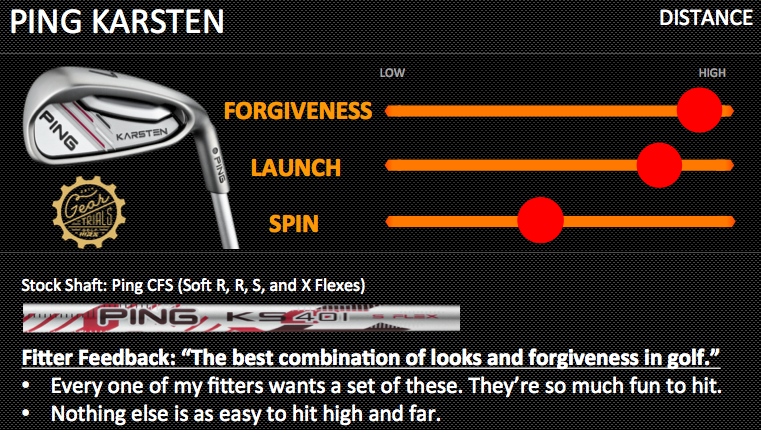
[colored_box color=”white”]Tech Talk: Ping’s Karsten irons are the first Ping product to make our distance-first category in 2014 Gear Trials, but you’ll probably notice that in true Ping spirit they also made our Forgiveness-First and Balanced-Performance categories. The Karsten and Nike’s Covert 2.0 are the only game-improvement irons to earn that distinction.
The Karsten irons have the longest heel-to-toe profile of any iron the company has ever produced. That, combined with the Karsten’s extra-wide soles, create an extremely low, deep center of gravity that has helped many golfers hit higher, longer and straighter iron shots than they ever have before.
The irons also have the thinnest iron faces the company has ever produced, but they’re reinforced with Ping’s Custom Tuning Port (CTP) to create more consistency and improve their sound and feel. There is truly no more forgiving iron in golf than the Karsten, which come stock with 3 and 4 hybrids that replace their corresponding irons. Golfers can also choose to replace the set’s 5 iron with a 5 hybrid, which makes the set even more playable for high-handicappers.
[button color=”red” link=”http://www.golfwrx.com/192473/ping-2014-karsten-hybrid-iron-set/”]Read more about the Karsten irons[/button][/colored_box]
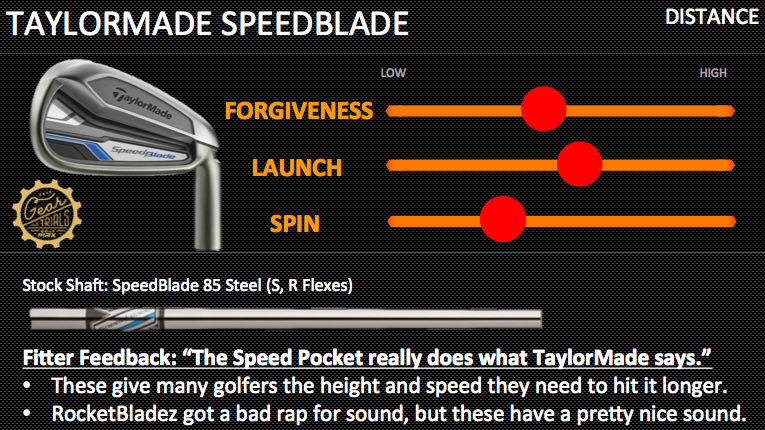
[colored_box color=”white”]Tech Talk: TaylorMade’s SpeedBlade irons are the second-generation of the company’s game-changing RocketBladez irons, which sold like hot cakes because of the unbelievable distances golfers were able to hit them.
The SpeedBlade irons aren’t all-too-different from RocketBladez and we think that’s a good thing. They’re cast from the same 17-4 stainless steel, but have an improved Speed Pocket that works with the irons’ slightly lower CG to help them launch crazy high for their strong lofts (26.5-degree 6 iron).
If you’re in search of one of the best-looking game-improvement irons in golf that just happens to fly as far (if not farther) than just about every other GI iron, SpeedBlade is the ticket.
[button color=”red” link=”http://www.golfwrx.com/143879/taylormade-speedblade-irons-editor-review/”]Read our review of the SpeedBlade irons[/button] [button color=”red” link=”http://www.amazon.com/gp/product/B00F8G5VYG/ref=as_li_qf_sp_asin_il_tl?ie=UTF8&camp=1789&creative=9325&creativeASIN=B00F8G5VYG&linkCode=as2&tag=golfwrxcom-20&linkId=D7IAY2DHL3ZZWF3N”]Buy SpeedBlade[/button][/colored_box]
Forgiveness
 Listed in alphabetic order
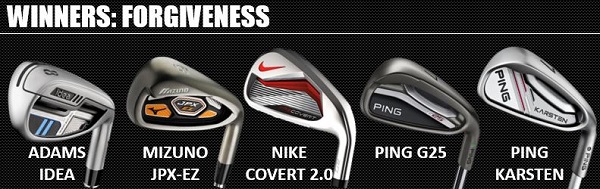
When it comes to forgiveness, bigger is almost always better, which is why our list of Forgiveness-First Game-Improvement irons are five of the largest irons on this list. While Mizuno’s JPX-EX, Nike’s Covert 2.0 and Ping’s G25 irons could be played by everyone from high-handicappers to single-digit golfers, Adams’ idea and Ping’s Karsten push the size limits of what accomplished golfers might be willing to put in their bag.
If you’re struggling to hit your current set of game-improvement irons high enough or consistently, don’t be scared to give these a try. We’ve found that most golfers are more than willing to play a larger iron if it leads to smaller numbers on their scorecard.
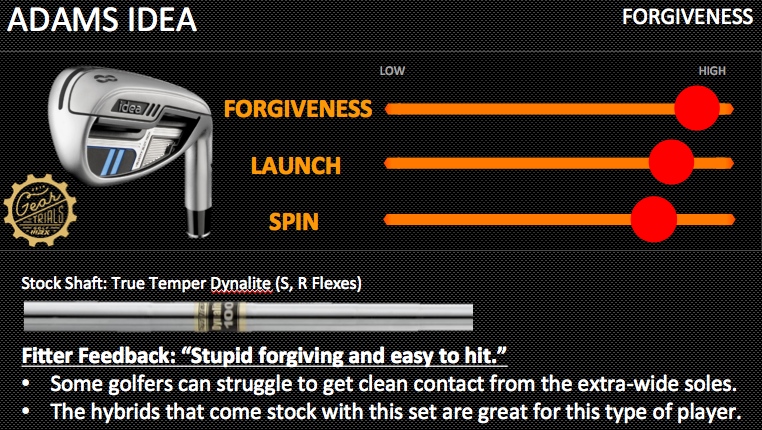
[colored_box color=”white”]Tech Talk: Adams’ idea hybrid-irons set takes the company’s original Cut-Thru slot technology and puts it on (USGA-legal) steroids. Not only are there slots on the soles of the hybrids and irons, but there are also what Adams calls “wrap-around” slots on the toe of the clubs, which create more ball speed on shots that are struck on that area of the clubface.
The idea’s set makeup includes five hybrids that replace a typical set’s 3-to-7 irons and as many as six more traditional-looking irons and wedges (8-PW, GW, SW LW), making the idea hybrids-irons the best set on this list for golfers who struggle to get their shots airborne.
More accomplished golfers might struggle to make clean contact with the idea’s wide-soled irons and hybrids, but they’re not the target audience here. If you find yourself unintentionally hitting more ground balls than fly balls, then these hybrids and irons could change that.
[button color=”red” link=”http://www.amazon.com/gp/product/B00FRF8EGU/ref=as_li_qf_sp_asin_il_tl?ie=UTF8&camp=1789&creative=9325&creativeASIN=B00FRF8EGU&linkCode=as2&tag=golfwrxcom-20&linkId=4AHFEMR5A2X3P2BQ”]Buy the idea irons[/button][/colored_box]
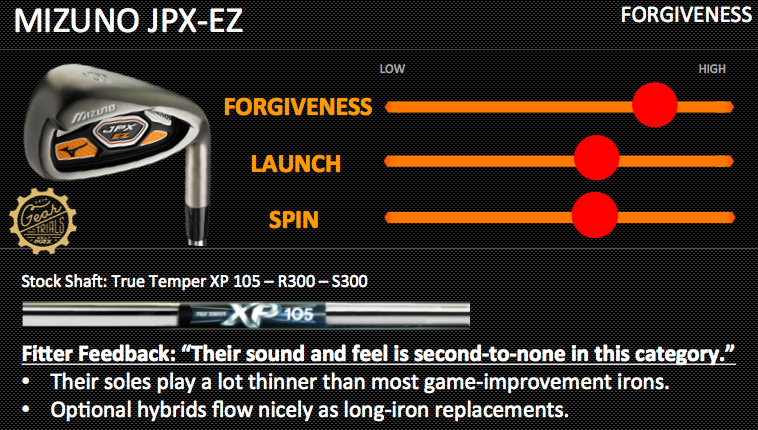
[colored_box color=”white”]Tech Talk: Mizuno’s JPX-EX irons could be the irons on this list that convince purists to finally make the switch to a set of game-improvement irons.
Mizuno’s name is synonymous with irons that feel terrific, so it’s no surprise that the JPX-EZ irons get top marks for sound and feel. The long and mid irons (4-7) create the fastest ball speeds of any Mizuno irons thanks to their Hot Face design, which uses a multi-thickness face to create more ball speed. The short irons and wedges (8-GW) trade distance for more consistency with faces that will lead to fewer “flyers.”
Mizuno also deserves a pat on the back for offering the JPX-EZ with a true aftermarket shaft, True Temper’s XP 105 in R and S flexes, as well as a high-quality Fujikura Orochi graphite option.
[button color=”red” link=”http://www.golfwrx.com/127802/2014-mizuno-jpx-ez-forged-and-jpx-ez-irons-spotted/”]Read more about the JPX-EZ irons[/button][button color=”red” link=”http://www.amazon.com/gp/product/B00EW4B6XA/ref=as_li_qf_sp_asin_il_tl?ie=UTF8&camp=1789&creative=9325&creativeASIN=B00EW4B6XA&linkCode=as2&tag=golfwrxcom-20&linkId=BODKPAMTAI4OYRYV”]Buy the JPX-EZ[/button][/colored_box]
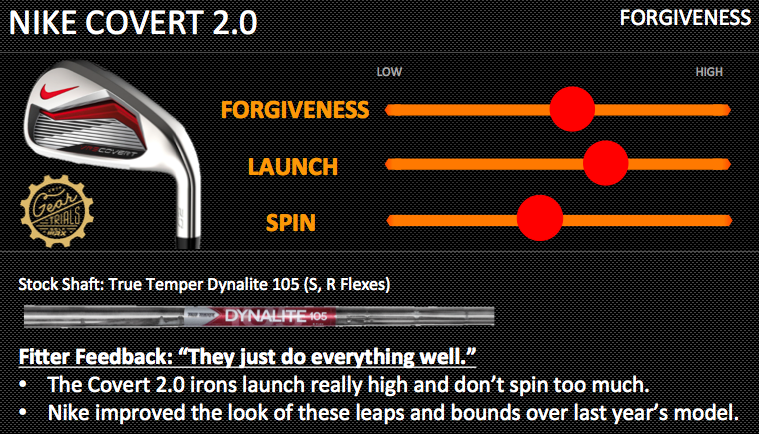
[colored_box color=”white”]Tech Talk: Nike takes the typical game-improvement iron formula a step further with its Covert 2.0 irons, which use the company’s ultra-thin NexCor faces to deliver top-notch ball speeds across the face.
The Covert 2.0’s are really large, so they’re not meant for better players — that’s why the company’s Covert Forged and VR Forged Pro Combo irons were made — but like most Nike irons they look fantastic for their size.
We appreciate Nike’s design philosophy of moving the CG of its irons closer to the true center of the clubface, which is easier said than done in iron design. That not only creates a more inviting visual at address, but offers more more consistent ball speeds on shots hit on the toe: a common error of high-handicappers.
[button color=”red” link=”http://www.amazon.com/gp/product/B00HB6Q3SE/ref=as_li_qf_sp_asin_il_tl?ie=UTF8&camp=1789&creative=9325&creativeASIN=B00HB6Q3SE&linkCode=as2&tag=golfwrxcom-20&linkId=N2QEKOY4CIF5E2KS”]Buy Nike’s Covert 2.0 irons[/button][/colored_box]
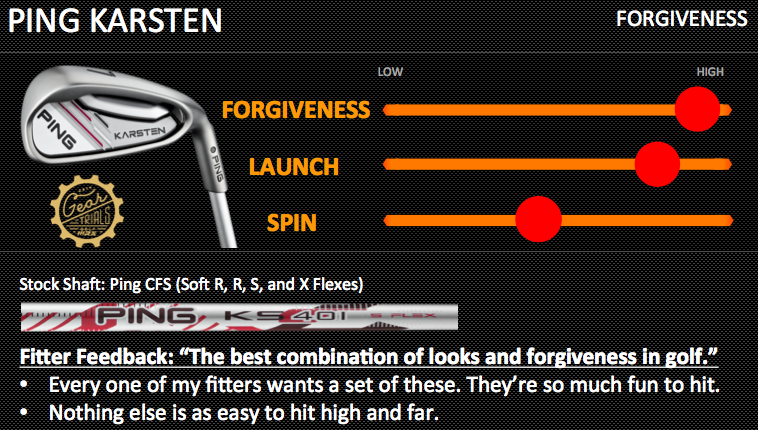
[colored_box color=”white”]Tech Talk: Ping’s Karsten irons are the first Ping product to make our distance-first category in 2014 Gear Trials, but you’ll probably notice that in true Ping spirit they also made our Forgiveness-First and Balanced-Performance categories. The Karsten and Nike’s Covert 2.0 are the only game-improvement irons to earn that distinction.
The Karsten irons have the longest heel-to-toe profile of any iron the company has ever produced. That, combined with the Karsten’s extra-wide soles, create an extremely low, deep center of gravity that has helped many golfers hit higher, longer and straighter iron shots than they ever have before.
The irons also have the thinnest iron faces the company has ever produced, but they’re reinforced with Ping’s Custom Tuning Port (CTP) to create more consistency and improve their sound and feel. There is truly no more forgiving iron in golf than the Karsten, which come stock with 3 and 4 hybrids that replace their corresponding irons. Golfers can also choose to replace the set’s 5 iron with a 5 hybrid, which makes the set even more playable for high-handicappers.
[button color=”red” link=”http://www.golfwrx.com/192473/ping-2014-karsten-hybrid-iron-set/”]Read more about the Karsten irons[/button][/colored_box]
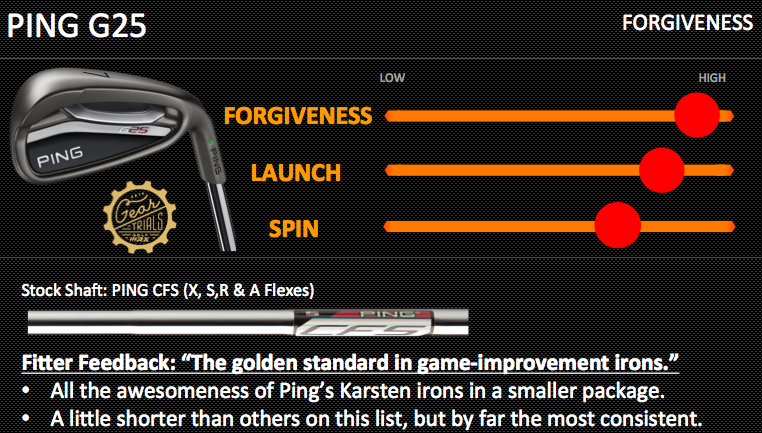
[colored_box color=”white”]Tech Talk: The performance of Ping’s G-Series irons is legendary, which is why if you find a GI iron in a tour player’s bag that’s not a Titleist AP1 it’s generally a set of Ping’s G15, G20 or G25 irons.
Think of the G25 as a more compact version of the company’s Karsten irons, with shorter shafts, smaller blade lengths and narrower soles that add versatility to their design. We love their stealthy black finish and for an iron their size they feel very solid thanks to Ping’s thoughtfully engineered Custom Tuning Port and multi-material insert that softens the blow at impact.
Ping also reinforces the cavities of the G25 irons, and while that limits the distance they can fly it also improves their consistency, which means if you want to hit an iron shot 160 yards and it goes 170 yards, it wasn’t the club’s fault.
[button color=”red” link=”http://www.golfwrx.com/112504/ping-g25-irons-editor-review/”]Read our review of the G25 irons[/button][/colored_box]
Balanced Performance
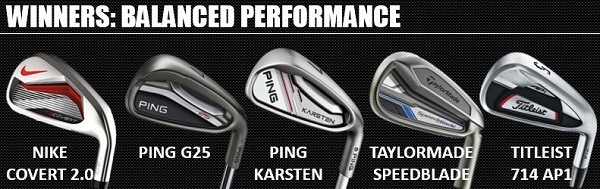 Listed in alphabetic order
Everyone of the game-improvement irons on this list offers a balance of distance, forgiveness and accuracy, but these five irons are a little better than the others on this list.
If consistency is what you’re after, make sure to test Ping’s G25 and Karsten irons, as well as Titleist’s AP1, which is also the most compact GI iron on this list. Want a bit more distance? If you need to hit the ball higher, go with TaylorMade’s SpeedBlade, and if you want a more forgiving option try Nike’s Covert 2.0.
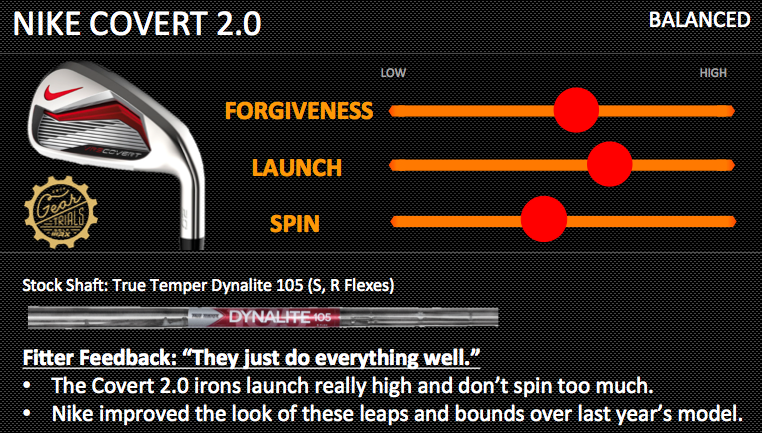
[colored_box color=”white”]Tech Talk: Nike takes the typical game-improvement iron formula a step further with its Covert 2.0 irons, which use the company’s ultra-thin NexCor faces to deliver top-notch ball speeds across the face.
The Covert 2.0’s are really large, so they’re not meant for better players — that’s why the company’s Covert Forged and VR Forged Pro Combo irons were made — but like most Nike irons they look fantastic for their size.
We appreciate Nike’s design philosophy of moving the CG of its irons closer to the true center of the clubface, which is easier said than done in iron design. That not only creates a more inviting visual at address, but offers more more consistent ball speeds on shots hit on the toe: a common error of high-handicappers.
[button color=”red” link=”http://www.amazon.com/gp/product/B00HB6Q3SE/ref=as_li_qf_sp_asin_il_tl?ie=UTF8&camp=1789&creative=9325&creativeASIN=B00HB6Q3SE&linkCode=as2&tag=golfwrxcom-20&linkId=N2QEKOY4CIF5E2KS”]Buy Nike’s Covert 2.0 irons[/button][/colored_box]
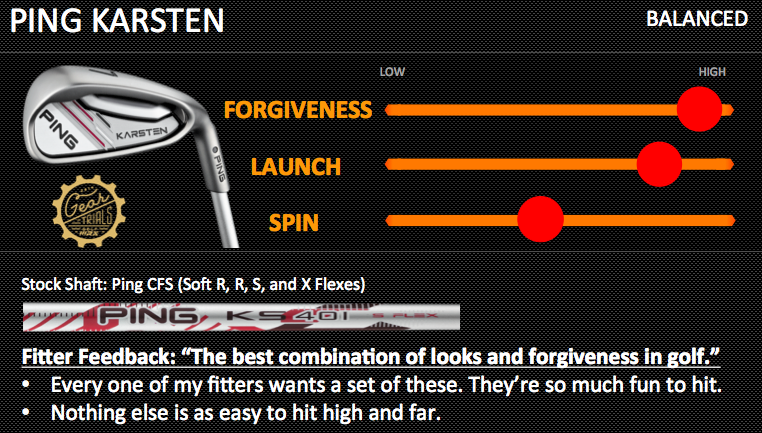
[colored_box color=”white”]Tech Talk: Ping’s Karsten irons are the first Ping product to make our distance-first category in 2014 Gear Trials, but you’ll probably notice that in true Ping spirit they also made our Forgiveness-First and Balanced-Performance categories. The Karsten and Nike’s Covert 2.0 are the only game-improvement irons to earn that distinction.
The Karsten irons have the longest heel-to-toe profile of any iron the company has ever produced. That, combined with the Karsten’s extra-wide soles, create an extremely low, deep center of gravity that has helped many golfers hit higher, longer and straighter iron shots than they ever have before.
The irons also have the thinnest iron faces the company has ever produced, but they’re reinforced with Ping’s Custom Tuning Port (CTP) to create more consistency and improve their sound and feel. There is truly no more forgiving iron in golf than the Karsten, which come stock with 3 and 4 hybrids that replace their corresponding irons. Golfers can also choose to replace the set’s 5 iron with a 5 hybrid, which makes the set even more playable for high-handicappers.
[button color=”red” link=”http://www.golfwrx.com/192473/ping-2014-karsten-hybrid-iron-set/”]Read more about the Karsten irons[/button][/colored_box]
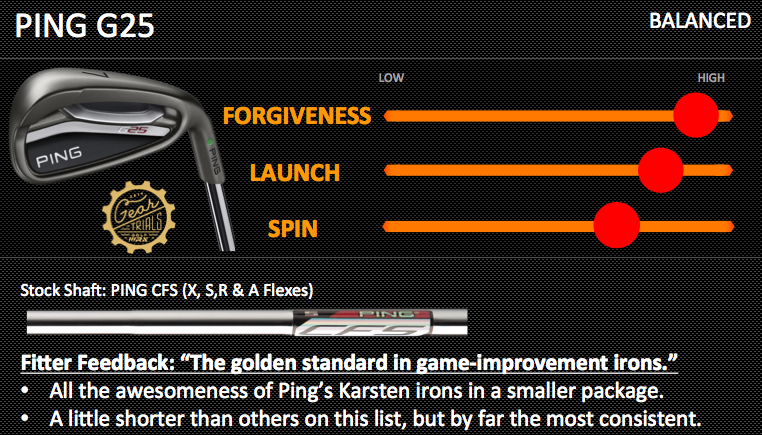
[colored_box color=”white”]Tech Talk: The performance of Ping’s G-Series irons is legendary, which is why if you find a GI iron in a tour player’s bag that’s not a Titleist AP1 it’s generally a set of Ping’s G15, G20 or G25 irons.
Think of the G25 as a more compact version of the company’s Karsten irons, with shorter shafts, smaller blade lengths and narrower soles that add versatility to their design. We love their stealthy black finish and for an iron their size they feel very solid thanks to Ping’s thoughtfully engineered Custom Tuning Port and multi-material insert that softens the blow at impact.
Ping also reinforces the cavities of the G25 irons, and while that limits the distance they can fly it also improves their consistency, which means if you want to hit an iron shot 160 yards and it goes 170 yards, it wasn’t the club’s fault.
[button color=”red” link=”http://www.golfwrx.com/112504/ping-g25-irons-editor-review/”]Read our review of the G25 irons[/button][/colored_box]
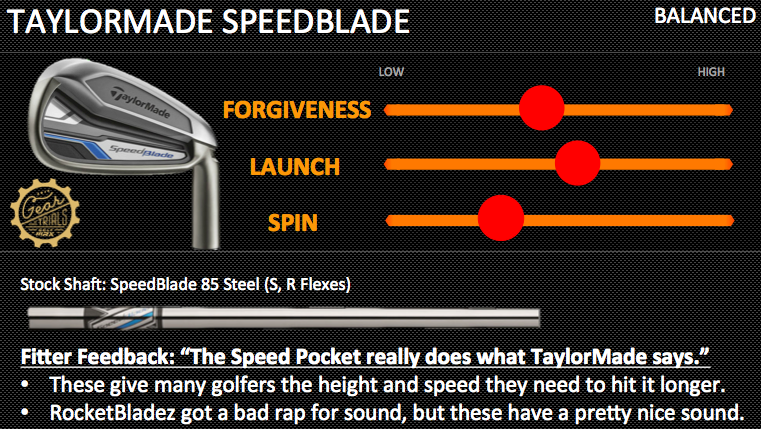
[colored_box color=”white”]Tech Talk: TaylorMade’s SpeedBlade irons are the second-generation of the company’s game-changing RocketBladez irons, which sold like hot cakes because of the unbelievable distances golfers were able to hit them.
The SpeedBlade irons aren’t all-too-different from RocketBladez and we think that’s a good thing. They’re cast from the same 17-4 stainless steel, but have an improved Speed Pocket that works with the irons’ slightly lower CG to help them launch crazy high for their strong lofts (26.5-degree 6 iron).
If you’re in search of one of the best-looking game-improvement irons in golf that just happens to fly as far (if not farther) than just about every other GI iron, SpeedBlade is the ticket.
[button color=”red” link=”http://www.golfwrx.com/143879/taylormade-speedblade-irons-editor-review/”]Read our review of the SpeedBlade irons[/button] [button color=”red” link=”http://www.amazon.com/gp/product/B00F8G5VYG/ref=as_li_qf_sp_asin_il_tl?ie=UTF8&camp=1789&creative=9325&creativeASIN=B00F8G5VYG&linkCode=as2&tag=golfwrxcom-20&linkId=D7IAY2DHL3ZZWF3N”]Buy SpeedBlade[/button][/colored_box]
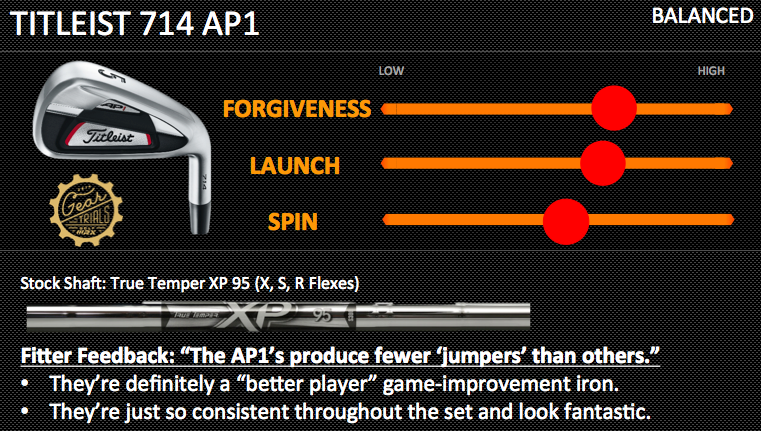
[colored_box color=”white”]Tech Talk: Titleist’s AP1 irons are the least GI-looking iron on this list, which is why you’ll find plenty of tour players using AP1’s for their long irons. Some players, like Ben Curtis, play a full set of the irons, with adds to their credibility with better players.
The AP1’s have a blend of distance, forgiveness and good looks that’s hard to beat, especially for 5-to-15 handicaps who are looking for more consistency than smaller irons can provide. They come stock with True Temper’s XP 95 shafts, but nearly any shaft a golfer could want is available through Titleist’s custom department.
Titleist touts the AP1 as golf’s most progressive set of iron, and we think that’s a fair claim. The CG’s of the long irons are lower and deeper to help golfers hit those clubs higher and farther, while the short irons have smaller blade lengths and narrower soles that contribute to more workability and trajectory control.
[button color=”red” link=”http://www.golfwrx.com/144023/titleist-714-ap1-and-ap2-irons-editor-review/”]Read our review of the AP1 irons[/button][/colored_box]







Equipment
Then and now: Comparing Rory McIlroy’s current setup to his record-breaking 2019 Canadian Open victory

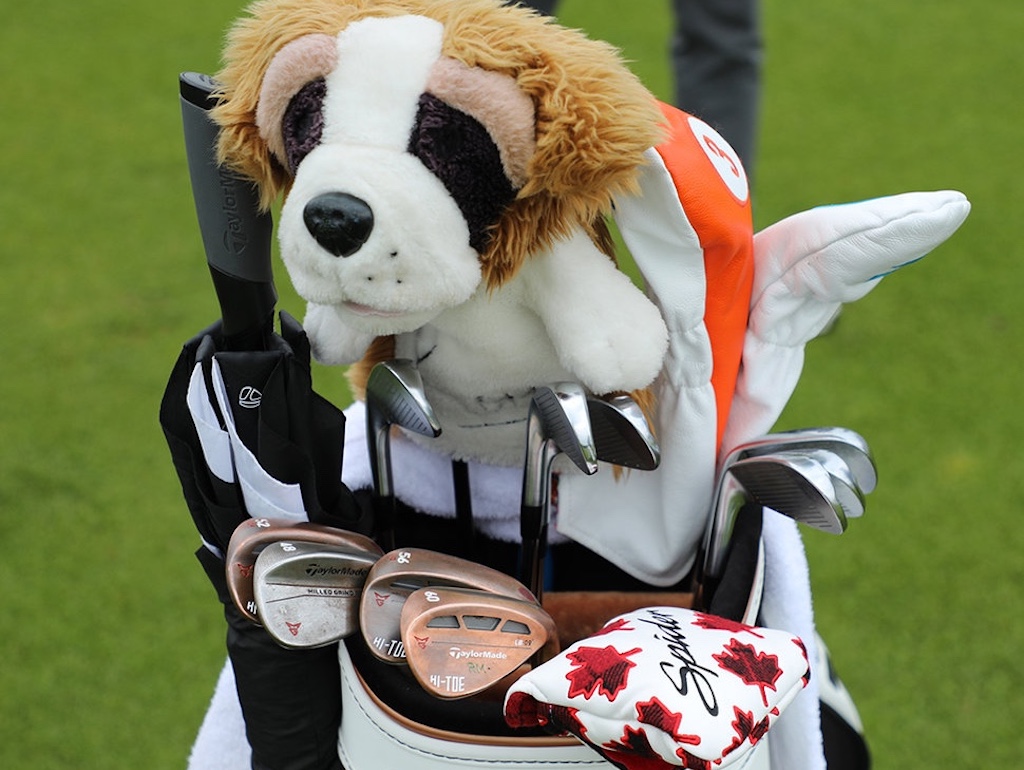
In Rory McIlroy’s first appearance at the 2019 RBC Canadian Open, he crushed the record books to earn his 16th PGA Tour title in dominating fashion, winning by seven shots over Shane Lowry and Webb Simpson.
McIlroy’s score of 22-under-par 258 is the lowest 72-hole score to date at the Canadian Open, and his closing 61 is also the best final-round score in the history of one of golf’s oldest tournaments. Finally, with his win in 2019, McIlroy became only the sixth player to win the career Triple Crown, adding to his victories at the U.S. Open in 2011 and The Open Championship in 2014, joining Tommy Armour, Walter Hagen, Arnold Palmer, Lee Trevino and Tiger Woods in a coveted list.
So, with that, why not compare his current setup to the clubs he used to break all the records?
Driver
2019: TaylorMade M5 (9 degrees), Shaft: Mitsubishi Tensei CK Pro White 70 TX
2026: TaylorMade Qi4D (9 degrees @8), Shaft: Fujikura Ventus Black 7X (45 5/8 inches)
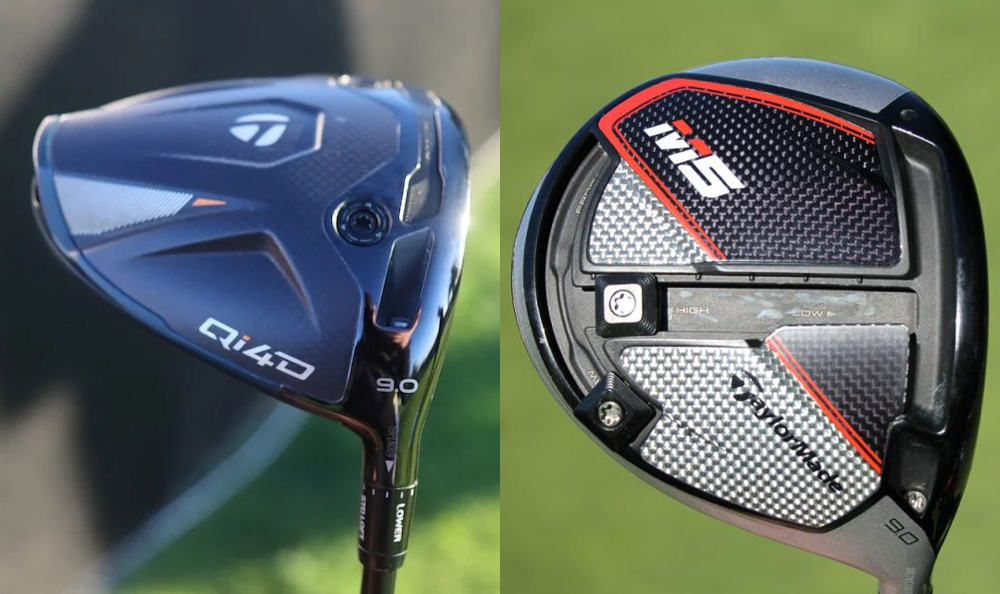
McIroy led the Tour in Strokes Gained: Off-the-Tee in 2019; he’s doing the same in 2026. Between now and then, McIlroy has switched from the Mitsubishi Tensei CK Pro White 70 TX (a shaft with slightly more feeling in the tip) to the original Fujikura Ventus Black 7X, having just made the change to the heavier version from playing the 60X.
What’s interesting about McIlroy’s 2019 setup is that the weighting on his driver is actually set in the high-draw setting, using the T-Track weighting system, whereas in the Qi4D, he’s currently using a heavily rear-weighted setup. (Two 13-gram weights in the rear and only two 4-gram front weights.)
The TaylorMade M5 driver he played in during his Canadian Open win was the company’s first head that they claimed to design to initially exceed the USGA’s COR limit, and then injected with tuning resin to bring it back in bounds.
Fairway woods
2019: TaylorMade M6 3-wood (15 degrees), Shaft: Mitsubishi Tensei CK Pro White 80 TX; TaylorMade M5 5-wood (19 degrees), Shaft: Mitsubishi Tensei CK Pro White 90 TX
2026: TaylorMade Qi4D 3-wood (15 degrees), Shaft: Fujikura Ventus Black 8X; TaylorMade Qi4D 5-wood (18 degrees), Shaft: Fujikura Ventus Black 9X

The TaylorMade M6 fairway wood that McIlroy was using during the 2019 season is still in the bag of some of the best golfers on Tour in 2026. Just check out Justin Rose’s winning setup from the Farmers Insurance Open earlier this year. This year, though, McIlroy has still been searching for his top-end-of-the-bag setup, having played both the new Qi4D and the Qi10, which he won the Masters with.

The same shaft swap can be seen in the fairway woods as the driver, along with slightly less loft on the 5-wood.
Irons
2019: TaylorMade P750 (4) Buy here, TaylorMade P730 (5-9), Shafts: Project X 7.0
2026: TaylorMade P760 (4), TaylorMade Rors Proto (5-9), Shafts: Project X 7.0

The biggest difference between McIlroy’s custom set and the stock P730s is the groove design. While the P730s were constructed with 14 MX-9 grooves on their milled faces, McIlroy’s proto heads instead use the higher-spinning, 16-groove layout of the TW2 grooves. Other big differences between the sets are that McIlroy’s 7- and 8-irons have thinner toplines, are 1 degree stronger in loft, and are 1/4 inch longer than the original P730 builds.
With McIlroy’s 4-iron, the switch from P750 to P760 sees a transition to a two-piece construction with Speed Foam in it, which allows McIlroy to launch the ball slightly higher, with more workability.
Wedges
2019: TaylorMade Milled Grind (48-09SB), TaylorMade MG Hi-Toe (52-09SB, 56-09SB, 60-LB09), Shafts: Project X Rifle 6.5
2026: TaylorMade MG5 (46-09SB, 50-09SB, 54-11SB, 60-08LB @61), Shafts: Project X 6.5 (46-54), Project X 6.5 Wedge (60)

Between 2019 and 2026, McIlroy’s focus on his short game has been much more apparent. It was the reason why he switched back to the TP5 golf ball, to help with launch, spin and control with his wedges leading up to his career Grand Slam victory in 2025. The most apparent changes to McIlroy’s wedge setup are his lofts and bounce. He’s slowly delofted his pitching to a sand wedge, but has increased the loft on the lob wedge, bending his current 60-degree to 61. With that, adding more loft to his lob wedge also slightly increases the bounce and leading-edge sit point, so, as a result, he plays a lower-bounce lob wedge compared to 2019. The MG5 wedges are also softer than the first Milled Grind option from 2019. McIlroy also no longer plays the full-face grooves found on the Hi-Toe.
Putter
2019: TaylorMade Spider X
2026: TaylorMade Spider Tour X
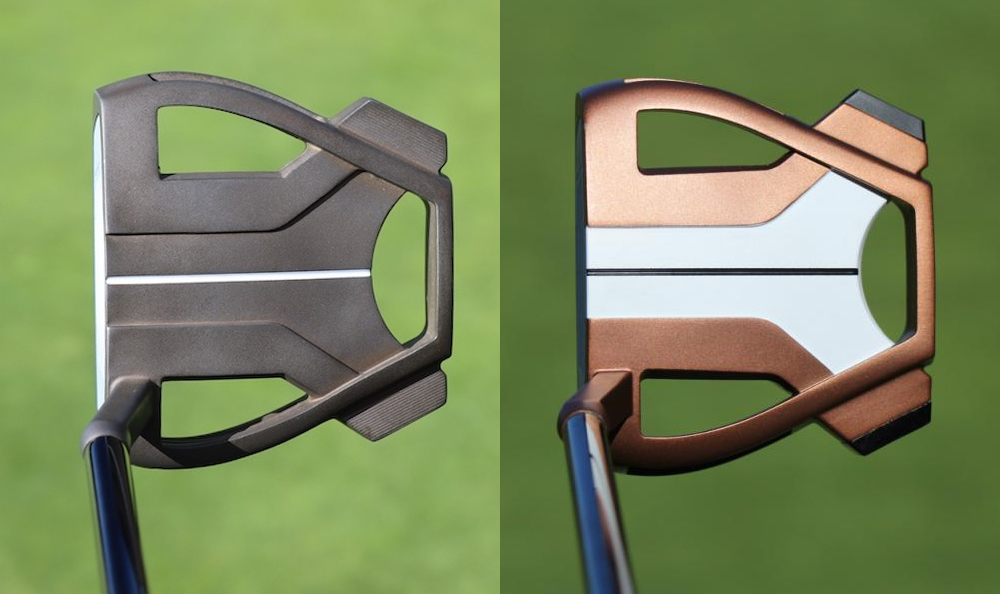
Notice anything similar. Yes, the copper finish on Rory McIlroy’s Spider X putter in 2019 is a slightly more reflective finish than the recently released torched PVD finish. McIlroy was using the True Path alignment system, but now uses only a single white sightline.
Ball
2019: 2019 TaylorMade TP5 (#22)
2026: 2025 TaylorMade TP5 (RORS)
As mentioned above, McIlroy had transitioned from the TP5 to TP5x golf ball since his victory in Canada in 2019, but now is black with the same style of golf ball as his victory at Hamilton Golf & Country Club.
Grips
2019: Golf Pride Tour Velvet Cord
2026: Golf Pride MCC
Interesting, McIlroy actually used Golf Pride’s Tour Velvet Cord grips during his victory in 2019 (it was during a 2+ year switch to the corded TV) as opposed to his usual MCC grips, which he has played for most of his career.


At GolfWRX, we are a community of like-minded individuals who all experience and express our enjoyment of the game in many ways.
It’s that sense of community that drives day-to-day interactions in the forums on topics that range from best driver to what marker you use to mark your ball. It even allows us to share another thing we all love – buying and selling equipment.
Currently, in our GolfWRX buy/sell/trade (BST) forum, @Putt4Dough is selling some prototype wedges from Vokey Wedgeworks. These include a 54 degree wedge with the M grind and a 60 degree wedge with a T grind.
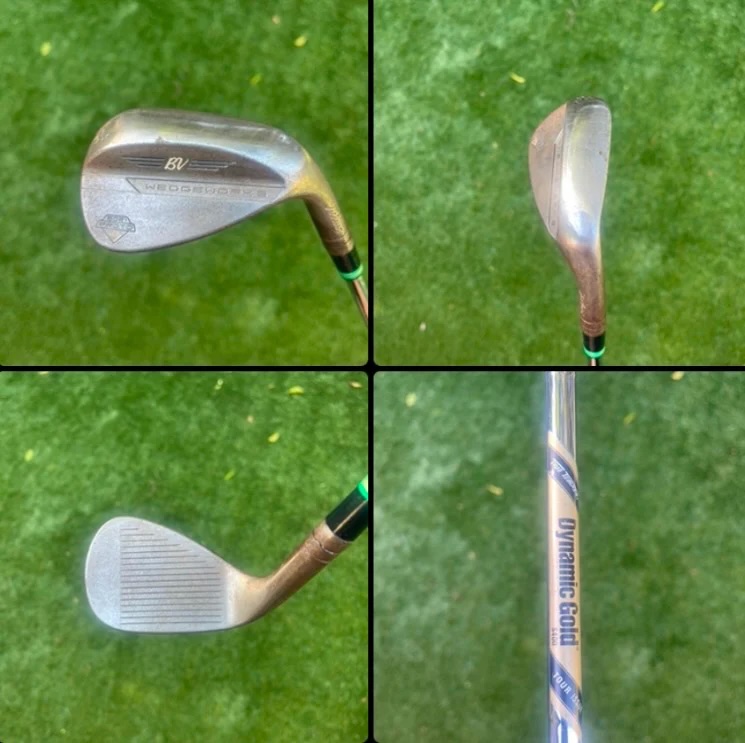
From the listing:
(1) Titleist Vokey Proto Wedge 54M with a Tour Issue DGS400 shaft and Golf Pride Tour Velvet (logo down). Standard length, lie, and loft. BB&F ferrule. Raw wedge in good condition. No initials. Price is $200 shipped. Buy both wedges for $380 shipped.
(2) Titleist Vokey Proto Wedge 60T with a KBS Tour 130X shaft and Golf Pride Tour Velvet. Standard length, lie, and loft. Raw wedge in good condition. No initials. Price is $200 shipped. Buy both wedges for $380 shipped.
To check out the full listing in our BST forum, head through the link. If you are curious about the rules to participate in the BST Forum, you can learn more here: GolfWRX BST Rules.
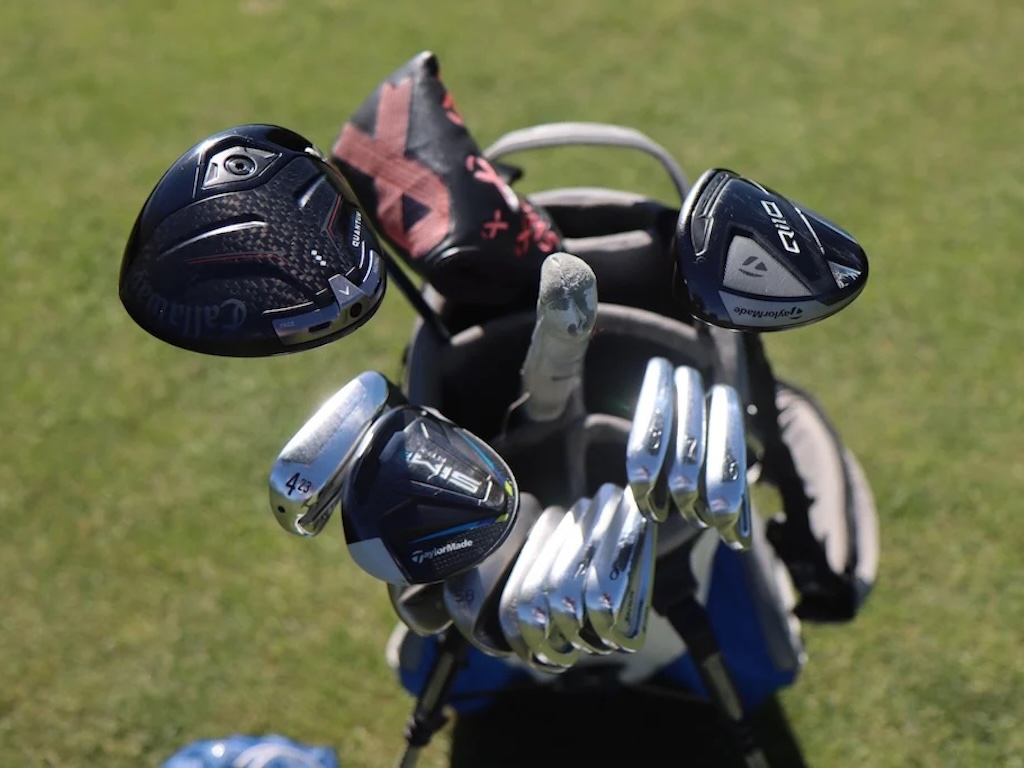
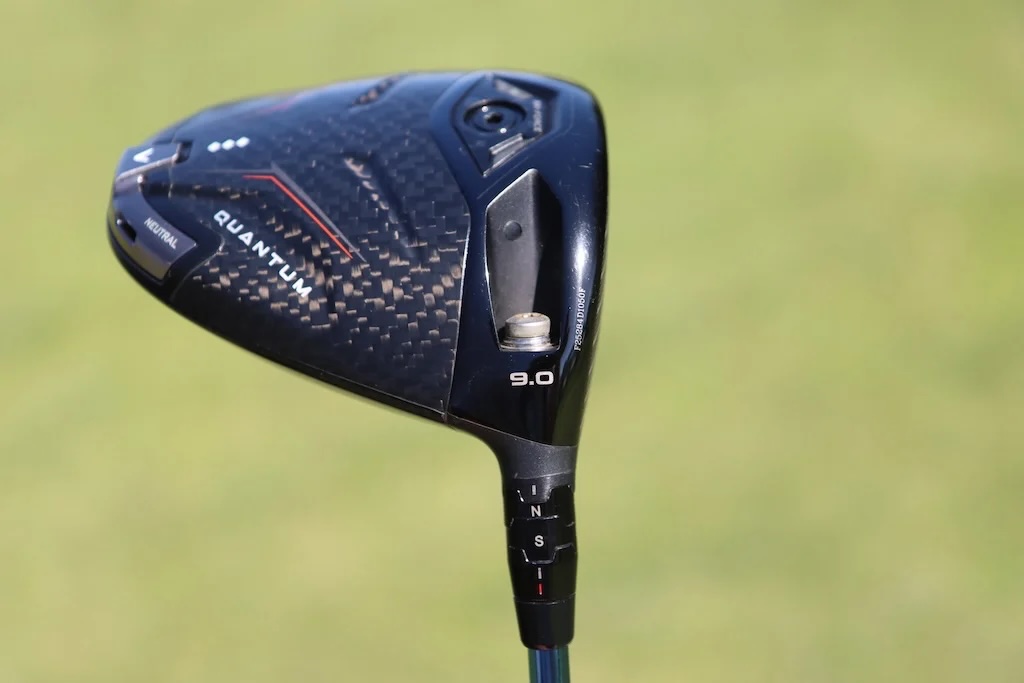
Driver: Callaway Quantum Triple Diamond (9 degrees)
Shaft: Project X HZRDUS Smoke Blue RDX 60 TX
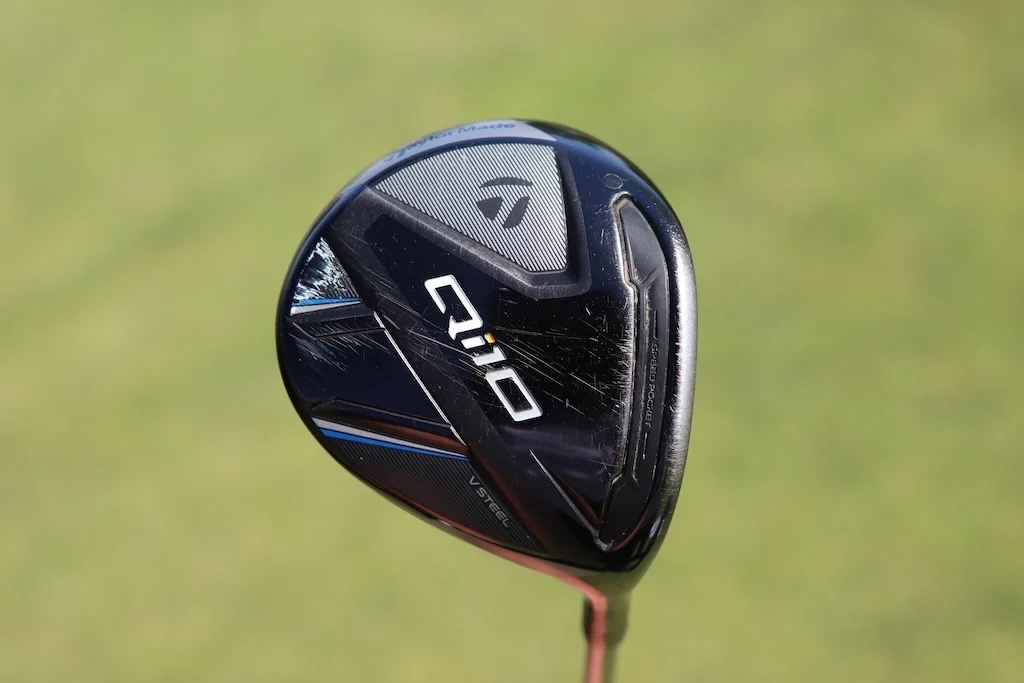
3-wood: TaylorMade Qi10 (15 degrees)
Shaft: Project X HZRDUS T1100 70 6.5
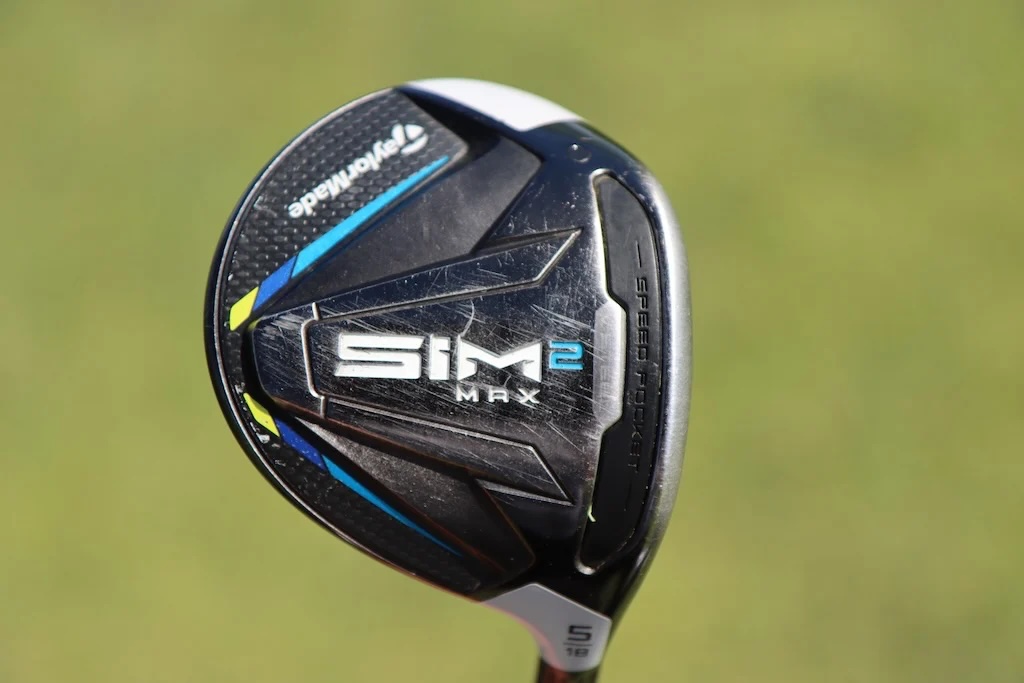
5-wood: TaylorMade SIM2 Max (18 degrees)
Shaft: Project X HZRDUS Smoke Black RDX 80 TX
Irons: Srixon ZXiU (23 degrees), Srixon Z785 MB (5-PW)
Shafts: Project X HZRDUS Smoke Black RDX 100 6.5 (4), KBS Tour 130 X
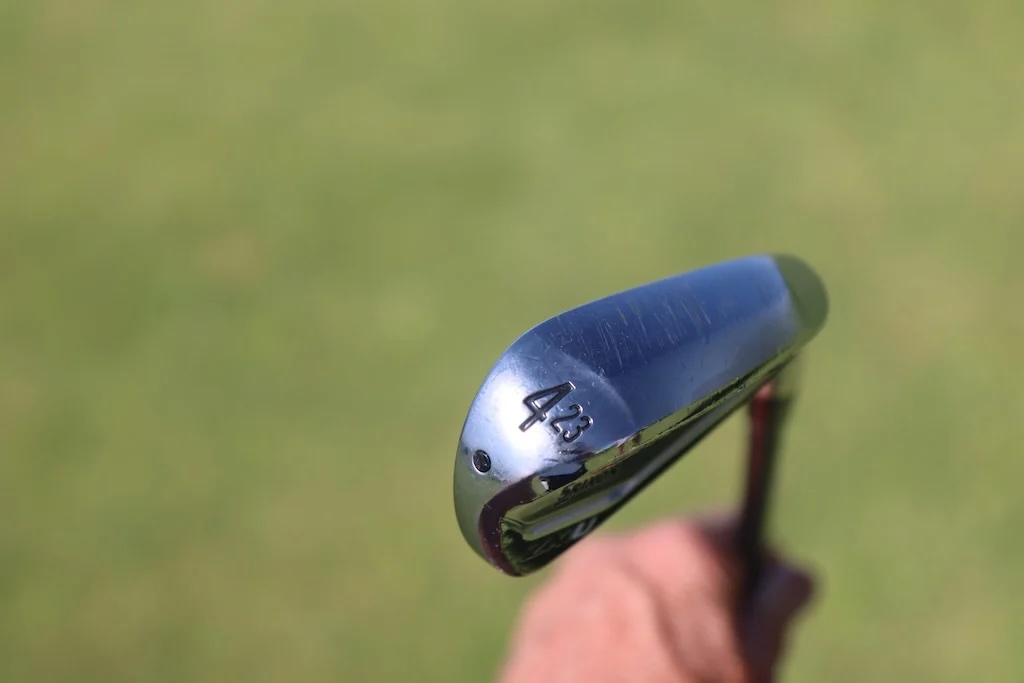
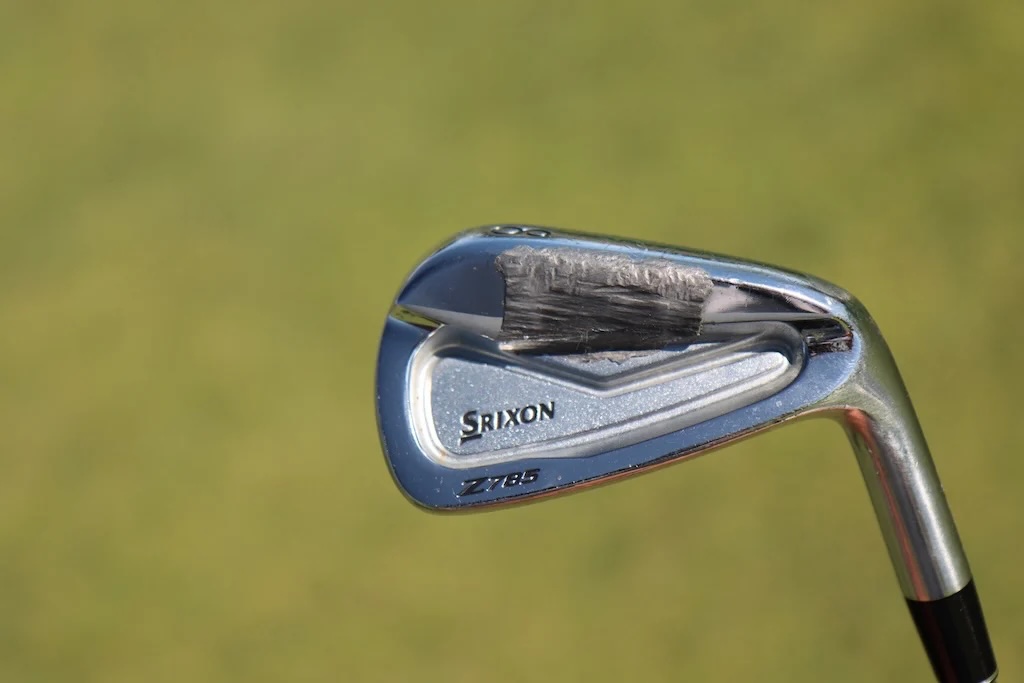
Wedges: Titleist Vokey Design SM11 (50-08F, 54-10S, 58-04T @59)
Shafts: KBS Tour 130 X
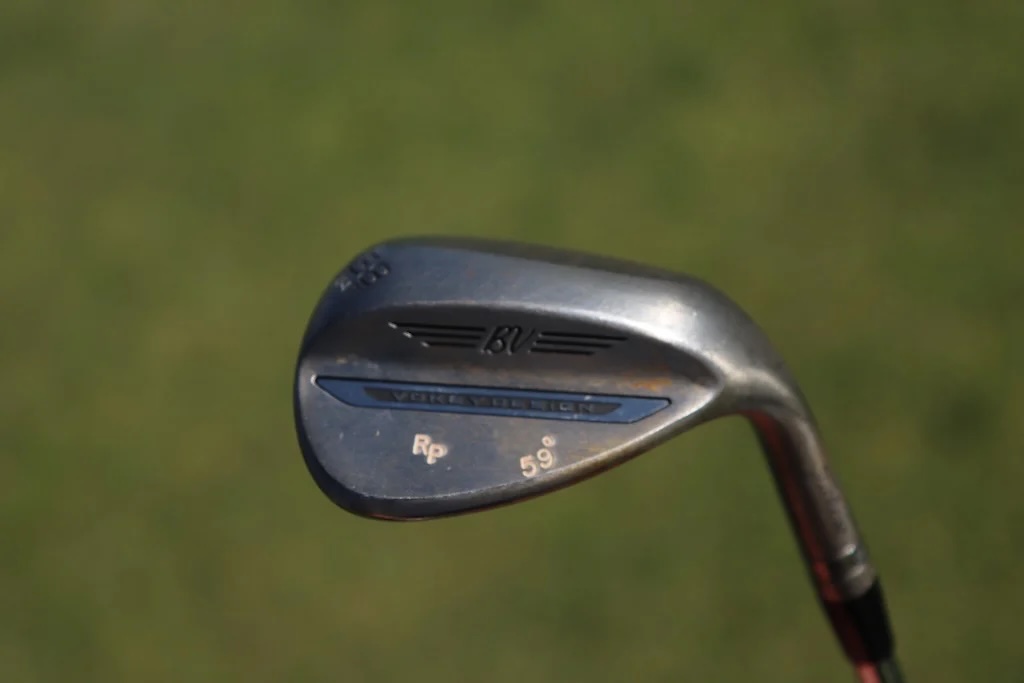
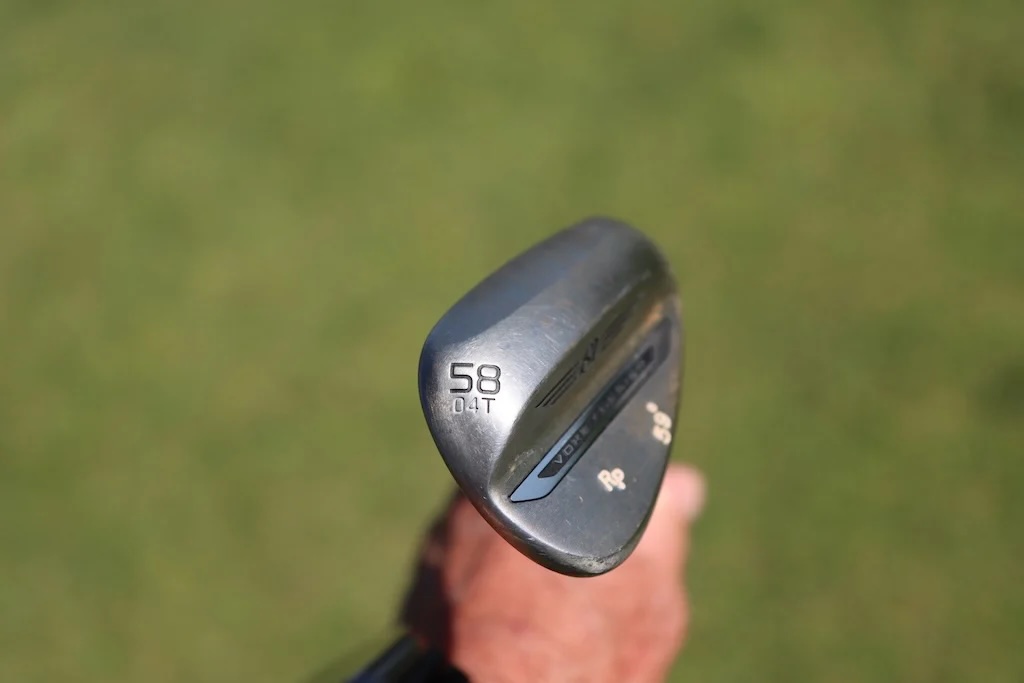
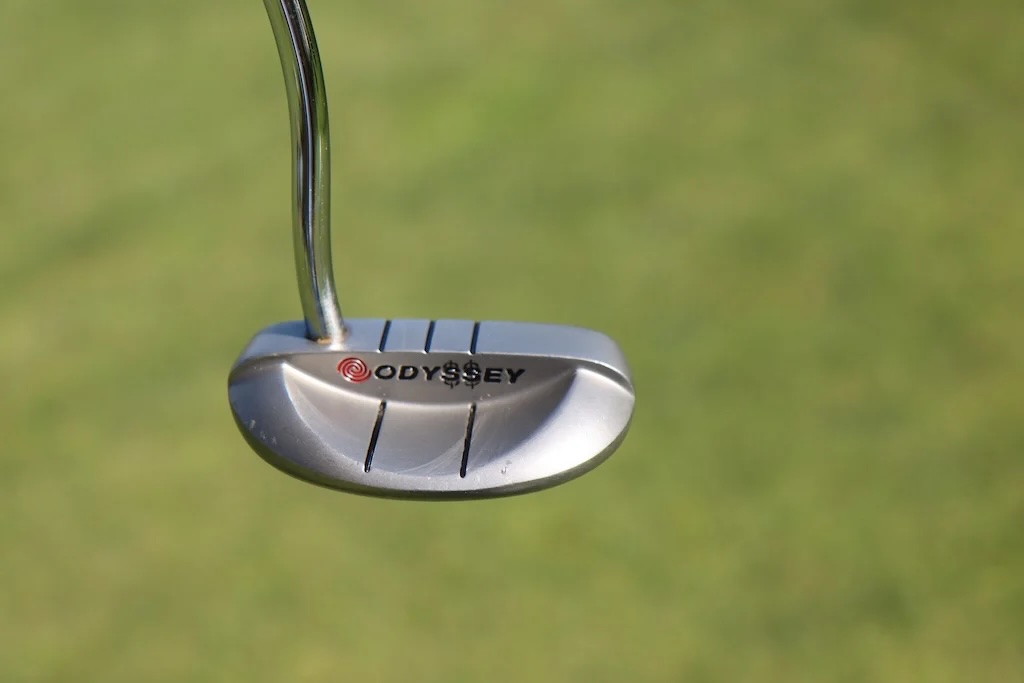
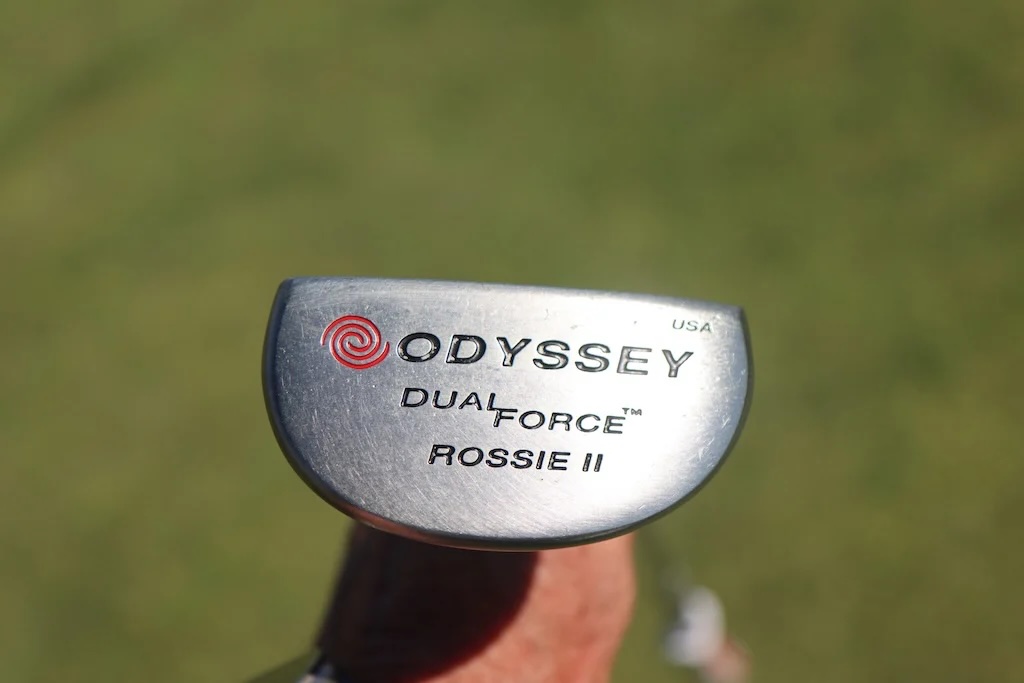
Putter: Odyssey Dual Force Rossie II
Ball: Titleist Pro V1x
Grips: Golf Pride Tour Velvet

What’s the story behind Webb Simpson’s custom-stamped irons?

Memorial Tournament Tour Report: Rory McIlroy, Cameron Young switch up drivers, and more

Cadillac Championship Tour Report: Spieth’s sizable changes, McLaren Golf launches, and more

Russell Henley’s winning WITB: 2026 Charles Schwab Challenge

Kristoffer Reitan’s winning WITB: 2026 Truist Championship

Best irons 2026: Best irons overall, most forgiving irons, and more

J.T. Poston’s winning WITB: 2026 Memorial Tournament

Aaron Rai’s winning WITB: 2026 PGA Championship

Cameron Young’s winning WITB: 2026 Cadillac Championship

Details on Jason Day’s latest prototype Avoda iron setup


Ryan Palmer WITB 2026 (June)
Driver: Callaway Quantum Triple Diamond (9 degrees) Shaft: Project X HZRDUS Smoke Blue RDX 60 TX 3-wood: TaylorMade Qi10 (15 degrees) Shaft:...


Bud Cauley WITB 2026 (June)
Bud Cauley had >14 clubs in his bag when photographed prior to the Memorial Tournament. Driver: Titleist GTS2 (8 degrees) Shaft: Fujikura...


Hannah Green WITB 2026 (June)
Driver: Titleist GTS3 (10 degrees, D4 SureFit setting) Shaft: Mitsubishi Chemical Diamana RB 53 S 3-wood: Titleist GT3 (15 degrees,...


Asterisk Talley WITB 2026 (June)
Driver: TaylorMade Qi4D (9 degrees) Shaft: Fujikura Ventus Blue 6 S 3-wood: TaylorMade Qi4D (16.5 degrees) Shaft: Fujikura Ventus Blue...
-
 Equipment6 days ago
Memorial Tournament Tour Report: Rory McIlroy, Cameron Young switch up drivers, and more
-
 News2 weeks ago
Russell Henley’s winning WITB: 2026 Charles Schwab Challenge
-
 Equipment3 days ago
Best irons 2026: Best irons overall, most forgiving irons, and more
-
 Whats in the Bag4 days ago
J.T. Poston’s winning WITB: 2026 Memorial Tournament
-
 Equipment1 week ago
Details on Jason Day’s latest prototype Avoda iron setup
-
 Equipment3 weeks ago
CJ Cup Byron Nelson Tour Report: Koepka and Kim’s newest putters finally get hot
-

 News2 weeks ago
Charles Schwab Challenge Tour Report: MacIntyre, Åberg and Spaun all switch putters, TaylorMade launches new Spider
-
 Equipment2 weeks ago
Details on J.J. Spaun’s surprise putter switch


mike w
Jan 17, 2015 at 6:29 pm
I absolutly could not agree more pn the club dofference 30m just because a club maybe ypu hit the ball the rite way that time but 215 with a 6 iron wow i am amazed i mean i have my best game with my irons by far and i still dont hit that far with my 6 iron maybe my 3 or 4 but a 6? Hmm if you hit it that far with a 6 what do you hit off the t with your driver? Please feel free to leave a replay i work at a golf course where several professional’s play and also have a professional golf coach that has been in the pga tour that would be able tp get you involved with such as log as the 6 iron isnt the only club you hit well
Jason P.
Jul 15, 2014 at 11:16 am
Say what you want but I’d put my Maltby TE Forged Irons against any of these. Plus I made them with the True Temper X95 Shafts and Golf Pride Grips of my choice 🙂 Best feeling irons I’ve ever owned period and their long enough and also forgiving without looking like a Ping Shovel. I’m not knocking on any of these irons I’m just letting you know there are great irons out there from Golfworks and Hireko !
Nico
Jul 14, 2014 at 7:35 am
Mike, perhaps your 6 iron has a 5 degree positive upright lie which effectively makes it a 4 iron.
Pingback: 2014 Gear Trials: Best Game-Improvement Irons | Spacetimeandi.com
Mike
Jul 12, 2014 at 3:22 pm
Are the scales for each iron absolute or relative to each category? I.e. can we compare the forgiveness/launch/spin to the player’s irons?
Zak Kozuchowski
Jul 13, 2014 at 8:09 pm
Mike,
The scales are relative to the other irons in this category.
RogerinNZ
Jul 12, 2014 at 1:39 pm
I look forward to buying a 5/4 iron from one of these sets when they are “”surplus to requirements”” from the new owner!
Great to see Ping get in there with the Karsten !
Tradition is Cyclic, it just keeps re emerging as New again!
A great way to add new Zing to your bag.
Great informative test Zak, thanks!
Matt Wiseley
Jul 12, 2014 at 7:58 am
Good article Zac. I am an aging business guy that can’t get out and play as often as I would like. Moved away from players irons a year ago and surprisingly love my GI irons.
I laugh at everyone that says ugly irons. If you hit the ball straight and score better, who really cares. Seems to me the lines have been getting blurred for years anyway from player irons to GI.
I am a 4 hdcp, swing speed with driver from 110-117, and stripe my Amp Cell irons. (By the way, amp cell much better than bio cell…cobra took a step back this year)
Thanks for the article.
MHendon
Jul 12, 2014 at 12:08 pm
I wouldn’t think a 4 hdcp with that much club head speed would be a good fit for a true GI iron unless you are a low ball hitter.
Scooter McGavin
Jul 12, 2014 at 3:40 pm
I’m 95 years old, with a +6 hdcp, 128 driver swing speed, and stripe my Miura baby blades…
Zak Kozuchowski
Jul 13, 2014 at 8:10 pm
Do you swing from the scooter, Scooter?
Jason P.
Jul 15, 2014 at 11:19 am
Haha…. Thanks i needed that. Funny !
MHendon
Jul 12, 2014 at 1:48 am
Game improvement irons again, when are you going to review players iron? Oh wait you supposedly did already.
Edgar Homonculus
Jul 11, 2014 at 10:48 pm
Who cares if they are not attractive? If you shoot better scores mission accomplished. Better than having to wait on a group of 20 handicaps playing Miuras from the tips.
Hokiefan10
Jul 14, 2014 at 12:14 pm
Exactly!
Shortgame85
Jul 11, 2014 at 9:55 pm
I have hit most of these irons and, I own the Ping G25 irons and hybrids. I am a 13 handicap trending toward a 12. I think this assessment is accurate, cogent and timely. Well done.
Chump
Jul 11, 2014 at 6:47 pm
There should’ve been a category for the ugliest iron. There might have been a 17-way tie.
Bainz
Jul 12, 2014 at 6:20 am
Your name tag sums you up. You keep playing your blades, I want to get as good as I can before i can’t play no more. JPX ez or Ping G25’s for me once prices come down a bit.
Bozwell
Oct 11, 2014 at 9:25 am
Bainz – Good call. I hit 15-18 different types of irons before deciding on the JPX EZ’s. They had the best feel and flight for me. Placing my order in about 2 weeks.
Phat
Jul 11, 2014 at 6:13 pm
Wow, what an ugly bunch of irons – the OEMs really need better design teams. Will stick with my Edge CFTs for years at this rate…
David W
Jul 14, 2014 at 12:52 pm
I’ve stuck with my Edge hybrids for years now, now because the others are ugly, but because they are great clubs that are easy to hit!
Zak Kozuchowski
Jul 11, 2014 at 5:58 pm
Irons tested:
Adams Idea 2014
Callaway X2 Hot
Cleveland 588 Altitude
Cleveland 588 MT
Cobra Bio Cell
Cobra Baffler XL
Mizuno JPX-825
Mizuno JPX-EZ
Mizuno MP-H4
Nike Covert 2.0
Ping G25
Ping Karsten
TaylorMade SpeedBlade
Titleist 714 AP1
Tour Edge Exotics CU
Wilson Staff C100
Wilson Staff D100 ES
Patrick
Jul 12, 2014 at 1:46 am
As one of the Top 100 Fitters in America, I can say that I am flabbergasted that you put the Covert 2.0 in the Forgiveness First Category instead of the 588 Altitude or the Baffler XL.
Zak Kozuchowski
Jul 13, 2014 at 8:14 pm
The Baffler XL’s were on the cusp of making it, Patrick, but we didn’t receive any votes for the 588 Altitudes.
Maybe you’d like to talk about possibly being a part of next year’s custom fitter panel? If so, please email me at [email protected].
Pete
Jul 12, 2014 at 2:56 am
@Zak, I think that list should be in the initial article, not only the comment in all your gear reviews. Just saying.
Zak Kozuchowski
Jul 13, 2014 at 8:18 pm
Thanks for the feedback, Pete. You make a good point that we’ll visit before we create next year’s list.
Mike
Jul 12, 2014 at 6:54 am
How did the TEE CU fair? I tested these with my Dad when he was looking at new irons, and trust me he needs game improvement. We found them far more forgiving with a heap better feel than the Callaway, Nike or Taylormade clubs. Surprised me because i had never even consider them – i use Nike or TMAG myself. Super hot faces, I hit the 6 iron 197m on the GC2!! about 30m further than normal.
Tim Finchem
Jul 12, 2014 at 7:15 pm
197m with a 6 iron! Welcome to the PGA tour Mike.
MHendon
Jul 12, 2014 at 7:47 pm
197m is like 215yds, welcome to the pga tour… more like welcome to the remax long drive! Might want to check the loft on that 6 iron.
Zak Kozuchowski
Jul 13, 2014 at 8:20 pm
They’re great irons, but we’ve just seen a little better results from the irons on this list.
The experience you had is a great example of why getting fit is so important. Everyone is different and different clubs can work differently for different players.
Note: This response was written under the assumption that your findings were real. There are very few situations wheere a player can gain 30 meters of distance by simply switching one stock club for another.