
Opinion & Analysis
Is video passé in golf instruction?

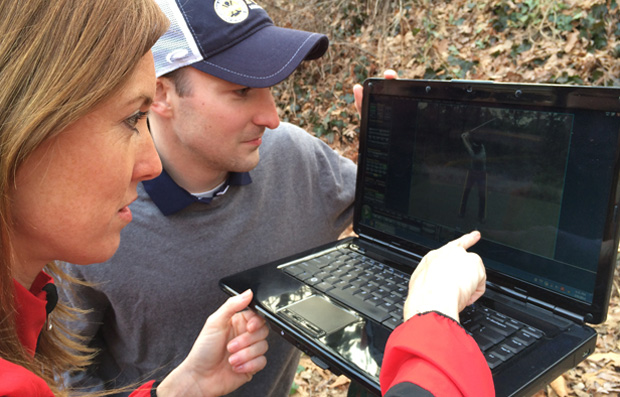
Golf instruction has seen a swell of technological advances such as ball-flight measuring devices, 3-D systems and other high-tech training aids that have given us the much-needed boost in our ever-growing body of knowledge of how best to play the game. Without one shred of doubt these advances have expanded our potential to know more and have only served golf instruction well. But as with all industry trends, the advent of something new will inevitably take the place of something else. Will our video equipment be what becomes the new paperweight?
Recently I’ve heard murmurs that video is passé and doesn’t give accurate enough feedback to be of use. It left me to think, “Is this correct? Should all of us be tossing out our cameras and replacing them with launch monitors?” I personally like my video setup and treat it much like any other training aid: It’s not going to solve everything, but if used correctly at the proper time, it can be very helpful. However, my feelings about video are biased and only serve as one example of why it should remain in our teaching tool kit. So in order to learn more, I looked into the research on physical education and kinesiology for a more objective perspective.
Sport psychologists call it observational learning or modeling when a learner watches something and then uses that to learn a skill or behavior. In golf instruction, we use modeling as a form of feedback by showing students video of themselves or showing them examples of others. We also use demonstration as a form of modeling to show others what the movement looks like. The famed psychologist Albert Bandura cites modeling as “one of the most powerful means of transmitting values, attitudes and patterns of thought and behavior.” In fact, years and years of research on observational learning have placed modeling firmly as one of the most important means for helping individuals learn or modify skills.
But exactly what kinds of models are useful and how are they to be used? According to two kinesiology professors, Penny McCullagh and Maureen Weiss, the skill level of the learner should be considered first when using video modeling. Their research, combined with others on demonstration characteristics relevant to acquiring skills, suggests that coaches and teachers consider two types of models:
- The tour pro, or a “correct model,” which shows an ideal movement.
- A “learning model,” or an example of someone who is attempting to learn the skill but has not yet achieved exemplary performance.
The research suggests that using the “correct model” as an example was better than using no model at all. However, for certain types of students, such as juniors or those in the early stages of learning, the “learning model” combined with corrective verbal feedback from the instructor was the most successful combination (This learning model could also be the student himself video taped performing the desired movement, and then comparing him to himself). In other words, students who were far from swinging like a tour player responded better to examples that were similar to them.
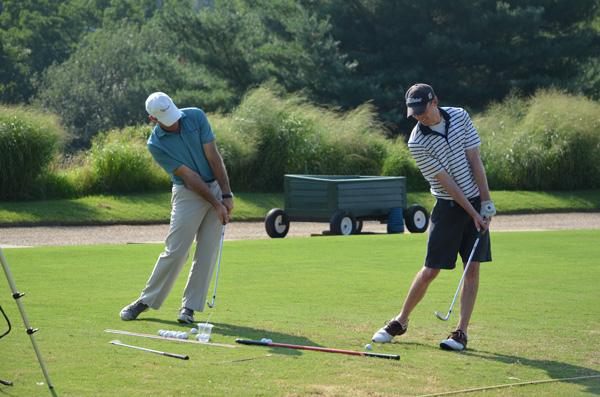
The root of why “the learning model” works well is based in what Bandura calls self-efficacy, or self-confidence. It’s the feeling that we can successfully do something that we are attempting to learn how to do. He adds that self-efficacy is highly influential in shaping what we decide to work on. So if a golfer sees himself making progress on his golf swing, he is more inclined to choose to work on it. This also means if he thinks he will never be able to do something, he could lose motivation and feel less motivated.
Although video certainly cannot tell us the angle of attack, or the X-factor stretch, it does have an important place in our teaching tool kits. Even if we are not using it to collect information about what is happening in throughout a swing, the benefit of a learner seeing an example can provide a profound effect both psychologically and with performance. In other words, keep the video in lessons — if not for you, for the benefit of your students.




This past Monday, I played in the U.S. Amateur local qualifier at Rock Creek Country Club in Portland, Oregon. A full tee sheet from 7:30 a.m. to 1:55 p.m., the top 11 scores would make it to the U.S. Amateur final qualifying.
I teed off at 10:48 a.m.. With the 7:30 am tee time, you can get a feel for the leaders’ pace, and they were off and running on the challenging setup at Rock Creek.
View this post on Instagram
Getting to the highlight of the round on the par five 17th, a drive up the left side and 212 yards left to the front hole location. I took out a 5-iron with plans of middle of the green. The ball ended up 8 feet left of the hole, pin high. A slight downhill putt dropped in for an eagle 3 on the 17th. With the cut line looking to be anywhere from -2 to even par. This was the boost I had been waiting for all day.
With making par from the trees on 18, it was time to wait for a potential playoff with a posted score of one under par 71.
Three hours later, it was playoff time. 8 players for 6 spots. I made par on the playoff hole, which was good enough to advance to the U.S. Amateur final qualifying in July. USGA qualifiers sure deliver on all of the emotions in golf!
Club Junkie
Building my 2026 gamer WITB: Ranking the contenders and new putter projects – Club Junkie Podcast

The annual What’s In The Bag build is underway, and on this episode of Club Junkie, Brian breaks down the clubs currently leading the race for a spot in his 2026 gamer setup. From drivers and fairway woods to irons, wedges, and shafts, he ranks the equipment that’s performing best and explains what’s separating the front runners from the rest of the field.
Brian also heads into the workshop to discuss several putter projects currently on the bench. From head options and shaft choices to build ideas and testing plans, he shares what he’s working on and which putters could become serious contenders for the bag this season.
If you’re a gear junkie who loves equipment testing, club building, and the never-ending pursuit of the perfect setup, this episode is for you.
Follow Club Junkie:
Instagram: @clubjunkiepod
TikTok: @clubjunkiepod
Threads: @clubjunkiepod
X: @ClubJunkiePod
Club Junkie
Tour Edge Exotics mini driver review + TaylorMade Spider ZT Max first look – Club Junkie

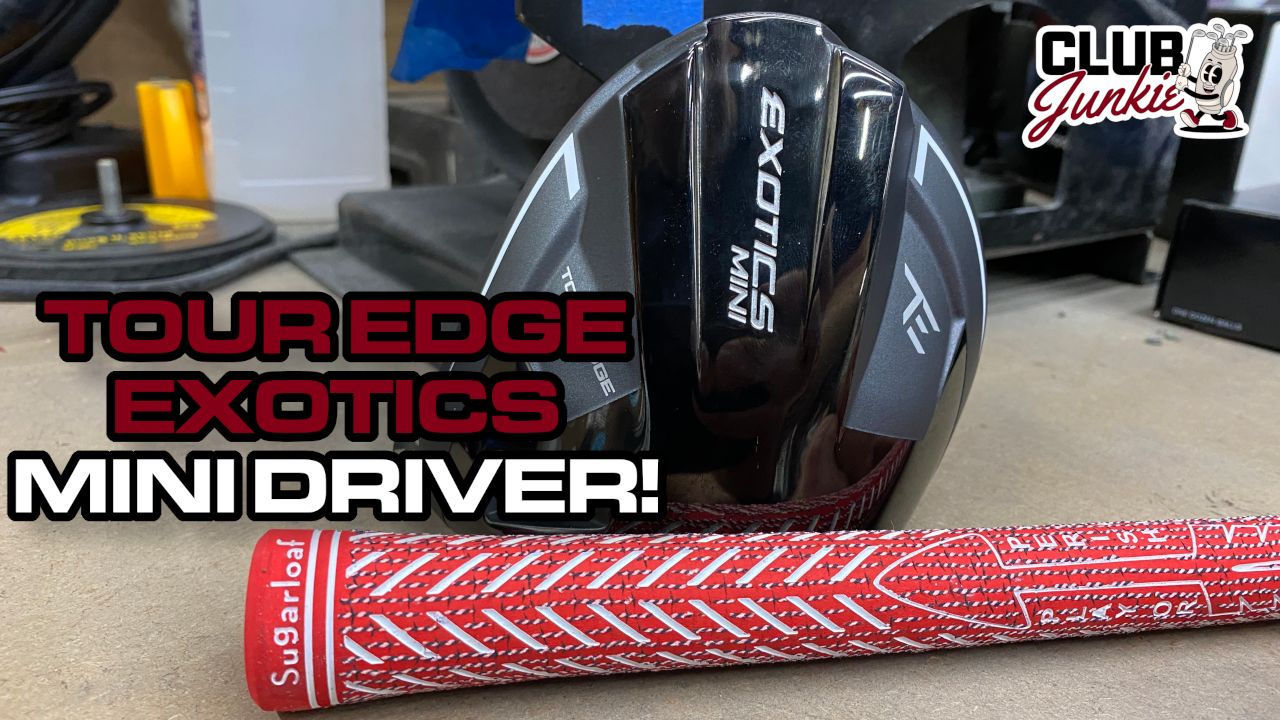
On this episode of Club Junkie, I put the new Tour Edge Exotics Mini Driver to the test and break down the performance, forgiveness, distance, and where it fits compared to a traditional driver or strong fairway wood. If you have been curious about adding a mini driver to the bag, this one is worth a look.
I also dive into the new TaylorMade Spider ZT Max putter that was recently spotted and discuss the growing zero torque putter trend. Plus, there is a closer look at the new Project X Titan Yellow shaft showing up on the PGA Tour and what makes it different from other profiles currently out there.

Justin Rose WITB 2026 (April): Full WITB breakdown with new McLaren irons

What’s the story behind Webb Simpson’s custom-stamped irons?

Memorial Tournament Tour Report: Rory McIlroy, Cameron Young switch up drivers, and more

Cadillac Championship Tour Report: Spieth’s sizable changes, McLaren Golf launches, and more

Russell Henley’s winning WITB: 2026 Charles Schwab Challenge

Kristoffer Reitan’s winning WITB: 2026 Truist Championship

Best irons 2026: Best irons overall, most forgiving irons, and more

J.T. Poston’s winning WITB: 2026 Memorial Tournament

Aaron Rai’s winning WITB: 2026 PGA Championship

Cameron Young’s winning WITB: 2026 Cadillac Championship


Bud Cauley WITB 2026 (June)
Bud Cauley had >14 clubs in his bag when photographed prior to the Memorial Tournament. Driver: Titleist GTS2 (8 degrees) Shaft: Fujikura...


Hannah Green WITB 2026 (June)
Driver: Titleist GTS3 (10 degrees, D4 SureFit setting) Shaft: Mitsubishi Chemical Diamana RB 53 S 3-wood: Titleist GT3 (15 degrees,...


Asterisk Talley WITB 2026 (June)
Driver: TaylorMade Qi4D (9 degrees) Shaft: Fujikura Ventus Blue 6 S 3-wood: TaylorMade Qi4D (16.5 degrees) Shaft: Fujikura Ventus Blue...


Brianna Do WITB 2026 (June)
Driver: Callaway Quantum Triple Diamond (9 degrees) Shaft: KBS PGW 3-wood: Callaway Elyte Titanium (15 degrees) Shaft: KBS PGW 5-wood:...
-
 Equipment6 days ago
Memorial Tournament Tour Report: Rory McIlroy, Cameron Young switch up drivers, and more
-
 News2 weeks ago
Russell Henley’s winning WITB: 2026 Charles Schwab Challenge
-
 Equipment3 days ago
Best irons 2026: Best irons overall, most forgiving irons, and more
-
 Whats in the Bag4 days ago
J.T. Poston’s winning WITB: 2026 Memorial Tournament
-

 Equipment1 week ago
Details on Jason Day’s latest prototype Avoda iron setup
-

 Equipment3 weeks ago
CJ Cup Byron Nelson Tour Report: Koepka and Kim’s newest putters finally get hot
-

 News2 weeks ago
Charles Schwab Challenge Tour Report: MacIntyre, Åberg and Spaun all switch putters, TaylorMade launches new Spider
-

 Equipment2 weeks ago
Details on J.J. Spaun’s surprise putter switch


Andrew Cooper
Feb 11, 2014 at 6:22 pm
Video is a limited tool, especially up against Trackman, 3D imaging and force plates, which capture the really important, and unarguable, info about the golf swing. By contrast 2D video is largely superficial (even assuming it’s been correctly set-up), often misleading, and potentially harmful.
From video we have the amazing resource of footage of all the best players from the last 100 years or so. Every swing effective, but every one unique-many with all sorts of quirks, “off plane” postitions and “moving parts”. However, so much video coaching promotes perfect plane and positions, losing the moving parts, trying to copy a tour player’s (unique) swing e.t.c.-and this can really mess up a golfer’s feel and natural athleticism. Video can be useful, but I think we’re more aware of it’s limitations and advancing beyond it.
James
Feb 10, 2014 at 4:19 pm
Best video lesson I ever had was swinging with a high speed camera looking down at my swing path and contact with the ball. Showed face angle of the club at impact, swing path, shaft lean. What it showed for me is that the face was slightly open at impact on a consistent basis but everything else was fine. Solution: take a stronger grip.
What this article seems to say is that video, sort of like the old Syber Vision, works for most people. But I wonder if it works better if you see yourself side by side with the model swing? And, wouldn’t a person’s model swing be different based on body type, height, etc?
Joe
Feb 10, 2014 at 3:42 pm
I work with a phenomenal instructor who blends video, launch monitor data, and physical feedback in a way that has been amazingly helpful to me. My golf life has been full of tips and “truisms” that pre dated use of these technology tools. With the ability to see my motion and the results it has on the ball, we’ve been able to work on developing a new “feel” for me that in many ways counteracts what I “learned” previously from tips. What I felt was a shift of the weight was a sway, and what I felt like was a reverse pivot was actually a coiled and much better position at the top. Video made it much easier to see that was creating too much out-to-in path and a massive throw of the club. The video gave me an image of what I was doing. The launch monitor numbers helped quantify some target measurements, and the physical feedback gave me the model to put together a new motion.
We made a few setup changes, and he sent me on my way to work on it. What’s really revolutionary about modern instruction is that instead of immediately signing me up for another session, he encouraged me to break out my phone at the range and get some swings on tape as a way to monitor my progress. Using the Trackman software and video, we went over what to look for. Using my iPhone 5s, I can capture perfect slow motion swings at the range and use free utilities (Ubersense) to draw lines and angles and compare multiple swings in sync with one another.
10+ years ago, you would have needed resources that less than 1% of golfers had regular access to. Now, it sits in my pocket.
Video is hardly passé – it has remarkable value and has become democratized in a way that can help more golfers in more meaningful ways.
tom stickney
Feb 10, 2014 at 12:47 pm
Video is also a necessity….good article
tom stickney
Feb 10, 2014 at 12:46 pm
Video will always help us to attach feels to our movements…most people are visual learners anyway. Good article.
Don
Feb 10, 2014 at 12:38 pm
Video and launch monitors, K Vests etc. should all be considered complimentary techniques. Trackman data is great for club delivery and ball flight data but it can’t show you whether the swing that delivered the numbers is physically sound or likely to cause fatigue or even injury.
In addition different students are likely to respond to different methods, pro’s are more likely to be able to work from just trackman data because they have a greater awareness of what movements or feelings influence the numbers. For the less physically aware video provides instant visual feedback and model comparisons can illustrate clearly the changes that may be required.
However, the worst PGA instructors I’ve experienced are those insistent on moving every aspect of a swing toward a perfect model and forget the need for functionality over aesthetic perfection. Beware the robo-pro.
Jon
Feb 10, 2014 at 11:46 am
I agree with your reference to modeling. Furthermore, modeling is most effective when the person is similar to the model, and this is important when dealing with diverse populations of learners. The difference between feel and real is easier to display with video.
Mike
Feb 10, 2014 at 11:03 am
Video will never become passé. It’s the best way to get instant feedback.