
Opinion & Analysis
Four key factors for success on the PGA Tour


It is a common practice in statistical analysis to seek out commonalities for successful or unsuccessful relationships in order to more accurately forecast future events. For example, if I own a store known for selling lemonade, I may want to find out certain commonalities between the days I tend to sell more lemonade versus the days I sell less lemonade. Those commonalities may be the temperature, tourist events that are in town, holidays and weekends versus weekdays.
Generally, the fewer the commonalities the more likely it will lead to a more accurate forecast. If I know that my store is largely dependent on the weather in order to sell lemonade and the other factors are negligible, then it becomes easier to plan around the weather variable. If I know that the warmer the temperature the more lemonade I can sell, I can then stock up on lemonade and perhaps up the price during the summer versus stocking less lemonade and discounting the lemonade during the winter.
With golf, I find many golfers attempt to break down the game in the same fashion. The old drive for show and putt for dough adage is quite common. There is also the various groups of people that believe that wedge play is everything, or hitting it long is everything, or hitting fairways is everything or even the doing everything well is everything.
What I have found in my research on the PGA Tour is common sense, but not entirely obvious. In essence, in order to be VERY successful on the PGA Tour, a golfer does not have to be great at everything. In fact, they do not even have be great at anything. Instead, if they are at least at the average in four different parts of the game, they are extremely likely to be very successful on Tour. In my 2012 Pro Golf Synopsis, I called these “The Big Four” of golf. I have since altered this slightly to derive an even more accurate depiction of how to be successful on Tour.
Driving Effectiveness
I utilize a proprietary algorithm that depicts how effective a golfer on Tour was off the tee. This algorithm includes metrics that are part of three different components to driving the ball: power, accuracy and precision.

The precision metrics have the greatest influence on a golfer’s score. This is followed by the power metric and then the accuracy metric. Average Distance to the Edge of the Fairway is based on shots that miss the fairway. Missed Fairway – Other % is any time a tee shot ends up in a hazard or requires a subsequent “rescue shot.”
Morgan Hoffmann, who finished 111th on Tour in 2013, was at “the average” for Driving Effectiveness on Tour. Here are a look at his metrics:

As we can see, Hoffmann hit it very long off the tee (Distance is based on all drives measured with a laser). He wasn’t very accurate, but his precision metrics were pretty good.
“Danger Zone” play
Danger Zone play is shots from 175-to-225 yards. This part of the game has the strongest correlation to success on Tour. All things being equal, I have determined that the difference between the best on Tour from the Danger Zone versus the Tour average is worth roughly 0.4 to 0.45 strokes per round. That may not seem like much, but it could be the difference between 40 to 60 spots on the money list.
Kevin Chappell, who finished 58th on Tour in 2013, was at the average from the Danger Zone, hitting those shots an average of 42 feet to the cup.
Short game shots from 10-to-20 yards
What I have found with my research is that the short game shots that have a mathematical correlation to Adjusted Scoring Average on Tour are from within 20 yards to the edge of the green. Outside of 20 yards, the correlation regresses. I believe that many shots from longer than 20 yards come down to luck and randomness.
What I have also found is shots from 20-to-100 yards are incredibly unimportant to the success on Tour. However, the common fallacy with some stat heads is that they start to label shots from less than 20 yards and putting in with shots from 20-to-100 yards, and thus they start to label putting as unimportant as well. The truth is that putting is very important as well as short game shots from under 20 yards. But when you add shots from 20-to-100 yards into the mix, it inaccurately waters down the importance of the short game and putting.
In 2012 Pro Golf Synopsis, I labeled this component of The Big Four as “total short game.” However, it is clear that when it comes to the short game, shots from 10-to-20 yards are much more important than shots from 1-to-10 yards. Thus, I decided to add only shots from 10-to-20 yards in The Big Four metrics that matter on Tour.
Long-hitting Luke List, who finished 163 on Tour in 2013, was at the Tour average at hitting shots from 10-to-20 yards to 6.7 feet.
Strokes Gained-Putting
The last metric is pretty self-explanatory. Typically, the golfers who perform best in Strokes Gained-Putting are the ones who make a higher percentage of putts from 3-to-15 feet than the others. Putts outside of 15 feet start to come down to randomness and luck.
So, who were the players that finished in the top-half in each of these metrics in 2013?

Seven out of the nine players listed finished in the top-25 on the 2013 money list. Jerry Kelly finished 99th, but that was mostly due to him playing in events with lower purse sizes. Meanwhile, he ranked No. 47 in Adjusted Scoring Average, the metric that most accurately depicts a player’s performance.
While it certainly does not hurt the cause, success on Tour is not about being great at anything (by Tour standards). Success on Tour is about being better than the average at a few important parts of the game. If a player is at least average or better off the tee, on the green, from 175-to-225 yards and from 10-to-20 yards they have put themselves in position to be wildly successful.




This past Monday, I played in the U.S. Amateur local qualifier at Rock Creek Country Club in Portland, Oregon. A full tee sheet from 7:30 a.m. to 1:55 p.m., the top 11 scores would make it to the U.S. Amateur final qualifying.
I teed off at 10:48 a.m.. With the 7:30 am tee time, you can get a feel for the leaders’ pace, and they were off and running on the challenging setup at Rock Creek.
View this post on Instagram
Getting to the highlight of the round on the par five 17th, a drive up the left side and 212 yards left to the front hole location. I took out a 5-iron with plans of middle of the green. The ball ended up 8 feet left of the hole, pin high. A slight downhill putt dropped in for an eagle 3 on the 17th. With the cut line looking to be anywhere from -2 to even par. This was the boost I had been waiting for all day.
With making par from the trees on 18, it was time to wait for a potential playoff with a posted score of one under par 71.
Three hours later, it was playoff time. 8 players for 6 spots. I made par on the playoff hole, which was good enough to advance to the U.S. Amateur final qualifying in July. USGA qualifiers sure deliver on all of the emotions in golf!
Club Junkie
Building my 2026 gamer WITB: Ranking the contenders and new putter projects – Club Junkie Podcast

The annual What’s In The Bag build is underway, and on this episode of Club Junkie, Brian breaks down the clubs currently leading the race for a spot in his 2026 gamer setup. From drivers and fairway woods to irons, wedges, and shafts, he ranks the equipment that’s performing best and explains what’s separating the front runners from the rest of the field.
Brian also heads into the workshop to discuss several putter projects currently on the bench. From head options and shaft choices to build ideas and testing plans, he shares what he’s working on and which putters could become serious contenders for the bag this season.
If you’re a gear junkie who loves equipment testing, club building, and the never-ending pursuit of the perfect setup, this episode is for you.
Follow Club Junkie:
Instagram: @clubjunkiepod
TikTok: @clubjunkiepod
Threads: @clubjunkiepod
X: @ClubJunkiePod
Club Junkie
Tour Edge Exotics mini driver review + TaylorMade Spider ZT Max first look – Club Junkie

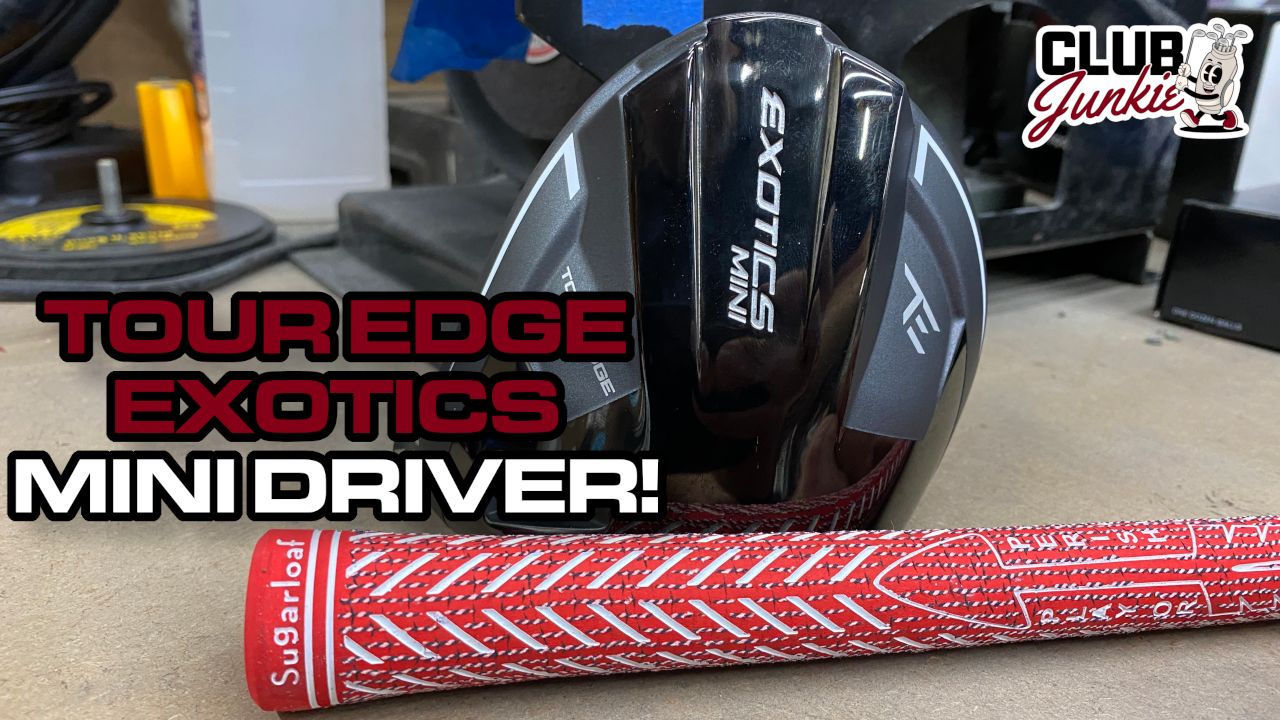
On this episode of Club Junkie, I put the new Tour Edge Exotics Mini Driver to the test and break down the performance, forgiveness, distance, and where it fits compared to a traditional driver or strong fairway wood. If you have been curious about adding a mini driver to the bag, this one is worth a look.
I also dive into the new TaylorMade Spider ZT Max putter that was recently spotted and discuss the growing zero torque putter trend. Plus, there is a closer look at the new Project X Titan Yellow shaft showing up on the PGA Tour and what makes it different from other profiles currently out there.

Justin Rose WITB 2026 (April): Full WITB breakdown with new McLaren irons

What’s the story behind Webb Simpson’s custom-stamped irons?

Memorial Tournament Tour Report: Rory McIlroy, Cameron Young switch up drivers, and more

Cadillac Championship Tour Report: Spieth’s sizable changes, McLaren Golf launches, and more

Russell Henley’s winning WITB: 2026 Charles Schwab Challenge

Kristoffer Reitan’s winning WITB: 2026 Truist Championship

J.T. Poston’s winning WITB: 2026 Memorial Tournament

Best irons 2026: Best irons overall, most forgiving irons, and more

Aaron Rai’s winning WITB: 2026 PGA Championship

Cameron Young’s winning WITB: 2026 Cadillac Championship


Bud Cauley WITB 2026 (June)
Bud Cauley had >14 clubs in his bag when photographed prior to the Memorial Tournament. Driver: Titleist GTS2 (8 degrees) Shaft: Fujikura...


Hannah Green WITB 2026 (June)
Driver: Titleist GTS3 (10 degrees, D4 SureFit setting) Shaft: Mitsubishi Chemical Diamana RB 53 S 3-wood: Titleist GT3 (15 degrees,...


Asterisk Talley WITB 2026 (June)
Driver: TaylorMade Qi4D (9 degrees) Shaft: Fujikura Ventus Blue 6 S 3-wood: TaylorMade Qi4D (16.5 degrees) Shaft: Fujikura Ventus Blue...


Brianna Do WITB 2026 (June)
Driver: Callaway Quantum Triple Diamond (9 degrees) Shaft: KBS PGW 3-wood: Callaway Elyte Titanium (15 degrees) Shaft: KBS PGW 5-wood:...
-
 Equipment6 days ago
Memorial Tournament Tour Report: Rory McIlroy, Cameron Young switch up drivers, and more
-
 News2 weeks ago
Russell Henley’s winning WITB: 2026 Charles Schwab Challenge
-
 Whats in the Bag4 days ago
J.T. Poston’s winning WITB: 2026 Memorial Tournament
-
 Equipment3 days ago
Best irons 2026: Best irons overall, most forgiving irons, and more
-

 Equipment1 week ago
Details on Jason Day’s latest prototype Avoda iron setup
-

 Equipment3 weeks ago
CJ Cup Byron Nelson Tour Report: Koepka and Kim’s newest putters finally get hot
-

 News2 weeks ago
Charles Schwab Challenge Tour Report: MacIntyre, Åberg and Spaun all switch putters, TaylorMade launches new Spider
-

 Equipment2 weeks ago
Details on J.J. Spaun’s surprise putter switch


Pingback: What Rickie Fowler Must Do to Join the ‘Big 3′ in Golf’s Elite Class | Sports News
Pingback: What Rickie Fowler Must Do to Join the ‘Big 3’ in Golf’s Elite Class | My Blog
Pingback: 10 Players Who Will Rise (or Fall) in 2015 | Golf Gear Select
Pingback: 10 Players Who Will Rise (or Fall) in 2015 | GolfClick.net | Blog
tbaxxtbaxx
Apr 26, 2014 at 12:27 am
Nice article Rich. My question is, what single statistic has the highest correlation with money won? Ballstriking composite? Putting? Scrambling? GIR?
Brock
Nov 8, 2013 at 4:01 pm
Why does the danger zone correspond to a higher delta in shots per round (.4 to .45 as you said) than say, 125-150, or 150-175? It seems like the majority of their approach shots these days are inside 175. So, I wouldn’t think that’s the reason for the importance. Is it because the range of misses are bigger from that distance than they would be from 125-175, leading to magnified scores down the line?
TK
Oct 25, 2013 at 3:07 am
Great article Richie, very interesting.
So in terms of the pga tour by your calculation of stats you believe that short game shots from 10-20 yards are much more important than from 20-100?
But I guess it is determined on how short or long the course is?
KCCO
Oct 23, 2013 at 10:39 pm
Best piece I’ve read in a bit on here, thx for very useful info!
Andrew Cooper
Oct 22, 2013 at 10:27 am
Thanks Richie, great stuff. Would you say this big 4 would also apply for club golfers? Does it change as you move through different handicap levels?
Richie Hunt
Oct 24, 2013 at 12:03 pm
Every part of the game is important to some level. If a golfer can improve their fairway bunker play, over time it will help their score. It’s just not going to be as important as something like putting. For club golfers, the Zone ranges differ because they play shorter courses. You can get a good idea of your Danger Zone by looking at the average distance of the par-3’s. And for amateurs, driving becomes the most important part of the game. That is where the greatest standard deviation exists for amateurs. If they can have a good day driving the ball, it will help their score the most. Other than that, I would stick to the Big Four (driving, putting, short game and long approach shots).
paul
Oct 21, 2013 at 9:37 pm
Im glad i am not the only one that thinks that golf numbers are fascinating. All my friends think i am a big golf nerd cause i hit a measured and controlled distance off the tee so i have to hit a pitching wedge for my second shot. of course i beat them so i am an even bigger geek. I thought i was just doing good course management 🙁
[email protected]
Oct 23, 2013 at 8:29 am
Reminds me of how Greg Norman defined aggressive play. If a strength of your game is that wedge then getting that wedge in your hand as many times as possible is Aggressive! Good for you !
Golfwrx
Oct 21, 2013 at 8:39 pm
The successful formula: Know How to Close the Tournament. Numbers don’t mean anything if a PGA Tour player can’t close the deal.
Richie Hunt
Oct 22, 2013 at 9:55 am
Looking at Tour player performance, it’s very much a roller coaster ride throughout the year. Every player gets hot by their standards and then cools down and then plays decent. Part of the problem for Tour players is that the most they will get hot for is 3 weeks in a row. Rarely do I see a player get hot for 4 weeks in a row. They will get hot for 3 weeks in a row and then cool right down.
What separates the great Tour players from the rest is that when they are ‘cold’, they can still make cuts. When they are so-so, they are making the top-25. And when they are hot, they are in the top-5.
The problem for them here is that they can’t rely on great putting. It just doesn’t happen week to week. But if they can consistently be average or better in these four areas from week-to-week, they can start making cuts on their down tournaments, making top-25’s when they play so-so, and finish in the top-5 when they are playing well. And the more times they can get into the top-5, they will increase their chances of getting that victory.
Vlad
Oct 22, 2013 at 11:05 am
Streakiness, or being hot/cold for X weeks at a time, is something that doesn’t get talked about much. Interesting to hear the pros “…can’t rely on great putting. It just doesn’t happen week to week.”
Cyclical performance has a good bit of relevance to the amatuer/casual golfers. For me, when one area (like driver) gets hot, another area (like putting) cools down. Is this the same phenomenon with the pros? When they are in a stretch of being on the leaderboard week after week, is it that all facets are clicking? Or is it a case of 2 or 3 out of 4 areas (tee, approach, short game, putting) are exceptionally good?
Finnegans
Oct 21, 2013 at 8:18 pm
Great article again!
Thanx
Richie Hunt
Oct 21, 2013 at 6:35 pm
Thanks for the kind words.
A J
Oct 21, 2013 at 4:59 pm
The most original, insightful golf writer on the planet?
That would be Rich Hunt.
Another absolutely brilliant article. Thank you.