
Opinion & Analysis
Analyzing the logos of the six most recognizable golf brands

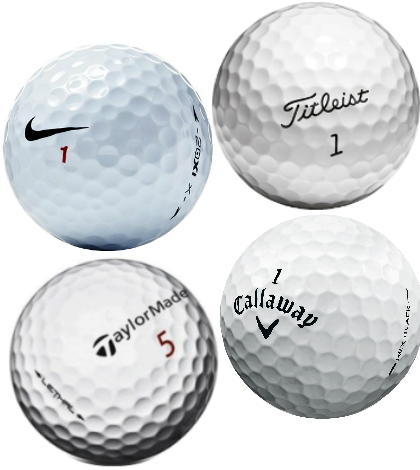
If a picture can be worth a thousand words, a logo can be worth a fair bit more. Like millions. Or billions.
The total golf economy of 2011 was responsible for nearly $70 billion in spending. As such, every OEM wants a share of this monetary pie and the way the consumer perceives an OEM has as much to do where the dollars are spent as anything.
With that in mind, let’s take a look at the stories behind and the images of a select few of the most recognized golf brands in the world.
Titleist
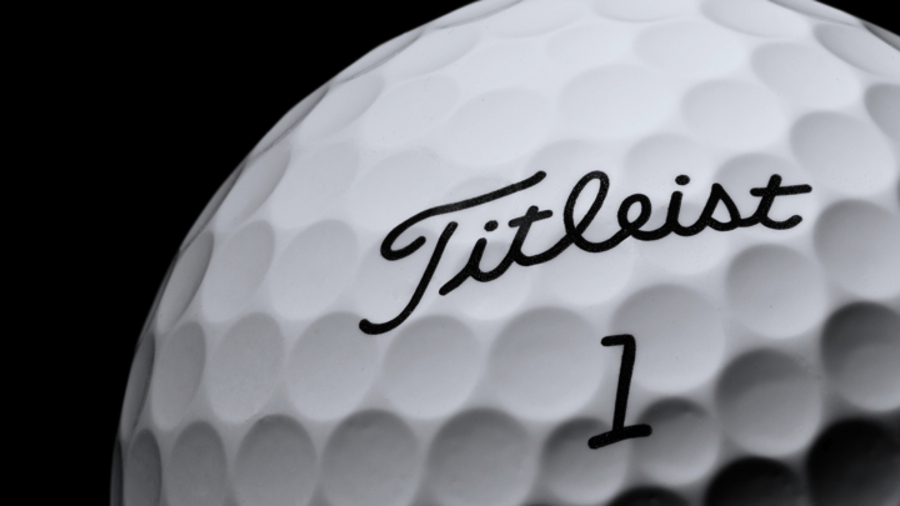
It would be a mistake to refer to the iconic logo as a font. Simply, it is a custom script and can’t be found as an option in any Word document. Thus, the mantra of “often imitated but never duplicated” might apply.
As a logo, the script is simple, clean and classic. There is a timeless element, which is no doubt a function of the fact that the logo hasn’t changed since its inception. The name Titleist is derived from moniker title holder or one who owns the title — the champion. Titleist has been a ball-first company since Phillip W. Skipper Young, an MIT grad, took X-rays of his ball and found the internal elements to be a bit off center. The result is the most dominant ball company in the world. It also makes a pretty decent line of woods, irons, hybrids and putters. You know what they say about something that ain’t broke.
My take: For many, Titleist IS golf. Like the logo, the resulting product is clean and classic. The target consumer for Titleist is one who isn’t necessarily looking for the loudest or boldest product, but a product that is going to perform and won’t ever run the risk of being labeled “gimmick” or flashy. The primary risk in this model is losing a consumer who is attracted to something a bit more caffeinated, but those who are always looking for the “next best thing” probably aren’t attracted to Titleist in the first place.
However, with such a large lead in the ball portion of the industry (nearly 50 percent marketshare), minor refinements and adjustments to the rest of the line are all the company needs at this point. The profits from this area allows the company to hold true to the manner in which it would like to develop and market the club portion of the company. The loyalty (and thus revenue stream) has been firmly established with the ball, and while other OEMs try to put a dent in Titleist’s market share, it’s like trying to drink the Atlantic through one of those twisty straws.
TaylorMade

The name conjures up images of a fine suit made to the exact specifications of the awaiting customer. However, this iteration is the largest golf OEM today, buoyed by a dominance in the metalwoods portion of the industry to the tune of nearly 35 percent. This company has profit like the desert has sand.
In 1983, TaylorMade introduced the first Burner series driver and the logo used was a red circle with a martini glass shaped “T” in the middle. Four years later, TaylorMade added irons to the product offerings and changed to a script logo. The current logo, a white “T” against a black background is cut in the shape of a driver. The simple contrast breeds an even simpler message. It’s all about the driver. Yes, yes it is.
In 2003, TaylorMade introduced the now-legendary R510 TP driver and accompanying TP crest to denote clubs more suited to the low-handicap player. TaylorMade went away from this visual designation after the R9 TP irons, although it has continued to offer a TP line of premium shafts. There are rumors, however, that the TP crest might make a revival moving forward and with it opportunities for the public consumer to play more of the equipment TaylorMade’s Staff Players actually use. Either way, the move will be calculated and likely quite profitable. If this does happen, expect TaylorMade to go full throttle and expect the public to show up with open wallets.
My take: TaylorMade knows exactly what it is doing and it is laughing all the way to the bank, because no one plays on the emotional vulnerability of the consumer golfer better than TaylorMade. The vast majority of humanity is never going break par, hit a smooth 7 iron 185 yards or putt like Tiger. But, it’s quite likely we will bomb a drive or two, hit the occasional sprinkler head and end up 300 yards down the fairway. Distance is intoxicating and TaylorMade is dedicated to reminding us of this time after time and dollar after dollar.
In an industry where the last decade has seen very few true “game-changing” innovations, TaylorMade continues to out-market and out-sell pretty much everyone else. What you think is true is far more important to TaylorMade than what is actually happening. It’s comfortable with its identity and its ability to market and shape the behavior of the willing consumer is unparalleled in the industry. When you’re on top, you’re going to take an inordinate amount of criticism. The upside is, well, everyone is still looking up at you.
Callaway

In 1988, Callaway Hickory Stick USA became Callaway Golf Company and the “Old English Callaway logo” introduced golfers to the Callaway golf brand and core S2H2 technology. The script is reminiscent of all things old, English, St. Andrews, sheep, pastures and the feathery. In 2002, the company added the chevron as an accent marker and has used this modified logo since. The chevron itself dates back to the Middle Ages, and as a French term generally refers to supporting beams (rafters) of a structure. The symbolic element is one of protection and part of the reason this image is often used on military uniforms.
My take: Appealing to the history of the game is an effective and cheap way to purchase authenticity. People like playing golf clubs made by real golf companies and what’s more real than a golf company with a logo that looks like it’s been around since Old Tom Morris was yelling at Young Tom Morris to get his chores done?
In the 1990s, Callaway struggled to create a mass presence as the logo, image and associated players (Johnny Miller, Jim Colbert) didn’t exactly enthuse the general consumer. Annika Sorenstam was undoubtedly a huge draw for females, but that in and of itself didn’t create mass revenue. The addition of Arnold Palmer to the Callaway staff in 2000 certainly increased credibility, but didn’t score many “youth” points. That said, during the last decade, Callaway has made a concerted effort to maintain top-shelf staff (Ernie Els, Phil Mickelson, Jim Furyk) while attracting new/younger talent (James Hahn, Morgan Pressel, Luke List, Patrick Reed). In the last 15 years, Callaway seems to have positioned itself quite nicely, and given its recent legal tiffs with TaylorMade, Callaway is poised to fight for every inch…or yard as the case may be.
Adams
![ADAMS new and old[4]](https://storage.googleapis.com/prod-golfwrx-backup/wp-content/uploads/2013/09/ADAMS-new-and-old41.jpg)
From 1991 until the summer of 2013, Barney Adams and Adams Golf leveraged the momentum created by the original Tight Lies fairway woods into a full-fledged golf equipment company. The logo during this time was fairly non-descript and featured a red triangle followed by the name of the company. The logo itself was quite underwhelming and didn’t really promote anything in particular relative to the company.
However, in 2012, Adams was acquired by TaylorMade and then just a couple months ago the logo changed as well. This time to a script-type font, somewhat similar to that of Titleist.
My take: I’m not exactly sure what Adams is trying to achieve with the new logo, but as an image, I like it. There is certainly more personality to the logo and with it and more emotion than the mechanical triangle and text which it replaced. Given TaylorMade’s recent acquisition and the ensuing questions as to what would happen with Adams, I find the move curious.
Generally, a new logo is accompanied by an effort to rebrand or at least modify how the brand is perceived. So, the question is, “What is Adams going for?” If Adams is going to remain an entity unto itself, how will this logo help it achieve this identity? Some might see the new script as classy and simple; a nice ying to TaylorMade’s edgy yang. Others might see it as a cheap version of the Titleist script and still others might think it looks more like a baseball team than golf company.
Right now there are just too many variables to know exactly where Adams is headed, but wherever they are going, the new logo is clearly part of the plan.
Nike Golf

Nike might not have the storied golf history of a Ping, Titleist or Wilson. But it does have one of the most recognized and studied logos in the history of western civilization. The company was started by Bill Bowerman and Phil Knight in the 1960s, but Nike didn’t enter the golf arena until 1998. Interestingly enough, Nike had already committed $40 million to Tiger Woods in 1995, although it had no balls or clubs of its own. That soon would change.
The story of the swoosh, Nike’s iconic logo, is a bit more interesting. In 1975, Carolyn Davidson (then a student at Portland State) was paid $2 per hour to design a logo for Nike. Seventeen and a half hours and $35 later, the swoosh was born. Originally, Phil Knight wasn’t totally sold on the logo, but thought it might grow on him. Good call!
Eventually, Carolyn was given 500 shares of Nike stock for her efforts. So I guess you can look at it one of two ways: $30,000 is a lot of cash for less than 20 hours of work, or Phil Knight got the best deal since the U.S. Government purchased the Louisiana Territory.
My take: Nike’s success prior to entering the golf market is both a bastion and hinderance. The vast amounts of capital Nike accrues allowed it to sign the most marketable figures in golf: Tiger in 1995 and Rory just last year. It also allows Nike to sign golfers to a complete deal: bag, clubs, balls, hat, glove, clubs, etc. If a player is Nike, he or she is all Nike. This is great for the players and club pros who rep the company.
The challenge is winning over the general consumer and the hurdle for some is to see Nike as a legitimate golf company. Given the level and quality of product available from other OEMs, why would someone choose to play Nike over company __________? That’s the question.
Ping
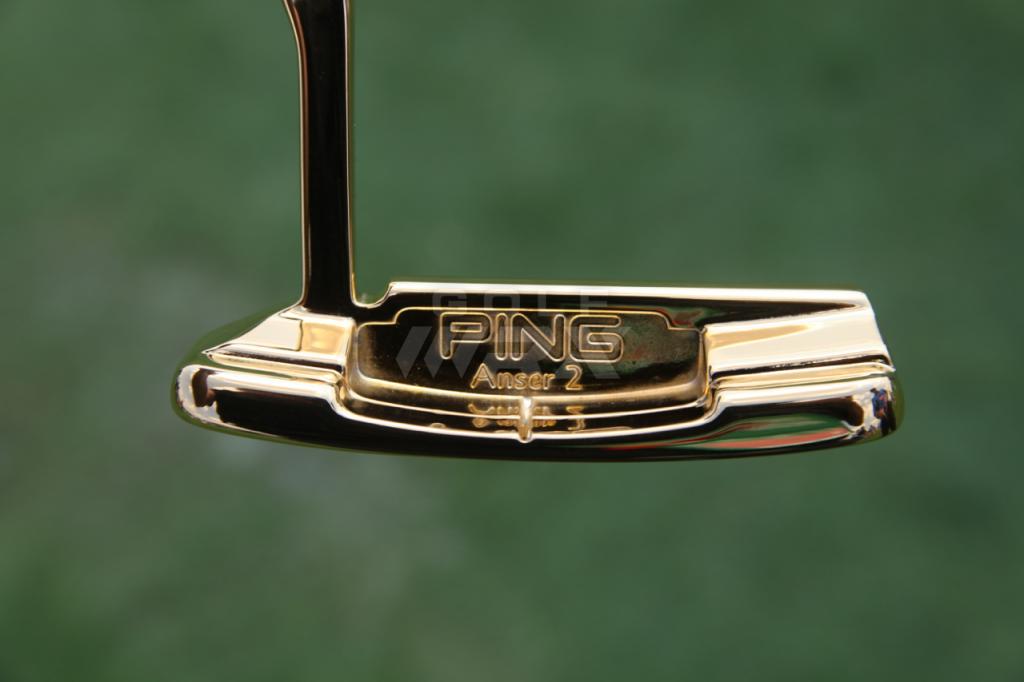
Onomatopoeia. Kind of what you’d expect from an OEM rooted in engineering. It is what it says it is. Furthermore, what’s more simple than the sound of John Solheim’s quest to create a better putter? Ping. That’s it. The moment of impact. Pure and simple. A bit metallic and it resonates.
Ping’s personification as “PING Man” seems to be equal parts man, Gumby and penguin. Whatever it is, John Solheim created it by bending wires and ultimately liked what he came up with. The unique design is reminiscent of a time when logos were not computer generated and the result of thousands of dollars of market analysis and advertising firms. Nothing is contrived and every design feature is purposeful. Both the PING script and PING Man are unmistakable and like their products, I don’t see Ping changing either unless there is a bona fide reason to do so.
My take: Ping is as authentic an OEM as we have in the major marketplace today. Profit is still the final analysis for any enterprise, but there are a variety of ways to get there. Ping gets there by staying true to its time-tested model. Engineer the living daylights out of a product and make sure it works. When it does, people will buy it. What you see is what you get. Form follows function for Ping, and the results are hard to deny.
From the Anser putter and perimeter-weighted irons to custom-fit everything, Ping has authored several of the most lasting and copied designs of the last several decades. That said, the cost for function-first designs is often lackluster aesthetics and critics of Ping are quick to note that until recently, many irons (see Eye 2) weren’t going to win any beauty contests. For my money, the the S55, Ping Gorge wedges and Anser Forged irons are a far cry from the Ping shovels of the 1990s.
It seems like everyone has a kid on the honor roll and the bumper sticker to prove it. Our culture, for better or worse, exhibits a heavy reliance on exposure and given the varied social media, 24/7 news coverage and 756 TV channels, we know the flavors of OEMs like Baskin Robbins.
Marquee players become synonymous with an OEM. Tiger = Nike, Hunter and Bubba: = Ping. Phil: = Callaway and the list goes on. At the end of the day, consumers purchases more than the product itself. They purchase a piece of the identity of the OEM. Why else do Titleist hats sell so well?




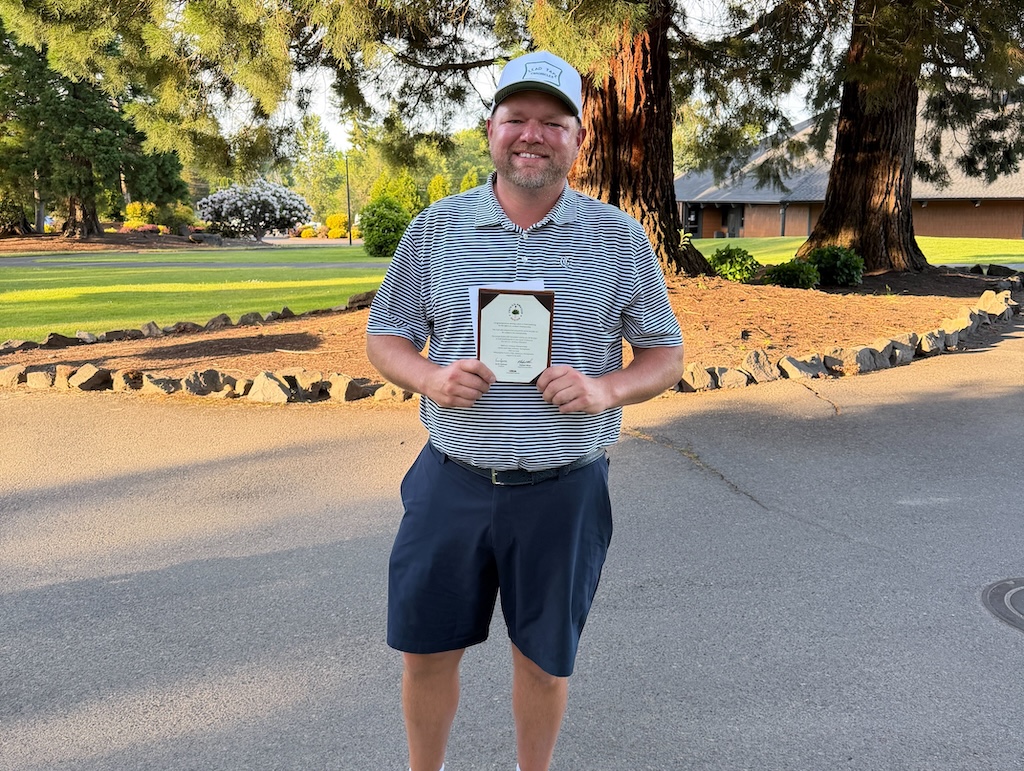
This past Monday, I played in the U.S. Amateur local qualifier at Rock Creek Country Club in Portland, Oregon. A full tee sheet from 7:30 a.m. to 1:55 p.m., the top 11 scores would make it to the U.S. Amateur final qualifying.
I teed off at 10:48 a.m.. With the 7:30 am tee time, you can get a feel for the leaders’ pace, and they were off and running on the challenging setup at Rock Creek.
View this post on Instagram
Getting to the highlight of the round on the par five 17th, a drive up the left side and 212 yards left to the front hole location. I took out a 5-iron with plans of middle of the green. The ball ended up 8 feet left of the hole, pin high. A slight downhill putt dropped in for an eagle 3 on the 17th. With the cut line looking to be anywhere from -2 to even par. This was the boost I had been waiting for all day.
With making par from the trees on 18, it was time to wait for a potential playoff with a posted score of one under par 71.
Three hours later, it was playoff time. 8 players for 6 spots. I made par on the playoff hole, which was good enough to advance to the U.S. Amateur final qualifying in July. USGA qualifiers sure deliver on all of the emotions in golf!
Club Junkie
Building my 2026 gamer WITB: Ranking the contenders and new putter projects – Club Junkie Podcast

The annual What’s In The Bag build is underway, and on this episode of Club Junkie, Brian breaks down the clubs currently leading the race for a spot in his 2026 gamer setup. From drivers and fairway woods to irons, wedges, and shafts, he ranks the equipment that’s performing best and explains what’s separating the front runners from the rest of the field.
Brian also heads into the workshop to discuss several putter projects currently on the bench. From head options and shaft choices to build ideas and testing plans, he shares what he’s working on and which putters could become serious contenders for the bag this season.
If you’re a gear junkie who loves equipment testing, club building, and the never-ending pursuit of the perfect setup, this episode is for you.
Follow Club Junkie:
Instagram: @clubjunkiepod
TikTok: @clubjunkiepod
Threads: @clubjunkiepod
X: @ClubJunkiePod
Club Junkie
Tour Edge Exotics mini driver review + TaylorMade Spider ZT Max first look – Club Junkie

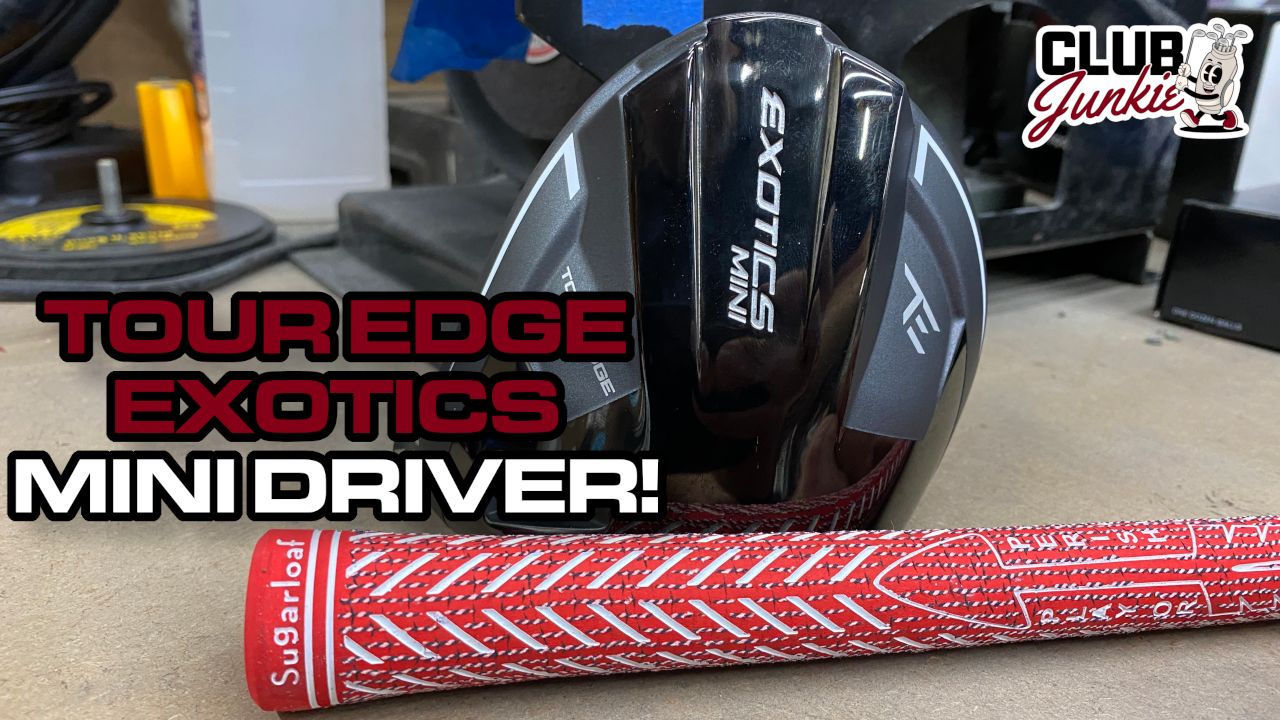
On this episode of Club Junkie, I put the new Tour Edge Exotics Mini Driver to the test and break down the performance, forgiveness, distance, and where it fits compared to a traditional driver or strong fairway wood. If you have been curious about adding a mini driver to the bag, this one is worth a look.
I also dive into the new TaylorMade Spider ZT Max putter that was recently spotted and discuss the growing zero torque putter trend. Plus, there is a closer look at the new Project X Titan Yellow shaft showing up on the PGA Tour and what makes it different from other profiles currently out there.

Justin Rose WITB 2026 (April): Full WITB breakdown with new McLaren irons

What’s the story behind Webb Simpson’s custom-stamped irons?

Memorial Tournament Tour Report: Rory McIlroy, Cameron Young switch up drivers, and more

Cadillac Championship Tour Report: Spieth’s sizable changes, McLaren Golf launches, and more

Russell Henley’s winning WITB: 2026 Charles Schwab Challenge

Kristoffer Reitan’s winning WITB: 2026 Truist Championship

J.T. Poston’s winning WITB: 2026 Memorial Tournament

Best irons 2026: Best irons overall, most forgiving irons, and more

Aaron Rai’s winning WITB: 2026 PGA Championship

Cameron Young’s winning WITB: 2026 Cadillac Championship


Bud Cauley WITB 2026 (June)
Bud Cauley had >14 clubs in his bag when photographed prior to the Memorial Tournament. Driver: Titleist GTS2 (8 degrees) Shaft: Fujikura...


Hannah Green WITB 2026 (June)
Driver: Titleist GTS3 (10 degrees, D4 SureFit setting) Shaft: Mitsubishi Chemical Diamana RB 53 S 3-wood: Titleist GT3 (15 degrees,...


Asterisk Talley WITB 2026 (June)
Driver: TaylorMade Qi4D (9 degrees) Shaft: Fujikura Ventus Blue 6 S 3-wood: TaylorMade Qi4D (16.5 degrees) Shaft: Fujikura Ventus Blue...

Brianna Do WITB 2026 (June)
Driver: Callaway Quantum Triple Diamond (9 degrees) Shaft: KBS PGW 3-wood: Callaway Elyte Titanium (15 degrees) Shaft: KBS PGW 5-wood:...
-
 Equipment6 days ago
Memorial Tournament Tour Report: Rory McIlroy, Cameron Young switch up drivers, and more
-
 News2 weeks ago
Russell Henley’s winning WITB: 2026 Charles Schwab Challenge
-
 Whats in the Bag4 days ago
J.T. Poston’s winning WITB: 2026 Memorial Tournament
-
 Equipment3 days ago
Best irons 2026: Best irons overall, most forgiving irons, and more
-
 Equipment1 week ago
Details on Jason Day’s latest prototype Avoda iron setup
-
 Equipment3 weeks ago
CJ Cup Byron Nelson Tour Report: Koepka and Kim’s newest putters finally get hot
-

 News2 weeks ago
Charles Schwab Challenge Tour Report: MacIntyre, Åberg and Spaun all switch putters, TaylorMade launches new Spider
-
 Equipment2 weeks ago
Details on J.J. Spaun’s surprise putter switch


Edward
Oct 17, 2013 at 12:49 pm
Nice change of pace here. Good read.
Stewart
Oct 16, 2013 at 4:51 pm
Nice article.
Don’t see where Nike come into it as far as golf though. Even with Tiger and a few others I just don’t really think of them as a golf company.
Maybe could have included the Scotty Cameron logo.
Rich
Oct 16, 2013 at 4:05 pm
Well,” LOGO”—Titlest is a name not a logo, Taylormade is going back to the shield away from their funky “T”, Adams is also a name, Nike has a Logo the swoosh, Ping rarely uses the little man with a club, Callaway has a Logo the Chevron. But you left out Wilson Staff the oldest of all The W/S shield and the best looking of all time.
Ask who has the best Logo Not A name!
Metrybill
Oct 30, 2013 at 9:52 pm
For ME, a 65 y.o., the bet looking, soft feeling and performing balls ever (great performers in the day), were the 60’s and 70’s Maxfli black and red balls. The current iterations are harsh. Still like the look.
195 Bowler
Oct 15, 2013 at 8:10 pm
Manufacturers take their logos seriously. I took a survey for Bridgestone Golf earlier this year, something about helping to design a new ball. One of the questions was should the ball’s logo change from “Bridgestone” to the Bridgestone “B” found on most of their products (hats, bags, golf ball packaging, etc.). Or, a combination (one side with “Bridgestone” and the other with the “B”). So long as they perform well, it shouldn’t matter . . . or will it?
Mike
Oct 14, 2013 at 9:25 am
Nice article. What about Footjoy (FJ)? Surely also iconic?
Alex
Oct 14, 2013 at 10:33 am
Good point!
The mark of a player as they call it
Jeff
Oct 20, 2013 at 10:00 pm
Footjoy is a Titleist brand, not an OEM in their own right.
Alex
Oct 14, 2013 at 9:09 am
Quite interesting, always wondered what Titleist meant, such a clean classic logo always like to see that on my ball/glove/putter/wedge
Never noticed that the TM logo was a driver head! Should have done I own enough things with it on…
Tad
Oct 14, 2013 at 8:27 am
I realy don’t care for the new adams logo i think the new logo looks like a basball companys logo, but if thats the futer of logos than im sure by next year i will like it.
Ted
Oct 13, 2013 at 9:30 pm
This is a nice article… I like the origin information… thanks for writing.
Desmond
Oct 13, 2013 at 12:33 pm
Reaching for articles, arent’ we?
Chris Nickel
Oct 15, 2013 at 2:22 pm
Not reaching at all…if you have better ideas, we’d love to hear them!
KCCO
Oct 16, 2013 at 7:35 pm
Thoroughly enjoyed!
Fred
Oct 17, 2013 at 8:19 pm
Chris: good response. As we all know, advertising and marketing go hand in hand in the corporate world and, perhaps, even more so where sports is concerned. In a recent article I read, someone asked one of the magazines why the pro bags were so big. Their response: the bigger the bag, the more “logos” that can be put on it. So, a point well made about logos on balls. That said, I’m not so sure I’m all that crazy about the size of the bear on Jack’s new balls. A bit distracting I think.
Jeff
Oct 20, 2013 at 10:05 pm
I loved the article, I have a suggestion for an article I have always wanted to see. I would love to see all the OEMs connected to all their offshoot-subsidiary brands. Like how Auschsnet at a time owned Titleist, Cobra, Footjoy, and Pinnacle, even though I think Cobra was bought by Puma, I would really love to know just who makes certain brands, Strata(Top Flite- Callaway I think) and Maxfli- I don’t know if its Dunlop or Taylormade owns the rights to that brand. Anyway its just an idea. thanks.
Deacon Blues
Oct 11, 2013 at 4:57 pm
In the Ping section, I think you’re referring to the late Karsten Solheim, not his son (and successor) John.
Fred
Oct 17, 2013 at 8:11 pm
Deacon is right. My father and Karsten were very good friends and worked together at GE in Phoenix when Karsten was still creating PING clubs in his garage. In the very early `60s, I recall my father, who was an Industrial Designer, working on some advertising layouts for Karsten’s company on our kitchen table. I recall seeing the PING man even then, at a time when John and I were both in high school. On another note: I credit Karsten for peeking my interest in golf. For my 13th birthday, he gave me a new set of PING 69s and my dad and I a few of the original putters (Scottsdale and Redwoods). According to Bobby Grace, the `69s are worth around $4,000 now.
Biz
Oct 18, 2013 at 4:47 pm
Also, the PING logo type is a result of a the most simple path a round cutter/bit can take on a manual milling machine…