
Opinion & Analysis
Don’t scramble your game this summer

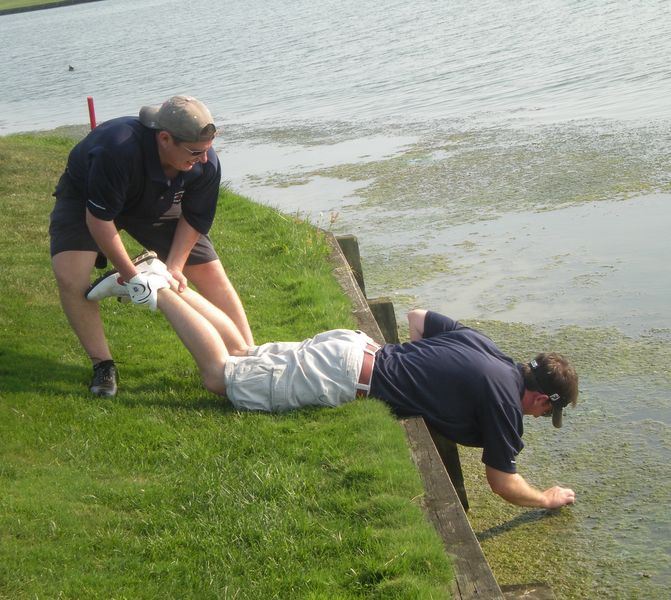
The summer golf season is underway, which provides the ideal conditions for charities, fundraisers, basketball teams, church groups and endless other organizations to raise money by hosting a golf outing.
Any golfer, or anyone that exists within a community, has at one point or another been invited to play in a charity golf event. A hefty entrance fee is backed by the assurance of prizes, giveaways, free lunch/dinner, cold beer, a closest to the pin/long drive contest, a putting contest, the chance to win a car with a hole-in-one, or a number of different lures to make the venture attractive.
As community members and golfers, golf outings are appealing for numerous reasons — the event is being held at a course you’ve always wanted to play, friends/neighbors will be attending, the opportunity of competition intrigues you, or you just can’t pass up the chance for an all-inclusive round of golf.
The format used in almost all golf outings held for charity or fundraising purposes is a scramble. This means that the foursome you are in comprises a team, where every player hits a tee shot. The best drive is selected and each player hits their second shot from that point. The best second shot is then determined, and the process repeats until a putt is holed.
This system works well for golf outings because of the variance in skill level, allowing for every foursome to have a chance to be competitive, while maintaining pace of play. It’s also fun to develop team camaraderie.
The chief word there is “fun.” The problem with that word is that for some golfers and competitors, fun directly derives from the word “win.”
This drive to win the event can ultimately put unwanted pressure on golfers, especially with an assortment of playing abilities on the same team. Members of the team may have different expectations for their round (winning vs. just playing for enjoyment and charity).
Often, this leads to uncomfortable situations, like when a less skilled golfer feels pressure to perform, and embarrassed when he/she fails to meet that expectation. Or when a lower handicap golfer is pressured to “carry” the group to a victory, and goes for broke on every swing.
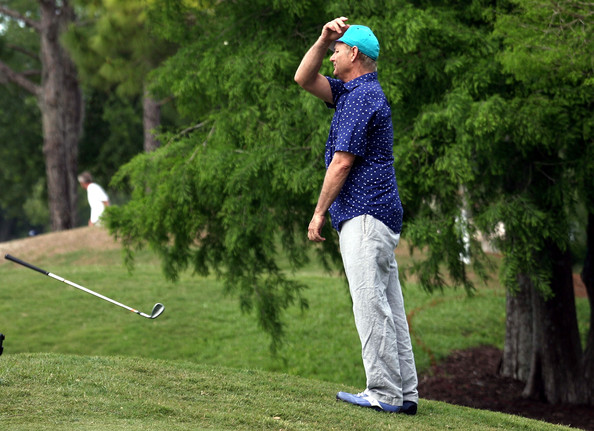
Due to the nature of a scramble, it’s easy to have the mentality that your particular shot doesn’t matter since the team can pick you up with their shots. On the other hand, it’s also easy to feel like you must hit a miraculous shot on every swing.
Regretfully sounding cliché, it’s best to just “play your game.”
Playing to exceed your skill set, and attempting to hit shots that you couldn’t possibly hit, does more to deteriorate inner confidence than it does help the team. The best way to avoid embarrassment, poor shots, or hits to your ego is to know your playing abilities.
If your average drive is 250 yards, it may be damaging to your psyche to try to hit a 300-yard bomb, only to see the ball sail out of bounds or not make it off the tee box.
Don’t pull a hamstring trying to win the long drive contest, either. I’ve seen it happen to my dad on several occasions, and it’s about as far from Freddy Couples-suave that you can get.

The higher handicap golfer in the group would benefit more from hitting a solid lay-up shot on a par 5 with an iron, than swinging beyond their capabilities with a wood and topping the ball. It’s ok to know your limits, especially in this format.
A lower handicap player could also feel compelled to stick one close on every approach shot, aiming at pins they normally wouldn’t. It may be beneficial to his/her game, and the team’s success, to play less aggressively. A chance at eagle is fun, but fishing the ball out of a pond is not.
Golf is a supremely mental game where uncharacteristically poor shots can have long lasting detrimental effects. It’s a game of misses, but playing out of your comfort zone can exacerbate the influence those misses have on your game.
Ultimately, the point of a scramble, and a golf outing in general, is to raise money while enjoying a round of golf with friends, colleagues or associates. Knowing your game and capabilities will ensure that everyone enjoys the round, and the group can be as competitive as possible within the realm of amicability.
Don’t take it too seriously, and don’t feel pressure to outperform your handicap. Enjoy the round, especially since you paid all that money.




This past Monday, I played in the U.S. Amateur local qualifier at Rock Creek Country Club in Portland, Oregon. A full tee sheet from 7:30 a.m. to 1:55 p.m., the top 11 scores would make it to the U.S. Amateur final qualifying.
I teed off at 10:48 a.m.. With the 7:30 am tee time, you can get a feel for the leaders’ pace, and they were off and running on the challenging setup at Rock Creek.
View this post on Instagram
Getting to the highlight of the round on the par five 17th, a drive up the left side and 212 yards left to the front hole location. I took out a 5-iron with plans of middle of the green. The ball ended up 8 feet left of the hole, pin high. A slight downhill putt dropped in for an eagle 3 on the 17th. With the cut line looking to be anywhere from -2 to even par. This was the boost I had been waiting for all day.
With making par from the trees on 18, it was time to wait for a potential playoff with a posted score of one under par 71.
Three hours later, it was playoff time. 8 players for 6 spots. I made par on the playoff hole, which was good enough to advance to the U.S. Amateur final qualifying in July. USGA qualifiers sure deliver on all of the emotions in golf!
Club Junkie
Building my 2026 gamer WITB: Ranking the contenders and new putter projects – Club Junkie Podcast

The annual What’s In The Bag build is underway, and on this episode of Club Junkie, Brian breaks down the clubs currently leading the race for a spot in his 2026 gamer setup. From drivers and fairway woods to irons, wedges, and shafts, he ranks the equipment that’s performing best and explains what’s separating the front runners from the rest of the field.
Brian also heads into the workshop to discuss several putter projects currently on the bench. From head options and shaft choices to build ideas and testing plans, he shares what he’s working on and which putters could become serious contenders for the bag this season.
If you’re a gear junkie who loves equipment testing, club building, and the never-ending pursuit of the perfect setup, this episode is for you.
Follow Club Junkie:
Instagram: @clubjunkiepod
TikTok: @clubjunkiepod
Threads: @clubjunkiepod
X: @ClubJunkiePod
Club Junkie
Tour Edge Exotics mini driver review + TaylorMade Spider ZT Max first look – Club Junkie

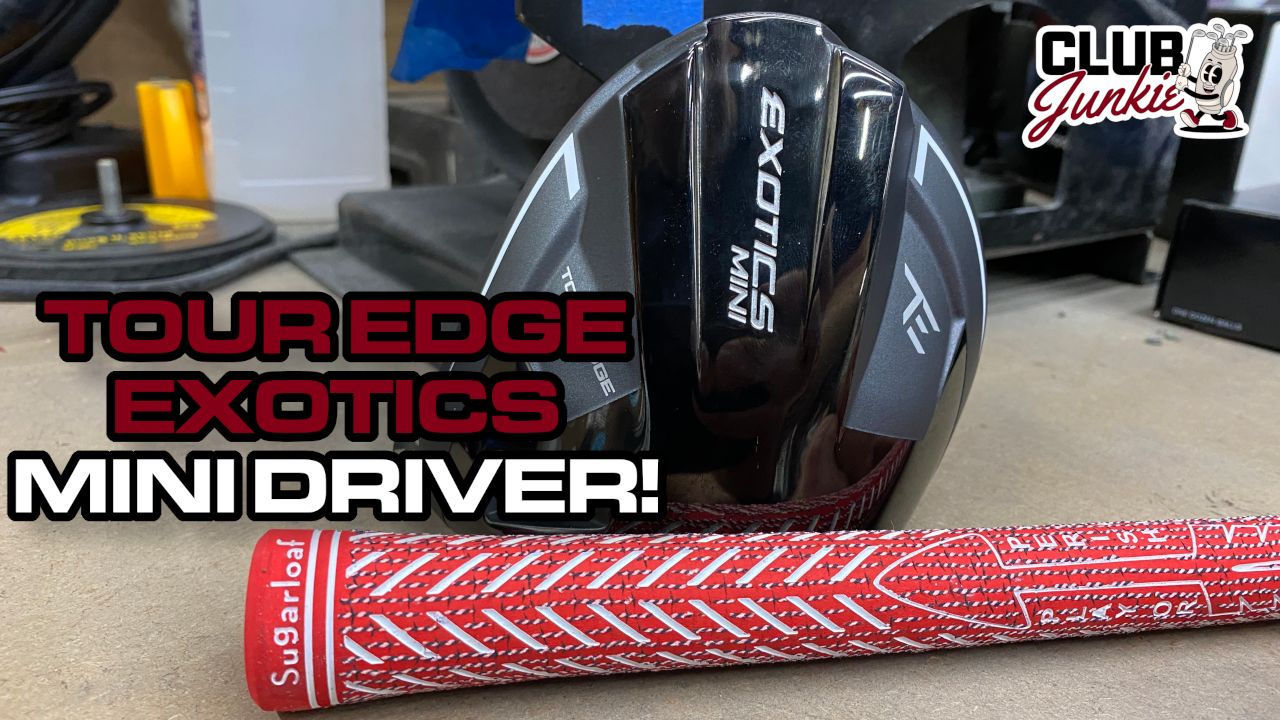
On this episode of Club Junkie, I put the new Tour Edge Exotics Mini Driver to the test and break down the performance, forgiveness, distance, and where it fits compared to a traditional driver or strong fairway wood. If you have been curious about adding a mini driver to the bag, this one is worth a look.
I also dive into the new TaylorMade Spider ZT Max putter that was recently spotted and discuss the growing zero torque putter trend. Plus, there is a closer look at the new Project X Titan Yellow shaft showing up on the PGA Tour and what makes it different from other profiles currently out there.

Justin Rose WITB 2026 (April): Full WITB breakdown with new McLaren irons

What’s the story behind Webb Simpson’s custom-stamped irons?

Memorial Tournament Tour Report: Rory McIlroy, Cameron Young switch up drivers, and more

Cadillac Championship Tour Report: Spieth’s sizable changes, McLaren Golf launches, and more

Russell Henley’s winning WITB: 2026 Charles Schwab Challenge

Kristoffer Reitan’s winning WITB: 2026 Truist Championship

J.T. Poston’s winning WITB: 2026 Memorial Tournament

Aaron Rai’s winning WITB: 2026 PGA Championship

Best irons 2026: Best irons overall, most forgiving irons, and more

Cameron Young’s winning WITB: 2026 Cadillac Championship


Bud Cauley WITB 2026 (June)
Bud Cauley had >14 clubs in his bag when photographed prior to the Memorial Tournament. Driver: Titleist GTS2 (8 degrees) Shaft: Fujikura...


Hannah Green WITB 2026 (June)
Driver: Titleist GTS3 (10 degrees, D4 SureFit setting) Shaft: Mitsubishi Chemical Diamana RB 53 S 3-wood: Titleist GT3 (15 degrees,...


Asterisk Talley WITB 2026 (June)
Driver: TaylorMade Qi4D (9 degrees) Shaft: Fujikura Ventus Blue 6 S 3-wood: TaylorMade Qi4D (16.5 degrees) Shaft: Fujikura Ventus Blue...


Brianna Do WITB 2026 (June)
Driver: Callaway Quantum Triple Diamond (9 degrees) Shaft: KBS PGW 3-wood: Callaway Elyte Titanium (15 degrees) Shaft: KBS PGW 5-wood:...
-
 Equipment6 days ago
Memorial Tournament Tour Report: Rory McIlroy, Cameron Young switch up drivers, and more
-
 News1 week ago
Russell Henley’s winning WITB: 2026 Charles Schwab Challenge
-
 Whats in the Bag3 days ago
J.T. Poston’s winning WITB: 2026 Memorial Tournament
-
 Equipment3 days ago
Best irons 2026: Best irons overall, most forgiving irons, and more
-

 Equipment1 week ago
Details on Jason Day’s latest prototype Avoda iron setup
-
 Equipment3 weeks ago
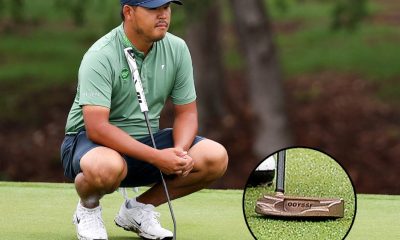
CJ Cup Byron Nelson Tour Report: Koepka and Kim’s newest putters finally get hot
-

 News2 weeks ago
Charles Schwab Challenge Tour Report: MacIntyre, Åberg and Spaun all switch putters, TaylorMade launches new Spider
-
 Equipment2 weeks ago
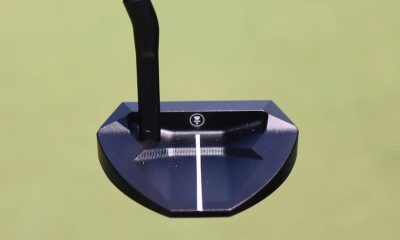
Details on J.J. Spaun’s surprise putter switch

