
Opinion & Analysis
Want to start a golf business? Here’s some advice


So, you love golf. If you’re a GolfWRXer, that goes without saying. And perhaps, like many golfers, you’ve thought about making your passion your profession.
No, this isn’t a discussion of the merits of the PGA’s PGM Program, but rather, it’s our attempt to provide valuable information and context if you’re considering starting a golf-related business.
For help in this endeavor, we talked to folks who invest in, buy, and build companies in the golf industry: Evan Roosevelt and Matthew Erley, both Managing Partners, at Old Tom Capital.
The duo describes Old Tom Capital as “an investment firm narrowly focused on the golf industry with a wide perspective around investing across all stages of companies.”
They also operate the private investment group, Old Tom Venture Club, which offers accredited investors early-stage investment opportunities in the golf industry.
Check out GolfWRX’s full conversation below.
GolfWRX: Many golfers have sketched an idea for a training aid on a napkin or conceived of some innovation that could change the game. Similarly, plenty of golf-adjacent businesses seem to come and go. Before getting into specifics, can you speak to the paths to success, and maybe point out a couple of companies who are doing well with and without investment?
Roosevelt & Erley: Certainly! While golf is a unique industry to build in, the foundational paths to success, especially for startups and innovators, are no different than building in any other category. They involve a solid understanding of the market, a unique value proposition, and the ability to execute and find a path to scale.
There is inherent risk to building in golf in that the category is sexy and fun, which isn’t a bad thing, but founders need to think critically about what they are building and if there is truly a market opportunity. What we would call the “golf goggles” problem is a very real thing and passionate golfers turned founders need to constantly decouple their passion for the game to ensure that what they are working on has the potential to be a sustainable business.
As investors, we see a dozen or so pitches a week and one of the most common mistakes is founders who have a solution looking for a problem. Founders need to validate their ideas outside of a core group of family, friends, and fellow playing partners, who will typically provide positive feedback on anything.
Does the golf course need better technology to improve on-course delivery of food? Will enough players adopt embedded sensors in their clubs to track data? Will a 10K square foot simulator bar survive in your market? The answer to all these questions may be yes, but there is a deep level of validation required to move forward that we would always recommend.
Companies like Arccos Golf and SuperSpeed Golf are great examples of successful ventures in the golf industry. Each has taken a different path. Arccos, known for its advanced golf analytics and shot-tracking systems, leveraged data to enhance player performance, attracting a mix of direct customers and B2B partnerships with equipment manufacturers. After a lot of success and growth, they secured significant funding, helping them scale their technology and outreach.
On the other hand, SuperSpeed Golf, known for its swing speed training system, started with a more grassroots approach. They focused heavily on product quality and customer education, building credibility through endorsements from professionals and strong online content. SuperSpeed Golf’s growth came from reinvesting profits rather than relying heavily on external capital, which allowed them to maintain control over their brand and business direction.
Raising capital is certainly not the only path to success and oftentimes it can be detrimental to a business. We recommend first focusing on market validation and growth, even at a small level, before considering funding.
GolfWRX: At GolfWRX, we see start-up equipment manufacturers come and go. It’s a difficult space with thin margins, whether you’re a custom putter manufacturer or selling starter sets at attractive prices. I know from our previous conversations, you don’t think it’s a model that’s particularly ripe for investment. Can you speak to why that is and what growth and success look like for these companies?
R&E: The equipment manufacturing space in golf is challenging, primarily due to high production costs, thin margins, and the need for significant brand recognition. Many new entrants struggle to achieve the scale required to be profitable and spend a great deal of cash along the way, as established brands dominate market share and benefit from economies of scale.
From an investment perspective, the capital-intensive nature of equipment manufacturing, coupled with the need for extensive marketing to build brand awareness, makes it less attractive to us as investors. The returns are typically not commensurate with the risks involved to fund a startup. However, there are exceptions, particularly if a company can differentiate itself significantly—be it through unique technology, materials, or customization options.
As mentioned earlier, our recommendation is always to start within a niche customer segment, build profitably, and then decide whether scaling makes sense. There are a ton of opportunities to build solid businesses in equipment, but we are not bullish on startup brands having the ability to challenge the incumbents in golf.
Growth and success in this space often come from focusing on niche markets or innovative products that offer clear advantages over existing options. For instance, companies like Swag Golf have found success by offering high-end, precision-milled putters with a focus on niche branding and building a focused community. They’ve built a loyal following and positioned themselves as a premium brand, which allows them to maintain healthier margins.
GolfWRX: I’d just like to establish some context here. Can you speak to what’s going on in the “business of golf” world broadly? What has changed (and what has not) since the pandemic?
R&E: The golf industry has obviously experienced notable shifts since the pandemic. The pandemic was a catalyst that increased equipment sales, tee times, and overall interest in the game. But, the most important change in the game started nearly 10 years before that, with the rise of off-course entertainment, giving the “golf curious” consumer new entry points into the game.
This new wave of golfers have had a much lower barrier of entry into golf, and a less intimidating path to play the game. That trend, along with the rise of golf technology, has driven new demographics into the sport, including younger players who are more tech-savvy and diverse in their interests.
These evolutions in the game of golf are profound for operators and founders building businesses inside of golf because they open up the aperture of potential customers and provide opportunity outside of traditional green-grass. Many of the next big golf companies are being built today on the backs of technology and the golf curious consumer.
Take a company like Dryvebox, one of our investments at Old Tom, who build mobile golf simulators that are used for corporate events, birthday parties, sponsor activations, etc. They have so much scale available to them due to how they have positioned their business in the golf entertainment space. Or another one of our portfolio companies, TMRW Sports, with the launch of their indoor golf league, TGL, which is positioned to bring golf to a more mass audience of viewers outside of the traditional tours.
Traditional golf is also healthy, but it’s now a more narrow segment of a growing category where “golf” can be so much more. That screams opportunity for us as investors, which is why we are spending more of our dollars in these high-growth segments of the game.
GolfWRX: Taking this further, looking into your crystal ball, what’s next, five years, 10 years down the road?
R&E: Looking ahead, the next five to ten years in golf will likely see continued integration of technology, both on and off the course, as well as new formats of the game to take advantage of the golf curious consumer and their path to enjoy the game.
We expect to see advancements in what we would term the “connected course,” with physical tech to monitor swings and ball tracking, better software connected to the phone, carts, pro shop, etc., as well as data for agronomy purposes, making the whole experience more integrated, fun, and compelling.
Another trend to watch is the evolution of golf’s audience and participant base. Efforts to make the sport more inclusive and accessible will likely intensify, with more initiatives aimed at attracting women, young people, and diverse groups who are underrepresented. This could lead to changes in how courses are designed and marketed, as well as how events and tournaments are organized.
Where does a player continue to experience golf and advance as a golfer after they leave a Top Golf, SIM, putting concept, etc.? We see a huge gap between off-course entertainment and on-course play. This is a big opportunity for founders to build businesses that can help the golf curious advance through the game.
Sustainability will also play a critical role. As environmental concerns continue to grow, golf courses and manufacturers will need to adopt more sustainable practices. This includes everything from water conservation and reducing chemical use on courses to exploring eco-friendly materials in equipment manufacturing.
GolfWRX: Getting down to the meat of our questions, what golf-related businesses does Old Tom feel are suitable for investment? Conversely, what areas are non-starters for you?
R&E: At Old Tom, we invest in great businesses run by great founders with an opportunity to scale and return capital. As mentioned earlier, a sustainable business model with a path to growth should always be the number one priority for founders, whether they are building inside or outside of golf.
From an investment perspective, we are most interested in golf-related businesses that can take a big chunk out of the industry and can scale to be $100M+ businesses. While it’s hard to say exactly what type of companies can do this, we tend to gravitate to the following: off-course entertainment, companies going after the golf curious consumer, software with broad product market fit, women’s golf, international golf (i.e new growth markets like India), agronomy tech, golf travel, and marketplace concepts.
On the other hand, businesses heavily reliant on traditional manufacturing, such as small-scale equipment makers, swing training aids, or apparel brands without a strong differentiator, are generally less attractive. The high production costs and competitive landscape make it difficult for these types of companies to scale profitably without significant capital investment and marketing spend.
Additionally, ventures solely focused on niche products without a clear path to broader market adoption may struggle to gain traction with investors. It’s essential to have a scalable business model and a plan for reaching a wider audience or integrating into larger ecosystems within the golf industry.
GolfWRX: For those who are brainstorming the next great golf business idea, what advice do you have? And for those who don’t plan to solely bootstrap and are looking to accelerate their growth with a capital infusion at some point, what do you say?
R&E: Our advice would be to start building. We see too many people at the idea stage, pitching concepts, looking for someone to sign an NDA to learn more, holding the cards close to their chest, and generally not creating enough progress and momentum.
The best way to build a company is to start working on it, find some level of traction and validation, and show a path and strategy to growth (even on a unit economic level). And you don’t need to leave your job, burn the ships, and be hand-to-mouth to build a company. Start small, build in public, and use the early validation to decide if you’re ready to make the leap to full-time.
For aspiring golf entrepreneurs, it’s crucial to start with a thorough understanding of the market and your target audience. Identify a specific problem or need within the golfing community that your product or service can address. This could be anything from improving performance, enhancing convenience, or making the game more accessible to new demographics. And then validate, validate, validate. Don’t make assumptions and don’t only trust the opinions of the people around you.
When seeking capital, prepare a comprehensive business plan that outlines what you have done and where you are going. We need to see the opportunity to scale and a believable path to growth. Demonstrating a clear path to profitability and scalability is key to attracting investors. We also want to see momentum. Even if it’s at a small scale, that can be enough for investors. And if you’re going to raise money, investors need to believe that you have a path to get large and take a big chunk of revenue in the golf market.





This past Monday, I played in the U.S. Amateur local qualifier at Rock Creek Country Club in Portland, Oregon. A full tee sheet from 7:30 a.m. to 1:55 p.m., the top 11 scores would make it to the U.S. Amateur final qualifying.
I teed off at 10:48 a.m.. With the 7:30 am tee time, you can get a feel for the leaders’ pace, and they were off and running on the challenging setup at Rock Creek.
View this post on Instagram
Getting to the highlight of the round on the par five 17th, a drive up the left side and 212 yards left to the front hole location. I took out a 5-iron with plans of middle of the green. The ball ended up 8 feet left of the hole, pin high. A slight downhill putt dropped in for an eagle 3 on the 17th. With the cut line looking to be anywhere from -2 to even par. This was the boost I had been waiting for all day.
With making par from the trees on 18, it was time to wait for a potential playoff with a posted score of one under par 71.
Three hours later, it was playoff time. 8 players for 6 spots. I made par on the playoff hole, which was good enough to advance to the U.S. Amateur final qualifying in July. USGA qualifiers sure deliver on all of the emotions in golf!
Club Junkie
Building my 2026 gamer WITB: Ranking the contenders and new putter projects – Club Junkie Podcast
The annual What’s In The Bag build is underway, and on this episode of Club Junkie, Brian breaks down the clubs currently leading the race for a spot in his 2026 gamer setup. From drivers and fairway woods to irons, wedges, and shafts, he ranks the equipment that’s performing best and explains what’s separating the front runners from the rest of the field.
Brian also heads into the workshop to discuss several putter projects currently on the bench. From head options and shaft choices to build ideas and testing plans, he shares what he’s working on and which putters could become serious contenders for the bag this season.
If you’re a gear junkie who loves equipment testing, club building, and the never-ending pursuit of the perfect setup, this episode is for you.
Follow Club Junkie:
Instagram: @clubjunkiepod
TikTok: @clubjunkiepod
Threads: @clubjunkiepod
X: @ClubJunkiePod
Club Junkie
Tour Edge Exotics mini driver review + TaylorMade Spider ZT Max first look – Club Junkie

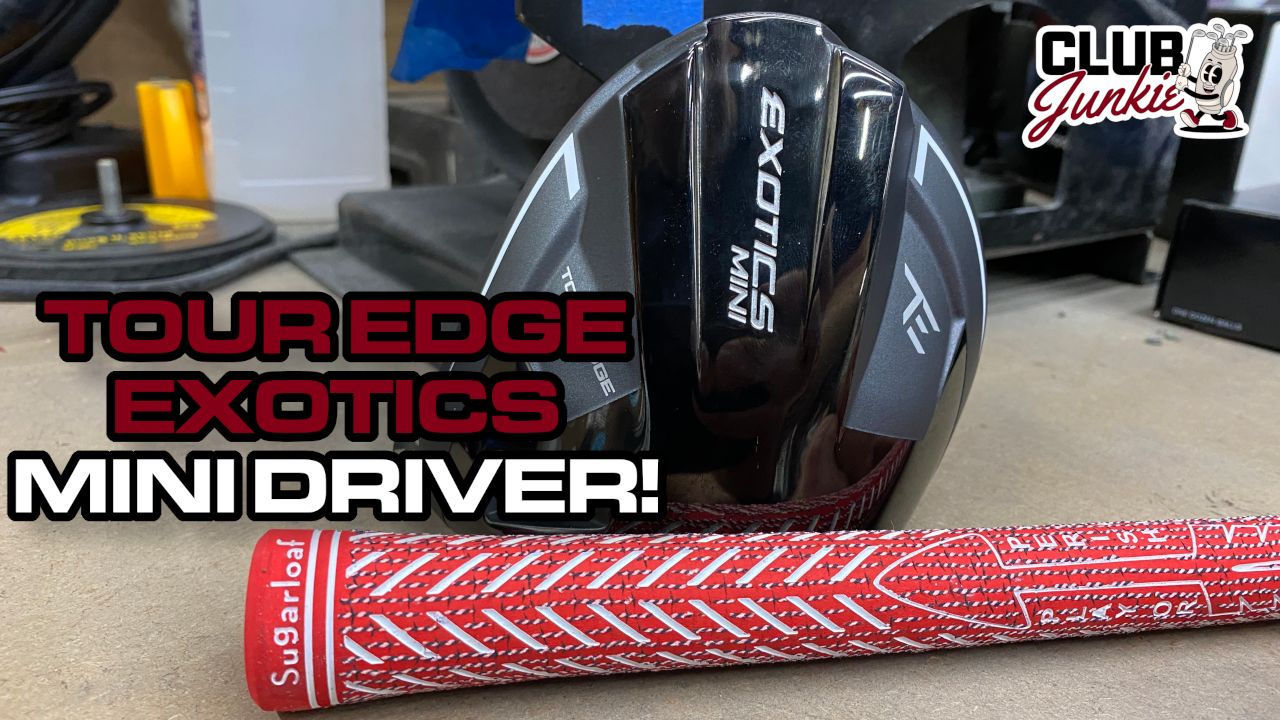
On this episode of Club Junkie, I put the new Tour Edge Exotics Mini Driver to the test and break down the performance, forgiveness, distance, and where it fits compared to a traditional driver or strong fairway wood. If you have been curious about adding a mini driver to the bag, this one is worth a look.
I also dive into the new TaylorMade Spider ZT Max putter that was recently spotted and discuss the growing zero torque putter trend. Plus, there is a closer look at the new Project X Titan Yellow shaft showing up on the PGA Tour and what makes it different from other profiles currently out there.

Justin Rose WITB 2026 (April): Full WITB breakdown with new McLaren irons

What’s the story behind Webb Simpson’s custom-stamped irons?

Memorial Tournament Tour Report: Rory McIlroy, Cameron Young switch up drivers, and more

Cadillac Championship Tour Report: Spieth’s sizable changes, McLaren Golf launches, and more

Russell Henley’s winning WITB: 2026 Charles Schwab Challenge

Kristoffer Reitan’s winning WITB: 2026 Truist Championship

Best irons 2026: Best irons overall, most forgiving irons, and more

J.T. Poston’s winning WITB: 2026 Memorial Tournament

Aaron Rai’s winning WITB: 2026 PGA Championship

Cameron Young’s winning WITB: 2026 Cadillac Championship


Ryan Palmer WITB 2026 (June)
Driver: Callaway Quantum Triple Diamond (9 degrees) Shaft: Project X HZRDUS Smoke Blue RDX 60 TX 3-wood: TaylorMade Qi10 (15 degrees) Shaft:...


Bud Cauley WITB 2026 (June)
Bud Cauley had >14 clubs in his bag when photographed prior to the Memorial Tournament. Driver: Titleist GTS2 (8 degrees) Shaft: Fujikura...


Hannah Green WITB 2026 (June)
Driver: Titleist GTS3 (10 degrees, D4 SureFit setting) Shaft: Mitsubishi Chemical Diamana RB 53 S 3-wood: Titleist GT3 (15 degrees,...


Asterisk Talley WITB 2026 (June)
Driver: TaylorMade Qi4D (9 degrees) Shaft: Fujikura Ventus Blue 6 S 3-wood: TaylorMade Qi4D (16.5 degrees) Shaft: Fujikura Ventus Blue...
-
 Equipment6 days ago
Memorial Tournament Tour Report: Rory McIlroy, Cameron Young switch up drivers, and more
-
 News2 weeks ago
Russell Henley’s winning WITB: 2026 Charles Schwab Challenge
-
 Equipment3 days ago
Best irons 2026: Best irons overall, most forgiving irons, and more
-
 Whats in the Bag4 days ago
J.T. Poston’s winning WITB: 2026 Memorial Tournament
-

 Equipment1 week ago
Details on Jason Day’s latest prototype Avoda iron setup
-

 Equipment3 weeks ago
CJ Cup Byron Nelson Tour Report: Koepka and Kim’s newest putters finally get hot
-

 News2 weeks ago
Charles Schwab Challenge Tour Report: MacIntyre, Åberg and Spaun all switch putters, TaylorMade launches new Spider
-

 Equipment2 weeks ago
Details on J.J. Spaun’s surprise putter switch

